

Daily Dose Of Jazz…
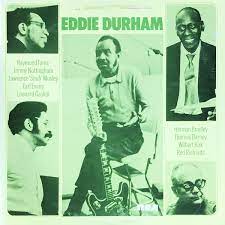
Edward Durham was born on August 19, 1906 in San Marcos, Texas to Joseph Durham, Sr., and Luella Rabb Durham. From an early age he performed with his family in the Durham Brothers Band. At the age of eighteen, he began traveling and playing in regional bands.
From 1929 Eddie started experimenting to enhance the sound of his guitar using resonators and megaphones. In 1935 he was the first to record an electrically amplified guitar with Jimmie Lunceford in Hittin’ the Bottle that was recorded in New York for Decca.
In 1938, Durham wrote I Don’t Want To Set The World On Fire with Bennie Benjamin, Sol Marcus, and Eddie Seiler. During the 1940s he created Eddie Durham’s All-Star Girl Orchestra, an all black female swing band that toured the United States and Canada.
That same year Eddie recorded single string electric guitar solos with the Kansas City Five or Six, which were both smallish groups that included members of Count Basie’s rhythm section along with the tenor saxophone playing of Lester Young. The orchestras of Bennie Moten, Jimmie Lunceford, Count Basie and Glenn Miller took great benefit from his composing and arranging skill.
Guitarist, trombonist, composer and arranger Eddie Durham, who was one of the pioneers of the electric guitar in jazz, transitioned on March 6, 1987.

More Posts: arranger,guitar,history,instrumental,jazz,music,trombone
The Quarantined Jazz Voyager
It is up to you to protect yourself, your family, your friends against the Covid variants.
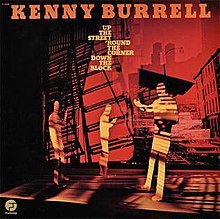
This week’s selection is taking us Up the Street, ‘Round the Corner, Down the Block to listen to a 1974 album by guitarist Kenny Burrell. He recorded tracks 2 & 4 in January 1974 at the Village Recorders in Los Angeles, California and tracks 1, 3, 5 & 6 at Fantasy Studios in Berkeley, California in February. It was released later that same year on the Fantasy Records label.
There were two recording supervisors: Orrin Keepnews on tracks 2, 4, and Sam Russell on tracks 1, 3, 5, 6. The recording engineer was Bob Brown on tracks 2, 4, and Eddie Harris on tracks 1, 3, 5, 6. The remix engineer duties were also performed by Eddie Harris. The lacquer cut was by David Turner. The photography and design was done by Tony Lane,
Track List | 37:44 All compositions by Kenny Burrell except as indicated
- Up the Street, ‘Round the Corner, Down the Block (Onaje Allan Gumbs) ~ 7:18
- Afro Blue (Mongo Santamaría) ~ 5:40
- Sausalito Nights ~ 7:15
- Juice (Gumbs) ~ 5:40
- A Little Walking Music ~ 3:18
- Soulero (Richard Evans) ~ 9:13
- Kenny Burrell ~ guitar, whistling (track 5)
- Jerome Richardson ~ flute, soprano saxophone, tenor saxophone
- Richard Wyands ~ piano, electric piano
- Andy Simpkins ~ bass
- Lenny McBrowne ~ drums
- Mayuto Correa ~ percussion

More Posts: adventure,album,club,festival,genius,guitar,jazz,museum,music,preserving,restaurant,travel
Daily Dose Of Jazz…
Mamadouh Bahri was born July 31, 1957 in Sfax, Tunisia and grew up there until the age of 25 when he moved to Montpellier, France where he later taught music at Jazz Action Montpellier (JAM) until 1991.
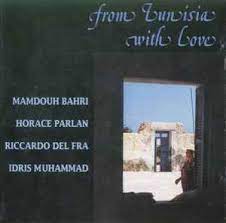
From 1989 to 1993, he played in a quartet with pianist Horace Parlan, Italian bassist Riccardo Del Fra and New Orleans drummer Idris Muhammad. In 1991, they recorded From Tunisia with Love, live in Carthage, Tunisia. The same year, Bahri moved to New York City, where he joined the collective Spirit of Life Ensemble with saxophonist T.K. Blue, trumpeter Ted Curson and drummer Winard Harper among others. He recorded seven albums with the group between 1993 and 2002.
He has played many concerts throughout France and performed in northern Europe, the Middle East, China and the United States. Mamadouh has appeared on broadcast television in Tunis and Abu Dhabi. His recordings have gotten radio airplay in France, New York City and Tunisia. Guitarist Mamadouh Bahri continues to combine Afro-Mediterranean music with a jazz tradition.

More Posts: bandleader,guitar,history,instrumental,jazz,music
Daily Dose Of Jazz…
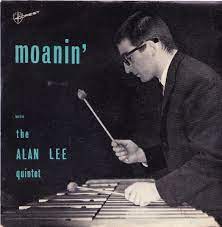
Alan Lee was born on July 29, 1936 in Melbourne, Australia. He was one of the first Australian jazz musicians to fuse classical music with jazz and to utilize Latin American rhythms in his music.
He led several jazz bands in Melbourne and Sydney from the late 1950s through the 1980s. Some of his recorded albums include his Seventies’ projects Gallery Concerts, The Alan Lee Jazz Quartet, Moomba Jazz ’76, Live from the Dallas Brooks Hall, and Alan Lee and Friends: Jazz at the Hyde Park Hotel in 1990, among others.
Bandleader, vibraphonist, guitarist, and percussionist Alan Lee at 86 continues to dabble in music.
More Posts: bandleader,guitar,history,instrumental,jazz,music,percussion,vibraphone
Daily Dose Of Jazz…
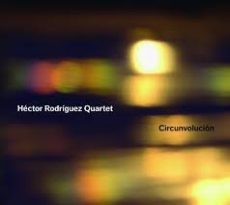
Hector Rodriguez was born on July 11, 1965 in Mexico City, Mexico. He began playing guitar at 14, which led to him playing rock covers in high school bands. By 18 he started privately studying with renowned Mexio City musicians and immersing himself in jazz and other genres.
After several years of studying and playing professionally in his hometown, he ventured to Berklee College of Music in Boston, Massachusetts, majoring in performance. With financial assistance from the World Scholarship Tour award, there he studied with a host of the faculty, graduating Summa Cum Laude with a Bachelor’s degree in performance in 2008.
Another scholarship led him to the New Egland Conservatory of Music in Harford, Connecticut studying with the likes of Jerry Bergonzi, Danilo Perez and Jason Moran among others. He graduated in 2011with a Masters in Jazz Performance.
Since then has performed at festivals in Central America, Mexico and the United States. Guitarist Hector Rodriguez continues to perform and conduct workshops and masterclasses.
More Posts: bandleader,composer,guitar,history,instrumental,jazz,music