

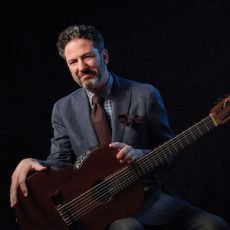
JOHN PIZZARELLI
John Pizzarelli, the world-renowned guitarist and singer, has established himself as a prime contemporary interpreter of the Great American Songbook and beyond, with a repertoire that includes Joni Mitchell, Neil Young, Tom Waits, Antônio Carlos Jobim, and The Beatles. Following high-profile collaborations with Sir Paul McCartney and Michael McDonald, Pizzarelli returns to his roots to honor his hero, the legendary jazz/pop vocalist and pianist Nat King Cole, whose centennial is being celebrated around the world.
Valet Parking ~ $10.00 prepaid
Valet parking is available for all Jazz St. Louis performances. Discounted $10 valet parking may be purchased when ordering your tickets. Please make sure to select the correct date and time when adding parking to your cart with your tickets before purchasing.
Performances
November 2 ~ 7:30pm
November 3 ~ 11:00am | 7:30pm
November 4 ~ 7:30pm | 9:30pm
November 5 ~ 7:30pm | 9:30pm
November 6 ~ 6:30pm
More Posts: adventure,album,club,festival,genius,guitar,jazz,museum,music,preserving,restaurant,travel
Daily Dose Of Jazz…
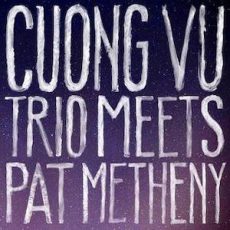
Cuong Vu was born on September 19, 1969 in Saigon, Vietnam and immigrated to Seattle with his family when he was six. At 11 he began to play the trumpet and later received a scholarship from the New England Conservatory of Music.
After graduation, in 1994 Vu moved to New York City and formed the group Ragged Jack with Jamie Saft, Andrew D’Angelo, and Jim Black. Since that time he has worked with Laurie Anderson, David Bowie, Dave Douglas, Myra Melford, Gerry Hemingway, and Mitchell Froom.
While a member of the Pat Metheny Group, he won two Grammy Awards for Best Contemporary Jazz Album: Speaking of Now and The Way Up. Cuong worked with Metheny mainly as a trumpeter, but also contributed vocals, guitar and various small percussion.
As an educator, he serves as chair and professor in the jazz studies department of the University of Washington’s School of Music. Trumpeter Cuong Vu has recorded eleven albums as a leader, thirty-three as a sideman, and continues to lead his own band with bassist Stomu Takeishi and drummer Ted Poor.

More Posts: bandleader,guitar,history,instrumental,jazz,music,trumpet,vocal
Daily Dose Of Jazz…
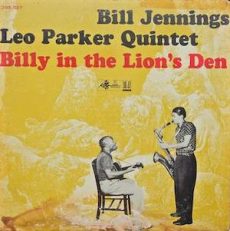
Bill Jennings was born September 12, 1919 in Indianapolis, Indiana and started out with his twin brother, Albert, in a trio called The Three Spades. He would later work with Louis Jordan and his Tympany Five, Wild Bill Davis Trio, Jack McDuff, Willis “Gator” Jackson, Bill Doggett, Louis Armstrong, Chris Powell And His Five Blue Flames, Hot Lips Page and others.
Recording as both a leader and a sideman, Bill has influenced numerous musicians in the genres of jazz, soul, R&B, and blues guitar. B.B. King often mentioned Jennings as one of his biggest influences. He recorded with such artists as Leo Parker, King Curtis, Ella Fitzgerald, Jerry Daniels of the Inkspots, Kenny Burrell, Betty Roche and Stuff Smith.
His unique ability to play in many styles included swing, bop, jump blues, R&B, and pop. Jennings played on Fever by Little Willie John, which made the Billboard R&B chart in the U.S. and peaked at number 24 on the Billboard Hot 100.
A left-handed player, Bill played guitar upside down, with the high strings at the top, which gave him a different approach to phrasing and bending the strings. Later in his career, he lost a finger on his fretting hand and began playing bass guitar.
Guitarist and composer Bill Jennings, who was described as “The Architect Of Soul Jazz”, transitioned at Veterans Hospital in Indianapolis on November 29, 1978 at the age of 59.
More Posts: bandleader,composer,guitar,history,instrumental,jazz,music

Daily Dose Of Jazz…
Claude Barthélemy was born on August 22, 1956 in St. Denis, France and started playing guitar when he was fourteen years old. He began playing professionally with Michel Portal’s Ensemble Unit in 1978 and worked with Aldo Romano, Stu Martin, and Gérard Marais.
In the early 1980s he assembled a trio with Jacques Mahieux and Jean-Luc Ponthieux. Additionally he worked with Jean-Marc Padovani and Nouvel Orchestre Philharmonique. By the mid-1980s he concentrated on composition, writing for mixed ensembles. Several of his pieces incorporated video and dance.
Barthélemy co-founded the group Zhivaro in 1987 and from 1989 to 1991 was the director of Orchestre National de Jazz. The 1990s saw him leading the octet La Nouvelle-Orleans, the quartet Monsieur Claude, and accompanying Elise Caron and Sylvie Cobo.
Guitarist Claude Barthélemy continues to perform as a director and leader of various ensemble configurations

More Posts: bandleader,composer,guitar,history,instrumental,jazz,music
Daily Dose Of Jazz…
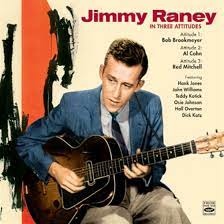
James Elbert Raney was born on August 20, 1927 in Louisville, Kentucky.In 1946, he worked his first paying gig as the guitarist with the Max Miller Quartet at Elmer’s in Chicago, Illinois. He was also a member of the Artie Shaw Orchestra and collaborated with Woody Herman for nine months in 1948. He also collaborated and recorded with Buddy DeFranco, Al Haig and later on with Bob Brookmeyer.
In 1967, alcoholism and other professional difficulties led him to leave New York City and return to his native Louisville. Raney lived with Ménière’s disease for thirty years, a degenerative condition that led to near deafness in both ears, although this did not stop him from playing.
In 1954 and 1955, he won the DownBeat Critics’ Poll for guitar. Guitarist Jimmy Raney, one of the most gifted and influential post war jazz guitarists in the world, transitioned from heart failure in Louisville on May 10, 1995.
More Posts: bandleader,guitar,history,instrumental,jazz,music