

Daily Dose Of Jazz…
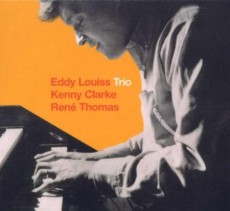
Eddy Louiss was born May 2, 1941 in Paris, France. Throughout his life his primary instrument was the Hammond organ, but as a vocalist, he was a member of Les Double Six of Paris from 1961 through 1963. He would worked with Kenny Clarke, Rene Thomas and Jean-Luc Ponty and was a member of the Stan Getz Quartet with Thomas and Bernard Lubat. This group recorded Getz’s album Dynasty in 1971.
In duet, Eddy recorded with pianist Michel Petrucciani in 1994 and with accordionist Richard Galliano in 2002. His later recordings, for example, Sentimental Feeling and Récit proche combined jazz with rock and world music.
Louiss spent most of his career leading his own group in France, but twice has made particularly notable recordings, both on organ. He played piano with Johnny Griffin in the mid-’60s, and in 1964, he was awarded the Prix Django Reinhardt.
Hammond organist Eddy Louiss, who left the world a catalogue of some twenty recordings as a leader, passed away on June 30, 2015.

Give A Gift Of Jazz – Share

Daily Dose Of Jazz…
Gerard Gibbs was born on November 16, 1967 in Detroit, Michigan and his father introduced him to jazz organist Richard “Groove” Holmes at the age of three. At seven he met Holmes who then became his idol. Though he began his training at age nine in classical piano, his love for jazz never faded.
By 1981, while home recuperating from corrective leg surgery, Holmes surprised the young musician, took an immediate interest and began mentoring him and showing him the tricks of the trade. For the next decade until Holmes’ death, their relationship would grow only stronger. But Holmes was only Gerard’s first encounter with great organists and he would go on to be mentored by Jimmy Smith, rub shoulders with Joey DeFrancesco and Jimmy McGriff and jam with the Mighty Burner himself, Charles Earland. These experiences added to his development and arsenal of techniques.
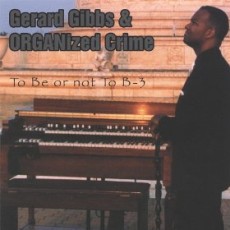
Gibbs currently performs on the concert circuit with Marion Meadows, Ronnie Laws, James Carter, and lends his talents to Pieces Of A Dream. When not leading two jazz bands playing jazz at night and on weekends, he is busy as an Architectural Engineer for the City of Detroit. He plays keyboards in his contemporary jazz group RYX and organ with Gerard Gibbs and ORGANized Crime.
Put A Dose In Your Pocket
More Posts: organ
Daily Dose Of Jazz…
John Taylor was born on September 25, 1942 in Manchester, England. The pianist first came to the attention of the jazz community in 1969 when he partnered with saxophonists Alan Skidmore and John Surman. In the early 1970s he was accompanist to the singer Cleo Laine and started to compose for his own sextet.
Taylor worked with many visiting artists at Ronnie Scott’s Jazz Club in London and later became a member of Scott’s quintet. He was later reunited with Surman in the short-lived group Morning Glory and in the 1980s in the Miroslav Vitous quartet. In 1977 formed the trio Azimuth with Norman Winstone and Kenny Wheeler. They made several recordings for ECM Records, performed in the United States, Europe and Canada.
The 1980s saw John working with Jan Garbarek, Enrico Evans, Gil Evans, Lee Konitz, Charlie Mariano, Tony Coe, Steve Arguelles, Stan Sulzman and David Sylvian. From 2006 he was a member of the Kenny Wheeler’s quartet and large ensemble and performed in duo and quartet settings with John Surman. During the 1990s he made several recordings with Peter Erskine Tio with bassist Palle Danielsson.
By the turn of the century he was performing and recording with a new Azimuth collaboration, the Steve Smith Quartet, Maria PiaDe Vito and Ralph Towner, toured with his new trio, received the BBC Jazz Award for Best New Work’ for his Green Man Suite and continued to record.
As an educator he was professor of Jazz Piano at the Cologne College of Music, became a Lecturer in jazz at the University of York, coached and taught undergraduate jazz musicians and was of central importance to the new Master’s degree jazz pathway and in advancing doctoral research and performance in jazz.
While performing at the Saveurs Jazz Festival in Segre, France he suffered a heart attack. Although he was resuscitated at the venue, pianist John Taylor, who occasionally performed on the organ and the synthesizer, passed away after being taken to the hospital on July 17, 2015.
Jazz Is Global – Share
More Posts: organ,piano,synthesizer
Daily Dose Of Jazz…
Papa John DeFrancesco was born John Jasper DeFrancesco on September 12, 1940 in Philadelphia, Pennsylvania. Growing up with a father who played reeds in swing bands including the Dorsey Brothers, he began plaing trumpet at six and did not start playing organ until his wife bought him an organ for his 23rd birthday. After a few months of nearly nonstop practicing, he was ready to perform in clubs.
By 1967 he was a part of the Philadelphia jazz scene. However, in 1979 when his son Joey turned eight and started playing professionally, he temporarily gave up his career in order to supervise his son. Johnny, his other son, has also developed into a fine guitarist.
In the 90s Papa John returned to a more active playing career and recorded two sessions for Muse Records featuring Joey on trumpet, titled Doodlin’ and Comin’ Home. Both records gained him a national reputation of his own. His organ playing is in an infectious hard bop style that compliments his sons playing and it was while working with Joey that his career was revived
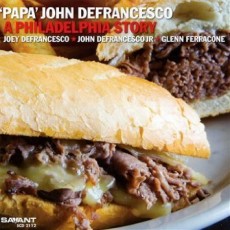
Between 2001 and 2006 he released four albums, took a five-year hiatus, and then returned to release A Philadelphia Story performed by a classic Hammond B-3 trio featuring John Jr. on guitar, drummer Glenn Ferracone with guest appearances by Joey and tenor saxophonist Joe Fortunato.
Organist and vocalist Papa John DeFranceso continues to perform, tour and record.
Put A Dose In Your Pocket
Daily Dose Of Jazz…
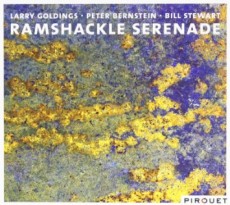
Larry Goldings was born August 28, 1968 in Boston, Massachusetts and studied classical piano until the age of twelve. While in high school at Concord Academy his primary influences were Erroll Garner, Oscar Peterson, Dave McKenna, Red Garland and Bill Evans. As a young teenager, Larry studied privately with Ran Blake and Keith Jarrett.
Goldings moved to New York in 1986 to attend a newly formed jazz program under the leadership of Arnie Lawrence at The New School. During college he studied piano with Jaki Byard and Fred Hersch. While still a freshman, Sir Roland Hanna invited him to accompany him to a three-day private jazz party in Copenhagen. While there, he met Sarah Vaughan, Kenny Biurrell, Tommy Flanagan and Hank Jones and had the opportunity to play in the band with Vaughan, Harry Sweets Edison and Al Cohn.
As a college student, Larry embarked on a worldwide tour with Jon Hendricks, working with him for a year. A collaboration lasting almost three years with guitarist Jim Hall followed. By 1988 he began developing his organ chops and secured a regular gig at Augie’s Jazz Bar, now Smoke on Manhattan’s Upper West Side. He was featured with several bands, and his own trio with guitarist Peter Bernstein and drummer Bill Stewart got its start there.
His first release was Intimacy Of The Blues in 1991 followed by sixteen more albums as a leader and has appeared as a sideman on hundreds of recordings. Over the course of his career, Goldings distinctive keyboard sound has been sought out more and more by pop, R&B, Brazilian, and alternative artists, such as, Madeleine Peyroux, John Scofield, Carla Bley, Michael Brecker, De La Soul, India Arie, Tracy Chapman, Pat Metheny, Dave Grusin, Norah Jones, John Mayer, Sia, John Pizzarelli, Steve Gadd, Rickie Lee Jones, Jack DeJohnette, Luciana Souza, and the list goes on and on.
In 2007, Larry, DeJohnnette and Scofield captured a Grammy nomination for Best Jazz Instrumental Album Individual or Group for their live album, Trio Beyond – Saudades. He has been twice awarded Best Organist/Keyboardist of the Year by the Jazz Journalists Association, and twice Best Jazz Album for Awareness and Big Stuff by the New Yorker Magazine.
As a composer his music has been used in the films Space Cowboys, Proof and Funny People. Brecker, Scofield, DeJohnette, Hall, Sia, Toots Thielemans, Curtis Stigers, James Taylor and Jane Monheit among others have recorded his compositions. Organist and keyboardist Larry Goldings continues to perform, record, tour and compose.
Selected discography[edit]
Jazz Is Global – Share
More Posts: organ