

Daily Dose Of Jazz…
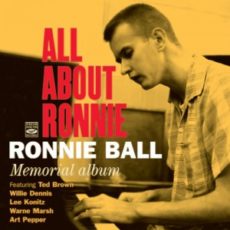
Ronald “Ronnie” Ball was born December 22, 1927 in Birmingham, England. He moved to London in 1948, and in the early Fifties worked both as a bandleader and under Ronnie Scott, Tony Kinsey, Victor Feldman and Harry Klein.
1952 saw a move to New York City where he studied with Lennie Tristano. In the 1950s and in the Sixties he worked extensively around the jazz scene with Chuck Wayne, Dizzy Gillespie, Lee Konitz, Kenny Clarke, Hank Mobley, Art Pepper, J.J. Johnson, Kai Winding, Warne Marsh, Buddy Rich, Gene Krupa, Roy Eldridge and Chris Connor among others.
By the 1960s he relatively disappeared from music. Pianist, composer and arranger Ronnie Ball passed away in October,1984.

More Posts: piano
Daily Dose Of Jazz…
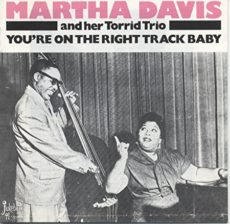
Martha Davis was born on December 14, 1917 in Wichita, Kansas, and was raised in Chicago, Illinois. By the mid-1930s, she had met and been influenced by Fats Waller, and performed regularly as a singer and pianist in Chicago clubs. In 1939, she met, and later married, bassist Calvin Ponder, who went on to play in Earl Hines’ band.
In 1948, Davis moved to California, and developed her recording career on Jewel Records in Hollywood with a trio including Ponder, guitarist Ralph Williams and drummer Lee Young. Their cover of Dick Haymes’ pop hit Little White Lies followed by a duet with Louis Jordan, Daddy-O in 1948, reached # 11 and #7, respectively, on the Billboard charts.
Davis and Ponder also began performing together on stage, developing a musical and comedy routine as “Martha Davis & Spouse” which played on their physical characteristics, she was large, he was smaller. The act became hugely popular, touring and having a residency at the Blue Angel in New York City. They appeared together in movies including Smart Politics with Gene Krupa, and in the mid-Fifties, variety films Rhythm & Blues Revue, Rock ‘n’ Roll Revue and Basin Street Revue. Several of their performances were filmed by Snader Telescriptions for video jukeboxes, and they also broadcast on network TV, particularly Garry Moore’s CBS show.
In 1957, after a break of several years, they resumed recording for the ABC Paramount label, with whom they cut two LPs. Singer and pianist Martha Davis passed away from cancer in New York on April 6, 1960 at age 42.
Daily Dose Of Jazz…
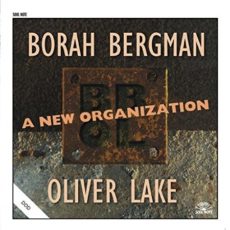
Borah Bergman was born on December 13, 1926 in Brooklyn, New York to Russian-Jewish immigrant parents. He began took piano lessons as a child and then changed to clarinet, before returning to piano after being discharged from the army. As an adult, he developed his left hand playing to the point where he became essentially ambidextrous as a pianist, and could play equally fast in both hands.
Bergman cited Earl Hines, Bud Powell, Lennie Tristano, Ornette Coleman chamber music, Bach and Dixieland as formative influences, due to the contrapuntally and polyphonically play.
Until the 1970s Borah played little in public, concentrating on private practice and his work as a school teacher. He recorded four albums as a soloist, most notably on the European label Soul Note, before embarking on duo and trio albums beginning in the 1990s. A small number of solo and quartet albums were also released from the middle of the decade.
Free jazz pianist Borah Bergman passed away on October 18, 2012.

More Posts: piano
Daily Dose Of Jazz…
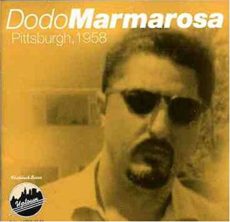
Dodo Marmarosa was born Michael Marmarosa on December 12, 1925 in Pittsburgh, Pennsylvania and received the uncomplimentary nickname Dodo as a child because of his large head, short body, and bird-like nose. He began taking piano lessons at the age of 9, receiving classical music lessons, but was influenced by the jazz playing of Art Tatum, Teddy Wilson, and others after fellow pianist Erroll Garner, four years his elder, introduced him to their music. Attending Peabody High School, he practiced a lot, until his left and right hands were equally strong.
Beginning his professional career in 1941 by joining the Johnny “Scat” Davis orchestra at the age of 15, he followed this stint with Gene Krupa around the end of 1942. After Krupa’s orchestra broke up he played in Ted Fio Rito’s band then moved to Charlie Barnet’s big band. He recorded debut was with Barnet in 1943 with “The Moose”, on which the 17-year-old pianist played, combining bebop and Count Basie-style minimalism. Marmarosa recorded some trio tracks with Krupa and DeFranco in 1944. He then worked with Tommy Dorsey and appeared in the MGM film Thrill of a Romance. After Dorsey he joined Artie Shaw’s big and small bands.
From the early 1940s Dodo had searched for and experimented with advanced progressive forms of jazz and became attracted to bebop after meeting and jamming with Dizzy Gillespie and Charlie Parker. In 1945 Marmarosa moved to Los Angeles, California and played piano on Parker’s first recordings for Dial Records. For the next two years he recorded extensively as a sideman in both bebop and swing contexts with Wardell Gray, Lionel Hampton, Mel Tormé, Willie Smith, Lester Young, and, became the house pianist for Atomic Records, Slim Gaillard and Barney Kessel.
Making his first recordings as leader in 1946, with trio tracks that included Ray Brown on bass and Jackie Mills on drums, and in a quartet with adding saxophonist Lucky Thompson, he also recorded his only vocal track, I’ve Got News for You, in the same year. He would go on to lead the first pizzicato jazz cello sessions for Dial with Harry Babasin on cello and Jackie Mills on drums.
The Fifties were not particularly productive, suffering from psychological problems and his family getting him no help, his behavior became erratic with him disappearing for weeks at a time. He recorded an Argo Records trio session in 1962 released as Dodo’s Back!, and made his final studio recordings that same year with saxophonist Gene Ammons and another with trumpeter Bill Hardman. His last public performance was contributed to his diabetes somewhere between the late Sixties to early to mid Seventies, leading to his permanent retirement.
Living in obscurity for the rest of his life, pianist, composer and arranger Dodo Marmarosa, who played in the bebop, modern, progressive and swing genres, passed away of a heart attack on September 17, 2002, in a veterans’ hospital in his hometown of Pittsburgh.

More Posts: piano
Requisites
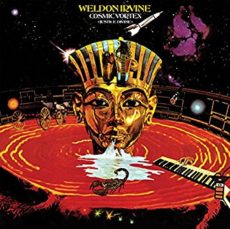
Cosmic Vortex – Justice Divine is the debut 1974 album by jazz pianist and keyboardist, Weldon Irvine. It explores the deeply spiritual and political landscape with a focus on lyrics and vocals in conjunction with elements of funk and improvisation.
Writing all of the compositions, Weldon included on this album Love Your Brother, Walk That Walk; Talk That Talk, Love Jones, I’ll Name It Tomorrow, Cosmic Vortex (Justice Divine), Quiet (In Memory of Duke Ellington), Let Yourself Be Free and Love Your Brother (Sanctified Version)” 1:30
To execute the task of giving this project life, along with himself on keyboards, soprano saxophone and vocals Irvine brought to the session Henry Grate, Jr., Cornell Dupree and Joe Caro on guitar, Bob Cranshaw, Gordon Edwards and George Murray on bass, Wesley “Gator” Watson, Jimmy Young, Lenny White and Chipper Lyles on drums, Napoleon Revels on percussion, Bud Johnson, Jr. on the congas and bongos, Gene Jefferson on tenor saxophone, Jimmy Owens, Roy Roman and Everett “Blood” Hollins on the trumpet, Bill Barnwell on flute, and on vocals he enlisted the talents of Nalo and Ojuleba.

More Posts: collectible,piano