

Daily Dose Of Jazz…
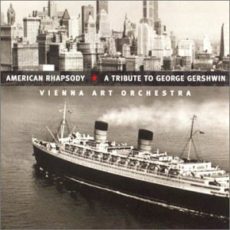
Mathias Rüegg was born on December 8, 1952 in Zurich, Switzerland and began playing jazz in secondary school. Trained as a schoolteacher, he taught for a while in special-needs schools. From 1973 to 1975 he attended the Musikhochschule in Graz, Austria, studying classical composition and jazz piano. In Vienna, Austria he performed in a nightclub as a solo jazz pianist, joined later by saxophonist Wolfgang Puschnig. The duo formed the core of an ensemble that became the Vienna Art Orchestra in 1977.
Rüegg’s distinctive, often humorous compositions have drawn on a range of influences from traditional folk music to classics. He has also led the VAO to explore the big band repertory of American jazz composers such as Duke Ellington. Beyond the traditional big-band complement, his orchestrations have prominently featured such instruments as the tuba, piccolo, bass clarinet, alphorn, exotic percussion, and wordless vocals.
Mathia has composed hundreds of pieces for the Vienna Art Orchestra, other European big bands, and classical orchestras, as well as theatre music and film music. Since 1994 he has composed several works for soloist and chamber orchestra.
Besides managing the VAO, Rüegg has conducted workshops in Europe, worked as artistic director for music festivals, and headed multimedia and music-related projects. From 1983 to 1987 he was the director of the Vienna Art Choir. He founded the Porgy & Bess music club in Vienna and the Hans Koller Prize for Austrian jazz.
Pianist, composer, director and bandleader Mathias Rüegg continues to pursue his career in a variety of musical endeavors.

More Posts: piano
Daily Dose Of Jazz…
Ernie Carson was born December 4, 1937 in Portland, Oregon. He played trumpet from elementary school, and played with the Castle Jazz Band in the mid-1950s prior to a stint in the U.S. Marines.
Following his discharge Ernie moved to and worked in Los Angeles, California with Dave Wierbach, Jig Adams, Ray Bauduc, Pat Yankee, and Turk Murphy. He led several of his own groups from the 1970s, including the Capital City Jazz Band and a new version of the Castle Jazz Band.
After more than twenty years of playing based in Atlanta, Georgia he moved back to his hometown in 1995. Dixieland jazz revival cornetist, pianist and singer Ernie Carson, who left a small catalogue of music as his legacy, passed away on January 9, 2012 in Portland, Oregon.

Daily Dose Of Jazz…
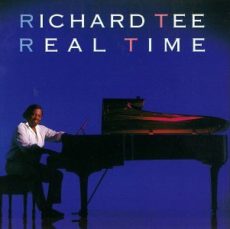
Richard Tee was born in Brooklyn, New York on November 24, 1943 where he spent most of his life and lived with his mother in a brownstone apartment building. Graduating from The High School of Music & Art in New York City, he attended the Manhattan School of Music.
Tee went on to lead a jazz ensemble, the Richard Tee Committee and in 1981 he played the piano and Fender Rhodes for Simon and Garfunkel’s Concert In Central Park. Over the course of his prolific career he played with Quincy Jones, Ron Carter, Benny Golson, Stanley Turrentine, Rahsaan Roland Kirk,Chuck Mangione, Grover Washington Jr., George Benson, Herbie Mann, Doc Severinsen, Patti Austin, Roberta Flack, Donny Hathaway, Barbra Streisand, Lou Rawls, Etta James.
Not limiting himself to jazz and blues, Richard also performed and recorded with Carly Simon, The Bee Gees, Aretha Franklin, Peter Allen, George Harrison, Diana Ross, Duane Allman, Bill Withers, Nina Simone, Juice Newton, Billy Joel, Eric Clapton, Kenny Loggins, David Ruffin, Peter Gabriel, Joe Cocker, Tim Finn, Peabo Bryson, Mariah Carey, Chaka Khan, Phoebe Snow, Leo Sayer and countless others.
He was a founding member of the band Stuff, ed by bassist Gordon Edwards and included guitarist Cornell Dupree, drummer Chris Parker and later adding guitarist Eric Gale and drummer Steve Gadd to the line up. Pianist, studio musician, singer and arranger Richard Tee, better known as a studio and session musician, passed away from prostate cancer on July 21, 1993 in Cold Spring, New York at the age of 49.
Daily Dose Of Jazz…
Francesca Tanksley was born the daughter of an American and an Austrian on November 21, 1957 in Vicenza, Italy. Growing up in Munich, Germany, her father worked for Radio Free Europe and from the age of seven took piano lessons. At the age of 16, she moved to Boston, Massachusetts where she studied piano and composition at the Berklee College of Music.
After two years Francesca returned to Munich where she worked with Al Porcino, Charly Antolini and Rudi Fuesers. Moving to New York City in 1980 she worked with trombonists Melba Liston for two years. During this time she began her long-term collaboration with saxophonist Billy Harper, and her first recording session were made with Robin Eubanks and Steve Turre on Dedication.
Tanksley has worked with Clifford Jordan, Cecil Payne, David Newman, Nick Brignola, Slide Hampton, Sheila Jordan, Jay Clayton, Bill Hardman and Erica Lindsay. She is the music director the Erica Lindsay – Howard Johnson Quintet.
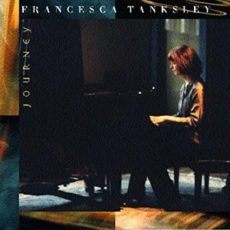
She works with a quintet and in a trio with bassist Clarence Seay and drummer Newman Taylor Baker, colleagues from Harper’s band, with whom she recorded her debut album Journey, released on DreamCaller label. Pianist Francesca Tanksley teaches at Berklee College of Music and continues to perform, compose and record.

More Posts: piano
Daily Dose Of Jazz…
Ted Rosenthal was born on November 15, 1959 and raised in Great Neck, Long Island, New York. He began playing by ear at a young age, and started studying at 12 with Tony Aless, a sideman with Charlie Parker and Stan Getz. In high school, he studied briefly with Jaki Byard and Lennie Tristano, and attended workshops with Billy Taylor, Woody Shaw and others.
Finding limited opportunities to study jazz at the conservatory level, Ted found joy in in studying classical piano at the Manhattan School of Music. He received bachelor’s and master’s degrees in piano performance while continuing to pursue his love of jazz outside the classroom. After college, he continued his classical piano studies with Phillip Kawin while playing jazz in and around New York.
Rosenthal won the Thelonious Monk International Jazz Competition in 1988, launched his solo career, released his first CD as a leader New Tunes, New Traditions, with Ron Carter, Billy Higgins and Tom Harrell. The album interweaves Thelonious Monk songs with his original compositions. In the early 1990s with the last Gerry Mulligan Quartet, recording three CDs with Mulligan and performed in major jazz festivals throughout the world. After Mulligan’s death, Rosenthal became musical director of The Gerry Mulligan All Star Tribute Band, featuring Lee Konitz, Bob Brookmeyer and Randy Brecker. The group’s CD, Thank You, Gerry!, was nominated for a Grammy award in 1998.
As a sideman Ted has performed in small groups led by Art Farmer, Jon Faddis, Phil Woods, Jay Leonhart, Wynton Marsalis and the Lincoln Center Jazz Orchestra, the Carnegie Hall Jazz Band, the Westchester Jazz Orchestra, the Vanguard Jazz Orchestra, Lewis Nash, George Mraz, Bill Charlap, Dick Hyman, Helen Merrill, Mark Murphy and Ann Hampton Callaway, to name a few.
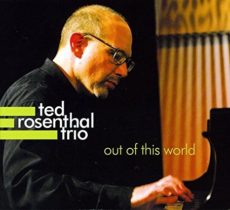
Pianist Ted Rosenthal, a recipient of 3 NEA grants, currently holds faculty positions at the Juilliard School and Manhattan School of Music in New York City, is a member of the Juilliard Jazz Quintet and continues to perform, record, compose and tour as a leader and sideman.

More Posts: piano