

Daily Dose Of Jazz…
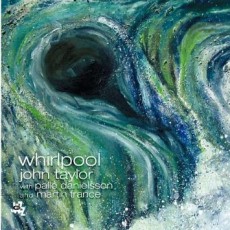
John Taylor was born on September 25, 1942 in Manchester, England. The pianist first came to the attention of the jazz community in 1969 when he partnered with saxophonists Alan Skidmore and John Surman. In the early 1970s he was accompanist to the singer Cleo Laine and started to compose for his own sextet.
Taylor worked with many visiting artists at Ronnie Scott’s Jazz Club in London and later became a member of Scott’s quintet. He was later reunited with Surman in the short-lived group Morning Glory and in the 1980s in the Miroslav Vitous quartet. In 1977 formed the trio Azimuth with Norman Winstone and Kenny Wheeler. They made several recordings for ECM Records, performed in the United States, Europe and Canada.
The 1980s saw John working with Jan Garbarek, Enrico Evans, Gil Evans, Lee Konitz, Charlie Mariano, Tony Coe, Steve Arguelles, Stan Sulzman and David Sylvian. From 2006 he was a member of the Kenny Wheeler’s quartet and large ensemble and performed in duo and quartet settings with John Surman. During the 1990s he made several recordings with Peter Erskine Tio with bassist Palle Danielsson.
By the turn of the century he was performing and recording with a new Azimuth collaboration, the Steve Smith Quartet, Maria PiaDe Vito and Ralph Towner, toured with his new trio, received the BBC Jazz Award for Best New Work’ for his Green Man Suite and continued to record.
As an educator he was professor of Jazz Piano at the Cologne College of Music, became a Lecturer in jazz at the University of York, coached and taught undergraduate jazz musicians and was of central importance to the new Master’s degree jazz pathway and in advancing doctoral research and performance in jazz.
While performing at the Saveurs Jazz Festival in Segre, France he suffered a heart attack. Although he was resuscitated at the venue, pianist John Taylor, who occasionally performed on the organ and the synthesizer, passed away after being taken to the hospital on July 17, 2015.

Jazz Is Global – Share
More Posts: organ,piano,synthesizer

Daily Dose Of Jazz…
Lisa Sokolov was born on September 24, 1954 in Manhasset, Long Island and raised in nearby Roslyn, New York. She was exposed to jazz as a child through her father, who played stride piano and listened to recordings of jazz artists including Art Tatum, Mabel Mercer and Stan Getz. She began singing from a young age and soon took up piano, which she studied for many years.
1972 saw Sokolov attending Bennington College in Vermont and studying with Milford Graves, Bill Dixon, Jimmy Lyons, voice teacher Frank Baker, and composers Vivian Fine and Louis Calabro. While there she was exposed to Betty Carter and Meredith Monk who have influenced her style. Obtaining a double major in music/back music, she became interested in free jazz as well as avant-garde jazz, both of which she has incorporated into her vocal style.
After graduation Lisa moved to New York City in 1976, spent several months in Paris, France, returned to pursue graduate work in music therapy, met Jeanne Lee and was subsequently introduced to bassist William Parker and a decade long collaboration was begun.
She was part of the Studio Henry scene, a cooperative performance space, alongsideJohn Zorn, Wayne Horvitz, Robin Holcomb, Elliot Sharpe and David Sewelson. The 1990s saw Sokolov recording music and releasing her debut as a leader, angel Rodeo, followed by her second release six years later in 1999 titled Lazy Afternoon. She has since released five more albums.
As an educator Sokolov has worked as a music therapist, has taught in NYU’s graduate music department and is currently a full arts professor at the Experimental Theater Wing at the Tisch School of the Arts, which is part of New York University, and is recognized in the music therapy world as a pioneer and innovator in the applications of the voice to human potential.
She has worked with Cecil Taylor, William Parker, Robin Holcomb, Rahn Burton, Rashid Ali, Bada Roy, Jeanne Lee, Jimmy Lyons, Wayne Hovitz, Hilton Ruiz, Irene Schweizer, Butch Morris, Blue Gene Tyranny, Jim Mc Neely, Gerry Hemingway and Cameron Brown to name a few. A courageous and adventurous vocalist, Lisa Sokolov continued to sing, compose and perform.
Give A Gift Of Jazz – Share
Daily Dose Of Jazz…
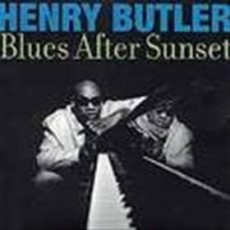
Henry Butler was born September 21, 1949 in New Orleans, Louisiana. Blinded by glaucoma in infancy and his musical training began at the Louisiana State School for the Blind, where he learned to play valve trombone, baritone horn and drums before focusing his talents on singing and piano,
Butler was mentored at Southern University in Baton Rouge by clarinetist and educator Alvin Batiste. He later earned a master’s degree in music at Michigan State University in 1974, receiving the MSU Distinguished Alumni Award in 2009.
Due to the devastation of his home and his vintage 1925 Mason & Hamlin piano by Hurricane Katrina, Henry moved to first Boulder then Denver, Colorado but by 2009 he relocated to New York City. He has pursued photography as a hobby since 1984,and his methods and photos are featured in a 2010 HBO2 documentary, Dark Light: The Art of Blind Photographers, that aired. His photographs also have been shown in galleries in New Orleans.
Pianist Henry Butler has recorded and released nine albums as a leader for Impulse, Windham Hill and Basin Street Records and as a sideman with James Carter and Corey Harris. He joins the lineage of Crescent City pianists like Professor Longhair, James Booker, Tuts Washington and Jelly Roll Morton. He continues to perform and record in a variety of styles of music.
Take A Dose On The Road
Daily Dose Of Jazz…
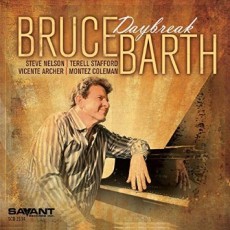
Bruce Barth was born September 7, 1958 in Pasadena, California. He started banging on the piano almost before he could walk. By the age of five he started piano lessons though he preferred to play by ear. When he was eight his family moved to New York where he studied piano and musicianship with Tony and Sue LaMagra for the next decade. Turning 15 his older brother Rich gave him his first jazz record, Mose Allison’s Back Country Suite. The young lad fell in love with both the music and the genre and inspired, he taught himself to play jazz by listening to records and imitating his many favorite pianists and horn players.
He went on to study privately with Norman Simmons and Neil Waltzer, and eventually enrolled in New England Conservatory in Boston, where he studied with Jaki Byard, Fred Hersch, and George Russell. Barth’s first professional recording was Russell’s masterpiece, The African Game, captured live on Blue Note Records. Arriving on the New York jazz scene in 1988, he soon joined tenor saxophonist Stanley Turrentine and their musical collaboration spanned a decade. Shortly thereafter, he toured Japan with Nat Adderley, and toured Europe and recorded with Vincent Herring’s quintet with Dave Douglas.
In 1990, Bruce joined the Terence Blanchard Quintet; the band toured extensively, and also recorded six CDs, as well as several movie soundtracks. In 1992, he played piano on-screen in Spike Lee’s Malcolm X. While in Blanchard’s band, he recorded his first two CD’s as a leader, In Focus and Morning Call; both were chosen for the New York Times’ top ten lists.
Throughout his professional life, Bruce has performed and collaborated with Tony Bennett, Steve Wilson, Terell Stafford, Luciana Souza, and Karrin Allyson, David Sanchez, James Moody, Phil Woods, Freddie Hubbard, Tom Harrell, Branford Marsalis, Wynton Marsalis, Art Farmer, Victor Lewis, John Patitucci, Lewis Nash, the Mingus Big Band, Tim Armacost, Scott Wendholt, Dave Stryker, Carla Cook, Paula West, Rene Marie, Luis Bonilla, Doug Weiss, Ugonna Okegwo, Montez Coleman, Dana Hall and Dayna Stephens, among numerous others.
As an educator pianist Bruce Barth is on the jazz faculty of Temple University, has taught at Berklee College of Music, Long Island University, currently gives private lessons to City College University and New School students, and has participated in many workshops, clinics, and seminars in the U. S. and abroad. To date he has performed on over one hundred recordings and movie soundtracks, including ten as a leader, is a Grammy nominated producer, and has served two years on the panel for the U.S. State Department “Jazz Ambassadors” program,. He continues to play solo piano, lead an all-star septet and composed for a variety of ensembles.
Take A Dose On The Road
More Posts: piano
Daily Dose Of Jazz…
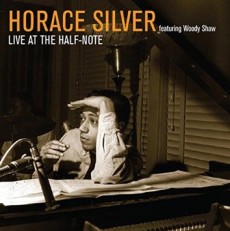
Horace Silver was born Horace Ward Martin Tavares Silva on September 2, 1928 in Norwalk, Connecticut to a mother from Connecticut and a father from Maio, Cape Verde. He began playing the piano as a child, receiving classical music lessons and Cape Verde folk music from his father. When he turned 11 he became interested in becoming a musician, after hearing the Jimmie Lunceford Orchestra.
From ninth grade Silver played tenor saxophone in the Norwalk High School band and orchestra, influenced by Lester Young. He played gigs locally on both instruments while still at school and around 1946 he moved to Hartford, Connecticut, taking a regular job as house pianist in a nightclub. His big break came around 1950, backing saxophonist Stan Getz at a Hartford club. Liking what he heard, Getz took Silver’s band on the road. With Getz he made his recording debut on the Stan Getz Quartet album, along with bassist Joe Calloway and drummer Walter Bolden.
The following year Horace left Getz, moving to New York City and worked at Birdland on Monday nights. During that year, he met the executives of Blue Note Records, eventually signed with them, and remained there until 1980. He also co-founded the Jazz Messengers with Art Blakey.
From 1951 he free-lanced around New York, recorded mostly his own compositions with his trio, featuring Blakey on drums and Gene Ramey, Curly Russell or Percy Heath on bass. Throughout his career he would record with Clifford Brown, Lou Donaldson, Kenny Dorham, Hank Mobley, Junior Cook, Blue Mitchell, Louis Hayes, Carmell Jones, Joe Henderson, Woody Shaw, Tyrone Washington, Michael and Randy Brecker, Lee Morgan, Benny Golson, Donald Byrd and Miles Davis All Stars.
He music reflected the social and cultural upheavals of the 60s and 70s as he briefly played electric piano and including lyrics in his compositions, and his interested in spiritualism also came into his music.
He received a National Endowment for the Arts Jazz Masters Award, recorded his final studio session in 1998 titled Jazz Has A Sense of Humor, was awarded the President’s Merit Award by the National Academy of Recording Arts and Sciences, penned his autobiography Let’s Get to the Nitty Gritty: The Autobiography of Horace Silver and published by University of California Press, and many of his compositions have become jazz standards.
Horace Silver, whose early influences were Bud Powell, Art Tatum, Teddy Wilson, Nat King Cole and Thelonious Monk, and who and influence for Bobby Timmons, Le McCann, Ramsey Lewis and Cecil Taylor, passed away of natural causes in New Rochelle, New York on June 18, 2014. The pianist and composer known for his distinctive playing style and pioneering compositional contributions to hard bop, featured surprising tempo shifts from aggressively percussive to lushly romantic merged with funk long before that word could be used in polite company.
Inspire A Young Mind
More Posts: piano