

Daily Dose Of Jazz…
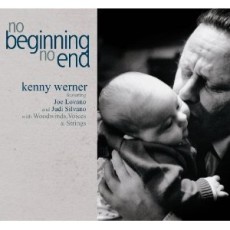
Kenny Werner was born on November 19, 1951 in Brooklyn, New York and by four was a member of a song and dance group. He started piano lessons at seven and by the time he turned 11, he recorded a single with a fifteen-piece orchestra and appeared on television playing stride piano. He attended the Manhattan School of Music as a concert piano major and later transferred to the Berklee School of Music.
Upon graduation he travelled working in Brazil and Bermuda before returning to New York where he formed a trio with drummer Gary Berkowitz and bassist Alex Peglise. In 1977 he recorded first LP that featured of the music of Bix Beiderbecke, Duke Ellington, James P. Johnson and George Gershwin and later that year with Charles Mingus on “Something Like A Bird”.
By the early 80s he toured extensively and recorded with Archie Shepp, recorded his own solo album of original compositions titled “Beyond the Forest of Mirkwood”, followed by a recording of the sounds heard coming from his Brooklyn-based studio – a hotbed of late-night jam sessions, titling the record after his address, 298 Bridge Street. In 1984 he joined the Mel Lewis Orchestra, began performing more in Europe and New York City as a leader and in duos with such notables as Rufus Reid, Ray Drummond, Jaki Byard also doing stints in the groups of Eddie Gomez, Tom Harrell, Joe Lovano and many others.
Since 1989 he has served as pianist, arranger and musical director for the noted film, television and Broadway star, Betty Buckley, has performed and recorded with Toots Thielemans mostly in duo settings but in trio with Oscar Castro-Neves and quartet with Airto Moreira. He has been nominated for a Grammy, has received performance grants from the NEA, a Guggenheim Fellowship Award for the 2010 release “No Beginning No End”, was commissioned to compose and conduct a memorial piece for Duke Ellington, and has been honored with the distinguished Composer award.
Kenny has a catalogue of twenty albums and another six as a sideman composer chops have had him writing compositions for the Mel Lewis Orchestra, the Vanguard Jazz Orchestra, Cologne Radio Jazz Orchestra, the Danish Radio Jazz Orchestra, the Metropole Orchestra and the Umo Jazz Orchestra and most recently has joined Quincy Jones. He is a published author of “Effortless Mastery” that features the physical, technical, psychological and spiritual aspects of being an artist and this publication has garnered him requests as a teacher and clinician from universities around the world, while maintaining an Artist-in-Residence at New York University.
Daily Dose Of Jazz…
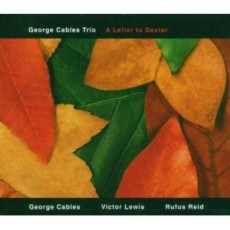
George Andrew Cables was born November 14, 1944 in New York City and was classically trained as a youth. He discovered jazz while attending the New York High School for Performing Arts, smitten by the freedom of expression. But unlike most musicians who are influenced by a single pianist, George listened to the whole bands of Miles and Trane and how they held together.
By 1964 he was playing in a band called The Jazz Samaritans that included Billy Cobham, Lenny White and Clint Houston. Playing gigs around New York at the Top of the Gate, Slugs, and other clubs attracted attention to Cables’ versatility and before long he had recorded with tenor saxophonist Paul Jeffrey, played with Max Roach and earned a brief 1969 tenure at the piano bench with Art Blakey and the Jazz Messengers and later with Sarah Vaughan, Tony Williams, Roy Haynes and Dizzy Gillespie.
A 1969 tour with tenor titan Sonny Rollins took Cables to the West Coast and by 1971 he became a significant figure in the jazz scenes of Los Angeles, where he first resided, and San Francisco, where he also lived. Collaborations and recordings with tenor saxophonists Sonny Rollins and Joe Henderson, trumpeters Freddie Hubbard and Woody Shaw, and vibist Bobby Hutcherson made Cables’ wide-ranging keyboard skills, often on electric piano, amply evident. Demand for his sensitive accompaniment increased and by the end of the 1970s, Cables was garnering a reputation as everyone’s favorite sideman.
Perhaps the most pivotal turn came when Dexter Gordon invited Cables into his quartet in 1977. The two years he spent with the tenor giant ignited Cables’ passion for the acoustic piano and immersed him in the bebop vocabulary. But the longest standing relationship Cables developed in the late seventies was with alto saxophonist Art Pepper, becoming his favorite pianist.
George Cables has emerged as a major voice in modern jazz and currently performs and records as a soloist, with trio and larger ensembles, and as a clinician in college jazz programs in addition to composing and arranging for his own albums and others.
More Posts: piano
Daily Dose Of Jazz…
Hampton Hawes was born November 13, 1928 in Los Angeles, California and his first experience at the piano was as a toddler sitting on his mother’s lap while she practiced. He was reportedly able to pick out fairly complex tunes by the age of three. Entirely self-taught and influenced by Earl Hines, Bud Powell and Nat King Cole, by his teens Hawes was playing with the leading jazz musicians on the West Coast, including Dexter Gordon, Wardell Gray, Art Pepper, Shorty Rogers and Teddy Edwards. His second professional job, at 19, was playing for eight months with Howard McGhee’s Quintet at the Hi De Ho Club, in a group that included Charlie Parker, who became a great influence on his playing.
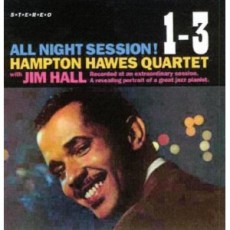
After serving in the U.S. army in Japan from 1952–1954, Hampton formed his own trio, with the bassist Red Mitchell and drummer Chuck Thompson. The subsequent three-record “Trio” sessions made by this group in 1955 for Contemporary Records were considered some of the finest records to come out of the West Coast at the time. The following year he added guitarist Jim Hall for the “All Night Sessions” that produced three records made during a non-stop recording session at the Contemporary Studios in Los Angeles.
In 1956, Hawes won the “New Star of the Year” award in Down Beat magazine, “Arrival of the Year” in Metronome magazine and the following year Hawes recorded in New York City with Charles Mingus on the album “Mingus Three”.
Struggled for many years with a heroin addiction and became the target of a federal undercover operation in Los Angeles in 1958. The DEA bargained that Hawes would inform on dealers in L.A. rather than risk a successful career. Coerced into selling a small amount of heroin to an undercover agent, he was arrested on his 30th birthday. Refusing to talk landed him a twice the mandatory minimum, ten-year sentence at Fort Worth Medical Facility, a federal prison hospital. However, after serving three years, in 1963 he was granted Executive Clemency by President Kennedy in 1963, the 42nd of only 43 such pardons given in the final year of Kennedy’s presidency.
After his release from prison, Hampton resumed playing and recording and during a world tour in 1967-68, the pianist was surprised to discover that he had become a legend among jazz listeners in Europe, Asia and the Middle East. During a ten-month period overseas he recorded nine albums, played sold out shows and concert halls in ten countries, and was covered widely in the press, appearing on European television and radio.
As a pianist Hawes’s style is instantly recognizable – for its almost unparalleled swing, unique approach to time and harmony, and its depth of emotional expression, particularly in a blues context. Hawes influenced a great number of other pianists including Andre Previn, Oscar Peterson, Horace Silver, Claude Williamson, Pete Jolly, Toshiko Akiyoshi and others.
Pianist Hampton Hawes died suddenly of a brain hemorrhage on May 22, 1977 at 48 years old. In 2004, the City Council of Los Angeles passed a resolution declaring November 13th “Hampton Hawes Day”.
More Posts: piano

Daily Dose Of Jazz…
Arturo Sandoval was born in Artemisa, Cuba on November 6, 1949 and began to play music at age 12 in the village band. After playing many instruments, he fell in love with the trumpet. In 1964, he began three years of serious classical trumpet studies at the Cuban National School of Arts. By the age of 16 he had earned a place in Cuba’s all-star national band and was totally immersed in jazz influenced by Charlie Parker, Clifford Brown and with Dizzy Gillespie as his idol and later mentor and colleague.
In 1971 he was drafted into the military. Luckily, Sandoval was still able to play with the Orquesta Cubana de Musica Moderna. In Cuba, Sandoval co-founded the band Irakere with Chucho Valdes and Paquito D’Rivera. They quickly became a worldwide sensation. Their appearance at the 1978 Newport Jazz Festival introduced them to American audiences and garnered them a recording contract with Columbia Records.
Arturo defected to the United States while touring in Spain with Dizzy in 1990, becoming a naturalized citizen in 1999 and has enjoyed a successful career. He has played with Woody Herman, Herbie Hancock, Woody Shaw, Stan Getz, Celine Dion, Tito Puente, Patti LaBelle, Frank Sinatra, Paul Anka, Gordon Goodwin and numerous others.
His life was the subject of the 2000 TV film For Love or Country: The Arturo Sandoval Story, starring Andy Garcia. He currently continues to perform, tour and record around the globe.
More Posts: flugelhorn,piano,trumpet
Daily Dose Of Jazz…
Joe Turner was born Joseph H. Turner on November 3, 1907 in Baltimore, Maryland. He was a stride and jazz pianist, not to be confused with blues singer Big Joe Turner. He started to learn the piano from his mother at age five and began to make a name for himself in Harlem as a teenager shortly after his move to New York in 1925.
Joe got his first big break in 1928 when Benny Carter hired him as part of his orchestra. He followed this with playing in Louis Armstrong’s group. He was an accompanist to Adelaide Hall with whom he toured Europe in 1931 where he remained through 1939 when war broke out.
Tuner returned to the States and worked as a singer, played with Sy Oliver’s band, then Rex Stewart until after the war. He went back to Europe passing through Hungary and Switzerland before settling in Paris and occasionally returning to the U.S. to perform.
He was the last major stride pianists to survive the era following in the footsteps of James P. Johnson and Fats Waller. He had a superb technique and fine sense of swing, recording a handful of albums. Joe Turner passed away of a heart attack on July 21, 1990 in Paris, France at age 82.

More Posts: piano