

Daily Dose Of Jazz…
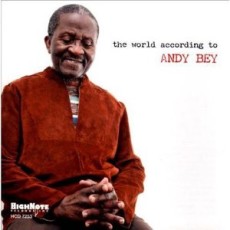
Andrew W. Bey was born October 28, 1939 in Newark, New Jersey. Although he received piano and singing lessons later on, he began playing by ear at the age of three. In the early 50s Andy got his initial professional exposure working on a television show “Startime” with Connie Francis and sang for Louis Jordan. He went on to form a trio with sisters Salome and Geraldine called “Andy and The Bey Sisters”. They recorded various sides and released two albums on the Prestige label and one on RCA. The group parted in 1965.
In the Seventies he worked with the Thad Jones/Mel Lewis Orchestra, collaborated with musicians like Stanley Clarke and also did notable work with Horace Silver and Gary Bartz. Later he recorded an album titled “Experience And Judgment” which had Indian influences. After that period he returned to hard bop and also recorded covers of music by non-jazz musicians.
In 1994, openly gay, Andy was diagnosed HIV-positive, but as of yet it has not interrupted his career. Colleague Herb Jordan assisted him with a resurgence of his recording career with “Ballads, Blues, & Bey” in 1996, returning him to prominence. Since then he has released five additional albums with his latest 2013 offerings titled “Chillin’ With Andy Bey” and “World According To Andy Bey”. Vocalist and pianist Andy Bey continues to perform, record and tour.
Daily Dose Of Jazz…
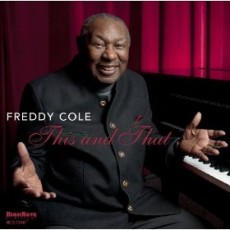
Freddy Cole was born Lionel Frederick Cole on October 15, 1931, to Edward and Paulina Nancy Cole and is the youngest sibling of musicians Eddie, Ike and Nat. Growing up in Chicago he began playing piano at age six, Cole hoped for a career with the NFL. But a hand injury ended his dream and the teenager began playing and singing in Chicago clubs. Although he was ready to hit the road at 18, his mother intervened and he continued his musical education at Chicago’s Roosevelt Institute before moving to New York City in 1951. While in New York, Cole studied at the Juilliard School of Music and went on to get a master’s degree at the New England Conservatory of Music.
The small Chicago-based label, Topper Records, released Freddy’s first single, “The Joke’s On Me” in 1952. A sophomore single, “Whispering Grass” on the OKeh label, was a moderate hit in 1953. He later spent several months on the road with Johnny Coles and Benny Golson in the Earl Bostic band before returning to hone his skills in the bistros of New York. He went on to work with Grover Washington, Jr. and to record jingles for various companies, including Turner Classic Movies.
During the 1970s, Cole recorded several albums for European and English based labels. He was the subject of the 2006 documentary “The Cole Nobody Knows” by filmmaker Clay Walker and is a member of the Steinway Artist roster. He has been inducted into the Georgia Music Hall of Fame in 2007.
Freddy cites his influences as John Lewis, Oscar Peterson, Teddy Wilson and Billy Eckstine, the latter being the subject of his release, “Freddy Cole Sings Mr. B”, that was nominated for a Grammy Award. When speaking of Eckstine, Cole recalled, “He was a fantastic entertainer. I learned so much from just watching and being around him.”
With over two-dozen albums as a leader and numerous collaborations, jazz pianist and vocalist Freddy Cole leads his quartet that holds down a rigorous schedule that continually tours the United States, Europe, South America and the Far East.
Daily Dose Of Jazz…
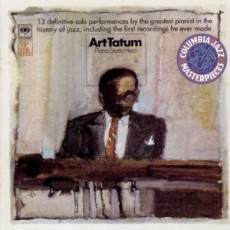
Arthur Tatum, Jr. was born in Toledo, Ohio on October 13, 1909. His father was a guitarist and his mother played piano. A prodigy with perfect pitch, Tatum learned to play by ear, picking out church hymns by the age of three, learning tunes from the radio and copying piano-roll recordings his mother owned. As a child he was also very sensitive to the piano’s intonation and insisted it be tuned often. He developed an incredibly fast playing style, without losing accuracy.
Suffering from infancy with cataracts that left him blind in one eye and only very limited vision in the other, Art had a number of surgical procedures to improve his eye condition but lost some of the benefits when he was assaulted in 1930. He enrolled in the Columbus School for the Blind and studied music, piano and learned Braille. Drawing inspiration from pianists James P. Weldon and Fats Waller, who exemplified the stride piano style, he also identified with the more modern style of Earl Hines.
By the age of 19, he was playing with singer Jon Hendricks at the Waiter’s and Bellmen’s Club. As word of Tatum spread, national performers including Duke Ellington, Louis Armstrong, Joe Turner and Fletcher Henderson when passing through Toledo would make it a point to drop in to hear the piano phenomenon. However, the major event that propelled his meteoric rise to success was his appearance at a 1933 cutting contest at Morgan’s Bar in New York City that included Waller, Johnson and Willie “The Lion” Smith. Standard contest pieces included Johnson’s “Harlem Strut” and “Carolina Shout” and Fats Waller’s “Handful of Keys.” Tatum triumphed with his arrangements of “Tea For Two” and “Tiger Rag”, in a performance that was considered to be the last word in stride piano. Tatum’s debut was historic because he outplayed the elite competition and heralded the demise of the stride era.
Tatum went on to have a prolific performing and recording career being widely acknowledged as one of the greatest jazz pianists of all time. The virtuoso, while piano was his most obvious skill, he also had an encyclopedic memory for Major League Baseball statistics. Art Tatum passed away at age 47 from kidney failure on November 5, 1956 in Los Angeles, California.
More Posts: piano
Daily Dose Of Jazz…
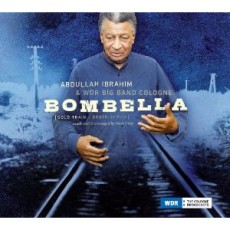
Abdullah Ibrahim was born October 9, 1934 in Cape Town, South Africa, formerly known as Adolph Johannes Brand, and as Dollar Brand. He first received piano lessons at age seven, was an avid consumer of jazz records brought by American sailors, and was playing jazz professionally by 1949. In 1959 and 1960, he played alongside Kippie Moeketsi and Hugh Masekela with The Jazz Epistles in Sophiatown, later recording the first jazz LP by Black South African musicians in 1960. Ibrahim then joined the European tour of the musical King Kong.
Moving to Europe in 1962, it was in the following year that Duke Ellington heard the Dollar Brand Trio at Zurich’s Africana Club at the request of Brand’s wife-to-be Sathima Bea Benjamin. As a result, Duke Ellington presents The Dollar Brand Trio was recorded at Reprise followed by a second session of the trio with Duke Ellington and Billy Strayhorn also on piano performing with Sathima as the vocalist. The recording, A Morning In Paris, remained unreleased until 1996 and then under Benjamin’s name. This led to wider appearances of the Dollar Brand Trio at many European festivals, as well as on radio and television.
Ibrahim has toured mainly in Europe, the United States, and South Africa, the band performing mainly in concert and club settings, and sometimes playing solo piano. Mainly playing the piano, he also plays the flute, saxophone, and cello, performing mostly his own compositions, although he sometimes performs pieces composed by others.
Abdullah Ibrahim to date has recorded more than forty albums as a leader, has written the soundtracks for a number of films, Chocolat and No Fear, No Die; and was a part of the 2002 documentary Amandla! – A Revolution in Four Part Harmony where he and others recalled the days of apartheid. He has ventured into orchestral performances with the inauguration of Nelson Mandela and the later initiation of the 18-piece Cape Town Jazz Orchestra in 2006.
A pianist and composer, Abdullah Ibrahim’s music reflects many of the musical influences of his childhood in the multicultural port areas of Cape Town, ranging from traditional African songs to the gospel of the AME church and ragas, to more modern jazz and other Western styles reflecting the influences of Thelonious Monk and Duke Ellington. He continues to perform, record and tour.
Daily Dose Of Jazz…
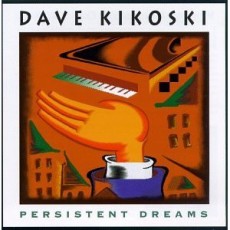
Dave Kikoski was born on September 29, 1961 in New Brunswick, New Jersey and learned to play the piano from his father who started him out at age six. In his early teens he played with his father, jazz and rock bands, and won “The New Jersey Allstate Jazz Competition”. Graduating from high school he headed to Boston’s Berklee School of Music, had a stream of trio gig while matriculating, met Pat Metheny who sat in on a gig and later recorded with him along with Roy Haynes.
Mid 80s found Dave in New York performing and recording several different dates through the end of the decade with Roy Haynes, Randy Brecker, Bob Berg and Billy Hart. In 1989 he recorded “Presage”, his first date as a leader with Eddie Gomez and Al Foster. His sophomore project “Persistent Dreams” featured a larger ensemble with Randy Brecker and Billy Hart. Since the nineties he has been kept busy as a sideman, session player and leader working with the likes of John Patitucci, Jeff “Tain” Watts, Red Rodney, Craig Handy, Ralph Moore, Didier Lockwood, Joe Locke, the Mingus Big Band, Victor Lewis, Roy Hargrove, Dave Holland and others.
Pianist Dave Kikoski has recorded sixteen albums as a leader and four as a sideman and co-collaborator, toured worldwide, played prestigious festivals and continues to perform, record, compose and expand his own voice.
More Posts: piano