

Daily Dose Of Jazz…
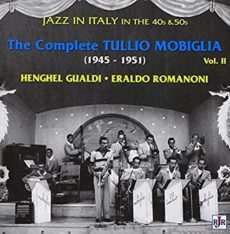
Tullio Mobiglia was born in Carezzano, Italy on April 12, 1911. In the early 1930s, after his studies at the conservatory in Genova and his first local engagements, he made several trips to the United States as a member of an on-board ship’s orchestra. Once in America, he made the acquaintance of the leading tenor saxophonists, including Coleman Hawkins.
In 1940 he visited Berlin, Germany as a member of the Italian Orchestra Mirador and in 1941 Tullio was with the Heinz Wehner Orchestra, and from April to November, he formed his own sextet played in the Patria Bar and was also in the Komiker Cafe’s musical revue Dreams About Me.
In the early Forties, Mobiglia’s orchestra played in the Rosita Bar and he also did some Film and Recordings during this period. Kramer combined musicians from two different generations to form his orchestra utilizing trumpeter Alfredo Marzaroli and saxophonist and clarinetist Francesco Paolo Ricci from the Twenties along with the younger members, Tullio Mobiglia, Eraldo Romanoni, Carlo Pecori, and the Triestino Angelo Bartole that performed during the Second World War II in Berlin.
After the war, he operated mainly in Italy, but also performed in Dortmund and Frankfurt Germany. From 1967 into the ’80s, he was active as a violin teacher at the Sibelius Conservatory in Helsinki, Finland.
Tullio directed a band without interruption in Berlin between 1941 and 1943, along with the Kramer’s Orchestra during the second half of the Thirties, the only stable group in the history of Italian Jazz between the years 1935 and ’43. He enlisted the brilliant and inventive guitarist Alfio Grasso to take part in the recordings.
Tenor saxophonist, violinist and bandleader Tullio Mobiglia passed away on July 24, 1991, aged 80, in Helsinki, Finland.

More Posts: bandleader,history,instrumental,jazz,music,saxophone,violin
Daily Dose Of Jazz…
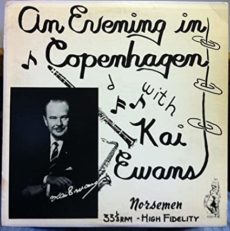
Kai Ewans was born Kai Peter Anthon Nielsen on April 10, 1906 in Hørsholm, Denmark. He initially played the banjo but switched to saxophone in 1923 when he formed the Blues Jazz Band. Disbanded in 1924, he joined Valdemar Eiberg’s ensemble from 1924–26.
Adopting the name Kai Ewans in 1927, he led Denmark’s first big band in 1927–28 and then led bands in Belgium and Germany through 1931. Following this, he played with Bernard Etté, Kai Julian, and Eric Tuxen through the mid-thirties.
He founded a new big band including mostly musicians from Tuxen’s ensemble in 1936, performed with Adelaide Hall, and recorded copiously with Benny Carter in the 1940s until the ensemble dissolved in 1947. Kai then emigrated to the United States, working in business before moving to California in 1956. From 1960 to 1964 he ran a restaurant with Carter in Beverly Hills. He later in the decade returned to Copenhagen to play again.
Retiring late in life to Connecticut, saxophonist Kai Ewans passed away on April 3, 1988.
More Posts: bandleader,history,instrumental,jazz,music,saxophone
Daily Dose Of Jazz…
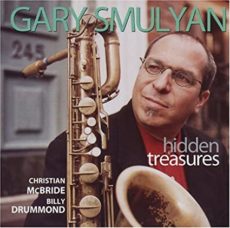
Gary Smulyan was born on April 4, 1956 in Bethpage, New York. He studied at Hofstra University before working with Woody Herman. His biggest influence is Pepper Adams. When Adams died, he recorded an album titled Homage, which featured eight pieces composed by Adams. He has recorded for Criss Cross Jazz and Reservoir Records, including the critically acclaimed High Noon: The Jazz Soul of Frankie Laine, featuring arrangements by Mark Masters.
He has recorded with Jimmy Knepper, Mulgrew Miller, Tommy Flanagan, Dick Oatts, Cedar Walton, Bob Stewart, John Clark, Joe Lovano, Joe Magnarelli, Mike LeDonne, Dennis Irwin, Christian McBride, Billy Drummond, Steve Johns, Peter Bernstein, Dominic Chianese, Gary Versace, Joseph Brent, Martin Wind, and Matt Wilson.
He has worked with an orchestra, as well as with Benny Green, Riccardo Fassi, Gerald Wilson, and Michael Benedict. Since 2006, Smulyan has served as artistic director at the Berkshire Hills Music Academy in South Hadley, Massachusetts.
Baritone saxophonist Gary Smulyan has consistently been ranked best baritone saxophone player in the annual Down Beat magazine readers’ and critics’ polls, continues to lead a trio with bassist Ray Drummond and drummer Kenny Washington.
More Posts: bandleader,composer,history,instrumental,jazz,music,saxophone
Daily Dose Of Jazz
Harry Howell Carney was born on April 1, 1910 in Boston, Massachusetts and grew up close to future bandmate Johnny Hodges. He began playing the piano at age seven, moved to the clarinet at 14, and added the alto saxophone a year later. His first professional gig was in Boston clubs.
Early influences on Carney’s playing included Buster Bailey, Sidney Bechet, and Don Murray. He also reported that, for his baritone saxophone playing, he “tried to make the upper register sound like Coleman Hawkins and the lower register like Adrian Rollini”
After moving to New York City he played a variety of gigs at the age of 17, and soon Carney was invited to join the Duke Ellington band for its performances in Boston in 1927. In October the same year, he recorded his first session with the band and having established himself, stayed with it for the rest of his life.
The band began a residency at the Cotton Club in New York at the end of the year, and Ellington added more personnel in 1928. Carney’s main instrument became the baritone saxophone and he became a dominant figure on the baritone in jazz, with no serious rivals on the instrument until the advent of bebop in the mid-1940s. Within the overall sound of the Ellington band, Carney’s baritone was often employed to play parts of harmonies that were above the obvious low pitching of the instrument; this altered the textures of the band’s sound.
In 1938, Carney was invited to play with Benny Goodman’s band at Carnegie Hall and the recordings were released as The Famous 1938 Carnegie Hall Jazz Concert. By 1944 he added the bass clarinet, co-composed Rockin’ in Rhythm and was usually responsible for executing the bubbling clarinet solo on this tune. In 1957, he was part of a band led by pianist Billy Taylor that recorded the album Taylor Made Jazz.
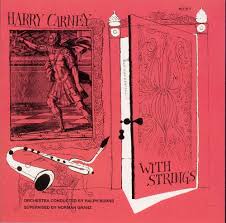
For over four decades Harry became the longest-serving player in Ellington’s orchestra. On occasions, he would serve as the band’s conductor, recorded one album as a leader and had many showpiece features written for him by the bandleader including his 1973 Third Sacred Concert built around his baritone saxophone.
Over the course of his career, he recorded with Rosemary Clooney, Ella Fitzgerald, Johnny Hodges, Jazz at the Philharmonic, and Billy Taylor. After Ellington’s death on May 24, 1974, some four months later baritone saxophonist and bass clarinetist Harry Carney, who was an early jazz proponent of circular breathing, passed away on October 8, 1974, in New York City.
More Posts: bandleader,history,instrumental,jazz,music,saxophone
Daily Dose Of Jazz…
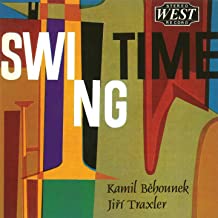
Kamil Běhounek was born on March 29, 1916 in Blatná, Czech Republic and was an autodidact on accordion, having learned to play by imitating recordings and BBC broadcasts. While studying law in Prague he began performing in clubs and recorded his first solo accordion date in 1936. By the late 1930s, he was working with the Blue Music Orchestra, Rudolf Antonin Dvorsky, Jiří Traxler, and Karel Vlach.
In 1943, he was forcibly compelled by the Nazis to go to Berlin and make arrangements for the bands of Lutz Templin and Ernst van’t Hoff. Upon returning to Czechoslovakia in 1945, he used some of these arrangements for his own band, then returned to Germany the following year, where he continued arranging for bandleaders such as Adalbert Luczkowski, Willy Berking, Heinz Schönberger, and Werner Müller.
He played with his own ensemble, including in Bonn, Germany and after 1948 he performed in West Germany at American soldiers’ clubs. Between 1968 and 1977 he recorded several albums of folk music but continued to play swing with his own groups. He also wrote an autobiography, Má láska je jazz (Jazz is my Love), which was published posthumously in 1986.
Bohemian accordionist, bandleader, arranger, composer, and film scorer Kamil Běhounek, who occasionally played tenor saxophone, passed away on November 22, 1983 in Bonn, Germany.

More Posts: accordion,arranger,bandleader,composer,film scorer,history,instrumental,jazz,music,saxophone