

Daily Dose Of Jazz…
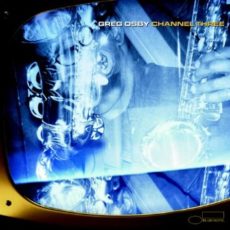
Greg Osby was born August 3, 1960 in St. Louis, Missouri. He majored in Jazz Studies at Howard University, then attended Berklee College of Music, studying with Andy McGhee. He played on Jack DeJohnette’s Special Edition, and has recorded with Steve Coleman, Jim Hall and Andrew Hill, thus setting the stage for Hill and Hall’s later appearance on his recording of The Invisible Hand.
He began recording under his own name in the Eighties on JMT Records, but his most celebrated work has been his run of records for the Blue Note label. Greg has followed in the footstep of many great bandleaders, discovering fresh talent and allowing players the opportunity to grow within his own band. He was responsible for giving exposure to the young pianist Jason Moran, who appeared on most of Osby’s 1990s albums including the live album Banned in New York and an experiment with adding a string quartet to the band, Symbols of Light.
Osby has contributed to the homages to Miles Davis’s 1970s electric jazz performed by Henry Kaiser and Wadada Leo Smith’s Yo Miles group and their double album Upriver. Not limiting himself to a strict jazz diet, in 2003 Osby toured North America with The Dead, a reincarnation of The Grateful Dead, and contributed in various lineups with Phil Lesh and Friends.
He has been featured in a series of magazine ads in Down Beat, JazzTimes and Saxophone Journal, and was named Playboy Magazine’s “Jazz Artist of the Year” in 2009. As an educator Greg is currently on faculty in the Ensemble Department at Berklee College of Music.
Since 1987 he has recorded nineteen albums as a leader and seven as a sideman working with Uri Caine, Steve Coleman, Robin Eubanks, Gary Thomas, CL Smooth, Joe Lovano, Stefon Harris, Jason Moran, Mark Shim, Gary Thomas, Andrew Hill, Jim Hall, Scott Colley and Teri Lynne Carrington.
Alto and soprano saxophonist Greg Osby continues to compose, record and perform mainly in the free jazz, free funk and M-Base idioms.

Put A Dose In Your Pocket

More Posts: saxophone
Daily Dose Of Jazz…
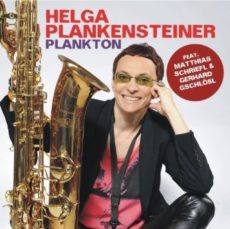
Helga Plankensteiner was born on August 1, 1968 in San Candido, Italy and studied classical saxophone at the Conservatory in Innsbruck under Florian Brambock, then jazz at the Conservatory of Trento. She would go on to study in various jazz workshops with Dick Oatts, Steve Slagle, Bobby Watson, Bob Bonisolo, Heinrich von Kalnein and Sandro Gibellini.
Helga expanded her talents to include vocals in her theater experience of the Threepenny Opera in addition to performing as a saxophonist for several other plays. She has been chosen by Musica Jazz in 2009 as one of the top ten rising talents, won the AMJ Big Band competition, and performed with the Orchestra Laboratorio of Trento with Matthias Ruegg, Bruno Tommaso, Maria Schneider, John Surman and Carla Bley.
She plays with the all-female saxophone quintet Girltalk, the Helga Plankensteiner Walter Civettini Quintet and the Unit Eleven Jazz Orchestra and. She is a permanent member of the Carla Bley Big Band, The Torino Jazz Orchestra and solos with Tom Harrell, Dusko Goykovich, Valery Ponomarev, Francesco Cafiso, Uri Caine, the Dani Felber Big Band and the Italian Sax Ensemble.
In addition, she conducts the ensemble Sweet Alps featuring soloists Gianluigi Trovesi, Florian Brambock, Michel Godard, Gianluca Petrella and Matthias Schriefl. Alto saxophonist Helga Plankensteiner continues to compose, record and perform at festivals worldwide.
Uplift Someone’s World
More Posts: saxophone
Daily Dose Of Jazz…
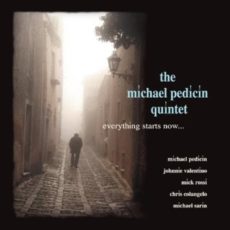
Michael Pedicin was born on July 29, 1947 in Bryn Mawr, Pennsylvania. He started playing at eight and joined a band at 15. His ability to read music and play alto, tenor, and soprano saxophone made him a sought-after session musician at Sigma Sound Studios. His session skills not only got him into the R&B side of music with Gamble & Huff but led to a self-titled debut solo album in 1980 on Philadelphia International Records that did well only in New York. His single You piqued CBS Records’ interest but ultimately they withdrew their offer when he demanded a three-record deal.
By 1981 the casinos and lounges of Atlantic City were calling his name and he moved there to pursue his musical dreams. Gigs were plentiful at first, but Atlantic City wasn’t Las Vegas, and many lounges discontinued their live entertainment and the saxophonist hit the road with Dave Brubeck for two years. He resurrected the Michael Pedicin Quartet after the stint and found work in Atlantic City’s revitalized lounges. He also started a talent agency, promoted major jazz acts, did a second album — City Song on the Optimism Records label and served as the musical director at different times for three casinos.
He formed Bayshore Music, a management company , recorded a third solo album, Angles, on Optimism that featured Peter Erskine and Micki Rossi. A fourth album, You Don’t Know What Love Is , featured the Holland, Dozier, and Gorman tune Forever, popularized by the Marvelettes and Marvin Gaye, that has been reissued by Peter Pan and Triloka Records.
Michael has worked with Lou Rawls and Maynard Ferguson, taught at Temple University, and started 12th Street Music with Sigma Sound engineer Joe Tarisa. The post-bop saxophonist Michael Pedicin continues to commute to Philadelphia for sessions, remains active on the jazz scene and composes, performs and records with his current quintet with drummer Vic Stevens, bassist Andy Lalasis, guitarist Johnnie Valentino and pianist Rick Germanson.
Give A Gift Of Jazz – Share
More Posts: saxophone
Daily Dose Of Jazz…
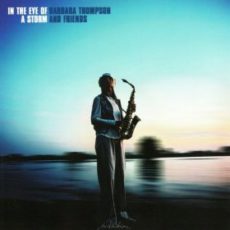
Barbara Gracey Thompson was born on July 27, 1944 in Oxford, United Kingdom. She studied clarinet, flute, piano and classical composition at the Royal College of Music, but it was the music of Duke Ellington and John Coltrane that caused her to shift her interests to jazz and saxophone.
Around 1970, Thompson she joined Neil Ardley’s New Jazz Orchestra and appeared on albums by Colosseum. Starting in 1975, she was a founding member of three bands, the first being the United Jazz and Rock Ensemble, with bandleaders Wolfgang Dauner, Volker Kriegel, Albert Mangelsdorff, Eberhard Weber, Ian Carr, Charlie Mariano, Ack van Rooyen and Jon Hiseman. The second was Barbara Thompson’s Jubiaba, a 9 piece Latin/rock band with Peter Lemer, Roy Babbington, Henry Lowther, Ian Hamer, Derek Wadsworth, Trevor Tomkins, Bill Le Sage and Glyn Thomas. The third, Barbara Thompson’s Paraphernalia, is her current working band with pianist Peter Lemer, vocalist Billy Thompson, bassist Dave Ball and Jon Hiseman on drums.
She was awarded the MBE in 1996 for services to music but due to her being diagnosed with Parkinson’s disease in 1997, she retired as an active saxophonist in 2001 with a farewell tour. Barbara went on to work exclusively as a composer exclusively, but returned to the stage in 2003 replacing the unwell Dick Heckstall-Smith during Colosseum’s “Tomorrow’s Blues” tour becoming a permanent member, and in 2005 she performed live with Paraphernalia in their “Never Say Goodbye” tour.
Thompson has worked with Andrew Lloyd Webber on musicals such as Cats, Starlight Express and Requiem. She has written several classical compositions, music for film and television, a musical of her own and has composed songs for her big band Moving Parts.
Sponsored By

www.whatissuitetabu.com
Daily Dose Of Jazz…
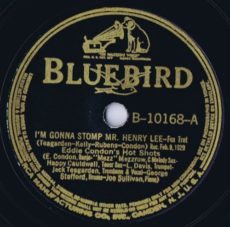
Happy Caldwell was born Albert W. Caldwell on July 25, 1903 in Chicago, Illinois. He began on clarinet at age 16, playing in the Eighth Illinois Regimental Band and soon after in an Army band. He studied to be a pharmacist but eventually gave up his medicinal studies for jazz.
He worked with Bernie Young early in the 1920s in Chicago, where he recorded for the first time in 1923 and began doubling on tenor saxophone. In the middle of the 1920s he played with Mamie Smith’s Jazz Hounds, Bobby Brown’s Syncopaters, Elmer Snowden, Billy Fowler, Thomas Morris, Willie Gant, and Cliff Jackson. By 1929 he had recorded with Louis Armstrong.
The 1930s saw him playing with Vernon Andrade, Tiny Bradshaw, and Louis Metcalfe, and leading his own band, the Happy Pals. He played at Minton’s in New York City for a short time before moving to Philadelphia, where he played with Eugene Slappy and Charlie Gaines. Returning to New York he put together a new ensemble in the Forties and continued to work in small settings for several decades. In the 1970s he played with Jimmy Rushing, including on international tours. Never leading his own sessions, clarinetist and tenor saxophonist Happy Caldwell, sometimes misspelled as Cauldwell, passed away on December 29, 1978 in New York City at age 75.
Take A Dose On The Road