

Daily Dose Of Jazz…
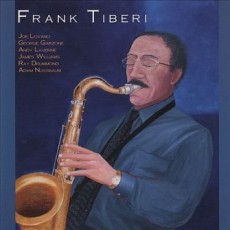
Frank Tiberi ws born December 4, 1928 in Camden, New Jersey. He plays the alto and tenor saxophone, clarinet, flute and bassoon. He has been performing and recording since the age of thirteen and has toured with Benny Goodman and Urbie Green, and has played with Dizzy Gillespie.
He is a part time professor at Berklee College of Music where he teaches improvisational techniques and pedagogy. He has served as the director for the Camden Jazz Festival. Tiberi specializes in modern and contemporary jazz techniques and has released EPs with fellow Berklee instructor George Garzone.
Saxophonist Frank Tiberi is currently the leader of the Woody Herman Orchestra. Herman handpicked him shortly before his death to lead the band. He has been doing so since 1987.

Dose A Day – Blues Away
More Posts: saxophone
Daily Dose Of Jazz…
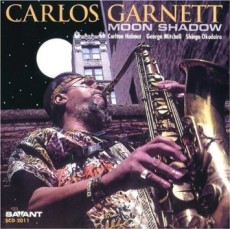
Carlos Garnett was born on December 1, 1938 in Red Tank, Panama Canal Zone. He became interested in jazz music after hearing the music of Louis Jordan and James Moody in film shorts He taught himself to play the saxophone as a teenager and played with soldiers from the nearby United States Army base. In 1957 he started playing in calypso and Latin groups.
After moving to New York in 1962 Garnett played in a rock ‘n’ roll group led by Leo Price. Around this time he also started learning music theory, being self-taught and having always played by ear. Jazz trumpeter Freddie Hubbard hired him in 1968 and introduced him to many New York musicians. His first recording was Hubbard’s 1969 album A Soul Experiment that contained two of his original compositions.
By the late 1960s and early 1970 Carlos played with Art Blakey’s Jazz Messengers, Charles Mingus and Miles Davis. He led his own group called the Universal Black Force, recording five albums between 1974 and 1977. In 1982 suffering from depression and drug abuse, he experienced a spiritual awakening and stopped playing music for years. He began performing again in 1991 and released the albums Fuego En Mi Alma, Under Nubian Skies and Moon Shadow.
In 2000 Garnett moved back to Panama, where he continues to perform actively and has assumed the role of Maestro, “Teacher”, to pass on to the next generation of young musicians in Panama, the music of jazz.
He has recorded with Russell Gunn, Dee Dee Bridgewater, Onaje Allan Gumbs, Mtume, Guilherme Franco, Norman Connors, Billy Hart, Kenny Kirkland, Anthony Jackson, Brad Jones, Andrew Hill and Pharoah Sanders.
As he continues to perform, he has performed in Japan, Austria and at three editions of the annual Panama Jazz Festival. The 9th Annual Panama Jazz Festival in 2012, organized by Panamanian pianist Danilo Perez, was dedicated to tenor saxophonist Carlos Garnett in recognition of his contribution to music.
Put A Dose In Your Pocket
More Posts: saxophone
Daily Dose Of Jazz…
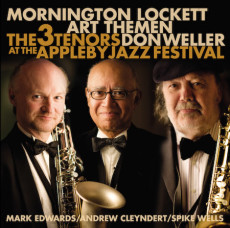
Art Themen was born Arthur Edward George Themen on November 26, 1939 in Manchester, England. He originally played the clarinet but after hearing the Dankworth Seven when he was sixteen and saxophonist Danny Moss winked at his cousin, he knew his path was with the saxophone. Dexter Gordon and Sonny Rollins initially influenced his style of playing, and later by Coleman Hawkins, Evan Parker and John Coltrane.
In 1958 he began his medical studies at the University of Cambridge, completed studies at St. Mary’s Hospital Medical School in London and in 1964 became a consultant specializing in orthopaedic medicine.
Themen started playing jazz with the Cambridge University Jazz Group alongside Lionel Grigson, Dave Gelly and Dick Heckstall-Smith. Around London he played with blues musicians Jack Bruce and Alex Korner, then with Peter Stuyvesant Jazz Orchestra in 1965 in Zurich, leading to his playing with Michael Garrick and Graham Collier’s Music.
1974 saw Themen entering on what was to be one of his central musical relationships when he started playing with Stan Tracey, touring with him worldwide and the United Kingdom. He also played and toured with musicians Nat Adderley, Ian Carr, George Coleman and Al Haig.
In 1995 he formed a quartet with pianist John Critchinson. Following his retirement as a consultant orthopaedic surgeon, saxophonist Art Themen has been concentrating on his jazz career and has recorded three albums with Al Haig, Peter King, Howard Riley, Mornington Lockett and Don Weller.
Dose A Day – Blues Away
More Posts: saxophone
Daily Dose Of Jazz…
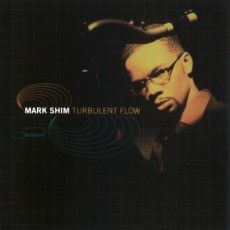
Mark Shim was born on November 21, 1973 in Kingston, Jamaica but raised in Canada from the age of eight months to five years. Then his family moved to Richmond, Virginia. He started playing tenor saxophonist in the seventh grade through high school. Graduating in 1991 he attended Virginia Commonwealth University and William Patterson College.
1994 saw Shim moving to Brooklyn, New York where he played and recorded with Hamiet Bluiett in Harlem. He then played with Elvin Jones, Mose Allison, Betty Carter, Greg Osby and the Mingus Big Band.
He recorded his debut album Mind Over Matter for Blue Note Records in 1998, with his sophomore project New Directions with Stefon Harris, Jason Moran and Greg Osby and Turbulent Flow released in 2000. Tenor saxophonist Mark Shim continues to perform, record and tour.
Give A Gift Of Jazz – Share
More Posts: saxophone
Daily Dose Of Jazz…
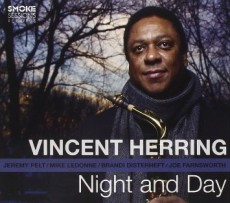
Vincent Herring was born November 19, 1964 in Hopkinsville, Kentucky. His formal musical education began at age 11, when he started playing saxophone in school bands and studying privately at Dean Frederick’s School Of Music in Vallejo, California. At age 16, he entered California State University at Chico on a music scholarship.
A year later, Vincent auditioned for a spot in the United States Military Academy Band Jazz Knights playing lead alto saxophone. He made the move to West Point, served one enlisted tour, which turned out to be a steppingstone to the New York jazz scene.
He first began touring Europe and the United States with Lionel Hampton’s big band. Since that turning point in his career Herring has recorded and performed over 200 sessions as a sideman working with Nat Adderley, Art Blakey and the Jazz Messengers, the Horace Silver Quintet, Jack DeJohnette’s Special Edition, Larry Coryell, Cedar Walton, Freddie Hubbard, Dizzy Gillespie, the Mingus Big Band, Nancy Wilson, the Roy Hargrove Big Band, Arthur Taylor, Dr. Billy Taylor, Carla Bley and the Phil Woods Sax Machine.
Vincent has been a special guest soloist with Wynton Marsalis and Lincoln Center as well as with Jon Faddis and the Carnegie Hall Big Band. As a leader he has recorded fifteen albums and taken bands to Japan and Europe, has appeared in nearly every major jazz festival in the world. Wearing his educator hat he gives clinics throughout Europe and the United States. He is currently performing with the Cannonball Legacy Band, which plays in jazz festivals, jazz clubs and occasionally small towns for benefit concerts.
Dose A Day – Blues Away