

Daily Dose Of Jazz…
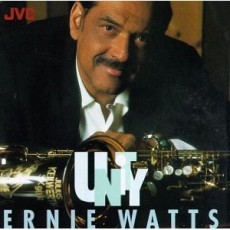
Ernie Watts was born Ernest James Watts on October 23, 1945 in Norfolk, Virginia. He began playing saxophone at thirteen, attended West Chester University and later matriculated through Berklee College of Music on a Downbeat scholarship. He toured with Buddy Rich in the mid-1960s, occupying one of the alto saxophone chairs along with Lou Marini.
Watts visited Africa on a US State Department tour with Oliver Nelson’s group, played tenor saxophone with the Tonight Show Band under Doc Severinsen for twenty years and was a featured soloist on many of Marvin Gaye‘s original Motown albums during the 1970s. A first-call musician he has sat in on many other pop and R&B sessions during 25 years in the studios in Los Angeles.
By the mid-1980s Ernie decided to rededicate himself to jazz, recording and touring with German guitarist and composer Torsten de Winkel, drummer Steve Smith and keyboardist Tom Coster. He would join bassist Charlie Haden‘s Quartet West, play saxophone on the Grease soundtrack, clarinet on The Color Purple and sax on the opening theme song of the popular 80s sitcom Night Court.
Watts has won two Grammy Awards as an instrumentalist, toured with the Rolling Stones, appeared in the 1982 film Let’s Spend The Night Together, was featured on Kurt Elling’s 2010 Grammy-winning album Dedicated To You, formed his own label Flying Dutchman Records, and tours Europe with his quartet.
With flute added to his instrument list, saxophonist Ernie Watts has released eighteen albums as a leader and nearly three dozen as a sideman working with Paul Anka, Patti Austin, Willie Bobo, Brass Fever, Moacir Santos, Donald Byrd, Gene Harris, Stanley Clarke, Carmen McRae, Randy Crawford, Gerald Wilson, Dizzy Gillespie, Bobby Hutcherson, Benny Golson, Milt Jackson, J. J. Johnson, Carole King, John Mayall, Sarah Vaughan, Bud Shank, Lalo Schifrin and Gábor Szabó among others. He continues to perform record and tour.

Daily Dose Of Jazz…
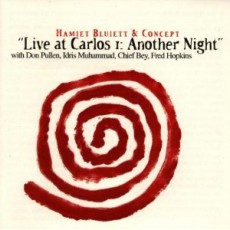
Hamiet Bluiett was born on September 16, 1940 in Brooklyn a.k.a. Lovejoy, Illinois, that was founded as a free black refuge community in the 1830s. As a child, he studied piano, trumpet, and clarinet, but was attracted most strongly to the baritone saxophone from the age of ten. He began his musical career by playing the clarinet for barrelhouse dances in Brooklyn, Illinois, before joining the Navy band in 1961. He attended Southern Illinois University Carbondale.
Following his time in the Navy, he returned to the St. Louis area in the mid-1960s. In the late 1960s Bluiett co-founded the Black Artists’ Group (BAG) in St. Louis, Missouri, comprised of a collective dedicated to fostering creative work in theater, visual arts, dance, poetry, film, and music. He led the BAG big band during 1968 and 1969.
Bluiett moved to New York City in 1969 and joined the Charles Mingus Quintet and the Sam Rivers large ensemble. In 1976 he co-founded the World Saxophone Quartet with two other BAG members, Julius Hemphill and Oliver Lake and David Murray. The group would quickly become jazz music’s most renowned saxophone quartet. He has remained a champion of the somewhat unwieldy baritone saxophone, organizing large groups of baritone saxophones.
In the 1980s, he also founded The Clarinet Family, a group of eight clarinetists playing clarinets of various sizes ranging from E-flat soprano to contrabass. Since the 1990s he has led a virtuosic quartet, the Bluiett Baritone Nation, made up entirely of baritone saxophones, with drum set accompaniment. His return to his hometown in 2002 affords him the opportunity to gig, perform with students from Neighborhood Music School in New Haven, Connecticut under the name of “Hamiet Bluiett and the Improvisational Youth Orchestra”.
Baritone saxophonist Hamiet Bluiett recorded over three-dozen albums and continued to perform, record and tour until his passing on October 4, 2018 at the age of 78 in St. Louis, Missouri.
Daily Dose Of Jazz…
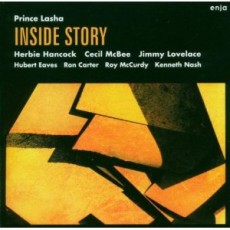
Prince Lasha (pronounced “La-shay“) was born William B. Lawsha on September 10, 1929 in Fort Worth, Texas. He came of age studying and performing alongside fellow I.M. Terrell High School students John Carter, Ornette Coleman, King Curtis, Charles Moffett and Dewey Redman.
Lasha moved to California during the 1950s. In the 1960s, Prince Lasha was active in the burgeoning free jazz movement, of which his Fort Worth cohort Ornette Coleman was a pioneer. Lasha worked closely with saxophonist Sonny Simmons , with whom he recorded two albums, The Cry and Firebirds no the Contemporary label, the latter receiving five stars and an AMG Albumpick at Allmusic. Later, he played with Harold Land.
Living to Europe for twenty years beginning in 1965, Lasha worked as a sideman appearing on recordings with Eric Dolphy, Elvin Jones/Jimmy Garrison Sextet featuring McCoy Tyner, and with Michael White. He also played with Steve Lacy , Paul Bley , Attila Zoller , Gary Peacock , and Barry Altschul. In the 1970s, Lasha and Simmons made additional recordings under the name Firebirds. In 2005, Lasha recorded the album The Mystery of Prince Lasha with the Odean Pope Trio.
From 1965, Lasha lived in Europe for two years, where In the 1970s, he recorded with the sextet of
Saxophonist, flautist and clarinetist Prince Lasha died on December 12, 2008, in Oakland, California. He left a small legacy of six recordings as a leader marking his place in jazz history.
Daily Dose Of Jazz…
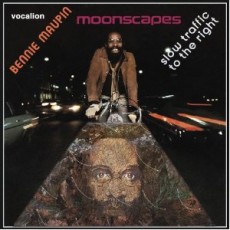
Bennie Maupin was born on August 29, 1940 in Detroit, Michigan and undertook extensive instrumental studies, both privately and at the Detroit Institute of Musical Art from age 14 until 1962. During this period his influences were Yusef Lateef, Wayne Shorter, John Coltrane and Sonny Rollins. By 1966 he was working with Roy Haynes followed by a two-year tenure with Horace Silver in ’68.
Maupin joined Herbie Hancock’s Mwandishi sextet and his Headhunters band, and then joined Miles Davis for the recording of Bitches Brew. He has also performed on several Meat Beat Manifesto albums.
Bennie is noted for having a harmonically advanced, “out” improvisation style, and as a composer, he has the ability to create brief melodies and song forms that create vast landscapes for improvisation.
Multireedist Bennie Maupin was also a member of the group “Almanac” with Cecil McBee, has recorded a half dozen albums as a leader and another two-dozen as a sideman. He has worked with the likes of Lee Morgan, Eddie Henderson, Marion Brown, John Beasley, Mike Clark, Jack DeJohnette, Darek Oles, Lonnie Smith, McCoy Tyner and Lenny White. He appears in the 2016 biopic I Called Him Morgan about trumpeter Lee Morgan and continues to pursue his career in music from jazz to rock to abstraction.
In January 2025 he lost his home, instruments, and other belongings in the Eaton Wild Fire in Los Angeles, California. Flutist, clarinetist and saxophonist Bennie Maupin continues to perform and record.
Daily Dose Of Jazz…
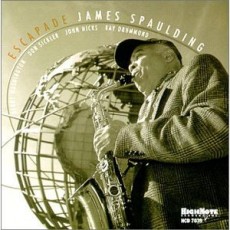
James Spaulding was born July 30, 1937 in Indianapolis, Indiana and started playing bugle while in grade school. He later learned to play trumpet and saxophone and flute. While in high school he studied clarinet and made his professional debut around his hometown in a rhythm and blues band.
After a three-year enlistment in the Army he settled to Chicago in 1957 leading his own groups. It was during this period he joined the Sun Ra Arkestra, making several recordings and remaining through 1959, while furthering his studies of flute at the Chicago Cosmopolitan School of Music. Spaulding subsequently freelanced as a studio musician and occasionally led his own groups before returning to Indianapolis in 1961.
Relocating to New York City in 1963, he recorded extensively for Blue Note Records as a sideman, and led several sessions as a leader for Storyville, Muse, 32 and High Note. He was also a member of the World Saxophone Quartet and recorded with Grant Green, Freddie Hubbard, Bobby Hutcherson, Lee Morgan, David Murray, Duke Pearson, Sam Rivers, Pharoah Sanders, Wayne Shorter, Stanley Turrentine, Larry Young and others.
As an educator he taught flute as an adjunct professor at Livingston College in New Jersey. Alto saxophonist James Spaulding continues to perform and record.