


Daily Dose Of Jazz…
Anton Schwartz was born July 16, 1967 in New York City. He attended the Dalton School, studied jazz privately with Warne Marsh and Eddie Daniels, and went on to pursue a degree in advanced mathematics from New York and Columbia Universities, and computer science at Stanford University where he pursued research in artificial intelligence. He soon left academia to become a full-time musician.
The saxophonist and composer has released five CDs as a leader on his Antonjazz label that has garnered notoriety amongst jazz enthusiasts. His 2006 release, Radiant Blue, landed in the Top Five on the U.S. jazz radio charts and featured sidemen Peter Bernstein and Taylor Eigsti. His most recent release “Flash Mob” has trumpeter Dominick Farinacci and pianist Taylor Eigsti joining him.
Anton performs periodically at Yoshi’s, has been a guest on NPR’s JazzSet and has been a soloist with the Boston Pops Orchestra. He returned to academia and has held artist-in-residence at Harvard University and The Brubeck Institute. He is currently a faculty member of the Jazzschool at the California Jazz Conservancy in Berkeley, California and The Stanford jazz Workshop.

Put A Dose In Your Pocket
Daily Dose Of Jazz…
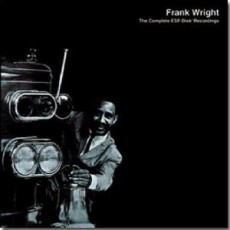
Frank Wright was born on July 9, 1935 in Grenada, Mississippi but grew up in Cleveland, Ohio. In his youth he started his musical career playing electric bass with Bobby “Blue” Bland, B. B. King and R&B bands in Memphis and Cleveland. But it was his meeting of Albert Ayler that he switched to the tenor saxophone, embraced the free jazz movement and moved to New York City in the mid-60s.
During this decade he played with some of the biggest names in avant-garde jazz including briefly with John Coltrane. He also made his first recordings as a leader for the ESP label but not finding an appreciative audience, Frank moved to Europe and spent the remainder of his life there.
Wright recorded for a few small labels, performed free jazz with expatriate American musicians and the European leaders of the avant-garde, and returned to the U.S. occasionally to perform with Cecil Taylor and the Art Ensemble of Chicago.
Tenor and soprano saxophonist and bass clarinetist Frank Wright, known for his frantic style, passed away on May 17, 1990.
Jazz Is Global – Share
Daily Dose Of Jazz…
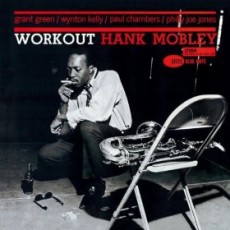
Henry (Hank) Mobley was born on July 7, 1930 in Eastman, Georgia but was raised in Elizabeth, New Jersey. Early in his career, he worked with Dizzy Gillespie and Max Roach, and then took part in one of the landmark hard bop sessions, alongside Art Blakey, Horace Silver, Doug Watkins and Kenny Dorham, resulting in the release of Horace Silver and the Jazz Messengers and the Jazz Messengers. When they split in ’56, Hank and Silver continued their collaboration in the 50s.
During the 1960s, he worked chiefly as a leader, recording over 20 albums for Blue Note Records between 1955 and 1970 and playing many of the most important hard bop players such as Grant Green, Freddie Hubbard, Sonny Clark, Wynton Kelly and Philly Joe Jones, along with a particularly productive partnership with Lee Morgan. He spent a brief time with Miles Davis in 1961 replacing John Coltrane.
Hank was a major voice on tenor saxophone, known for his melodic playing, is widely recognized as one of the great composers of originals in the hard-bop era, with interesting chord changes and room for soloists to stretch out.
He was forced to retire in the mid-1970s due to lung problems and although he worked two engagements at the Angry Squire in New York City in ‘85 and ‘86 in a quartet with Duke Jordan. He recorded as a leader for Blue Note, Prestige and Savoy record labels leaving history thirty-two albums and another fifty-six sitting in the sideman seat.
A few months later tenor saxophonist and composer Hank Mobley, who soared in the hard bop and soul jazz genres with his laid-back, subtle and melodic delivery, passed away from pneumonia on May 30, 1986.
Give The Gift Of Knowledge
More Posts: saxophone
Daily Dose Of Jazz…
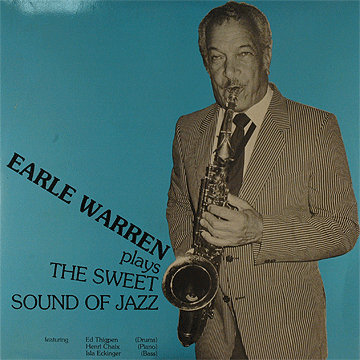
Earle Warren was born on July 1, 1914 in Springfield, Ohio. He was the primary alto saxophonist and occasional singer in the Basie orchestra in its formative years and its heyday, from 1937 to the end of the 1940s. After the break-up of Basie’s 1940s band, in 1949, he worked with former Basie trumpeter, Buck Clayton.
Earle also played some rock´n roll working for Alan Freed in Alan Freed’s Christmas Jubilee, December 1959, which was the very last big Alan Freed show before payola put an end to the legendary Freed. He also appeared in the 1970s jazz film of Count Basie and his band, “Born to Swing”.
In his later years, Warren performed often at the West End jazz club at 116th and Broadway in New York City, helming a band called The Countsmen, which also featured fellow former Basie-ite Dicky Wells on trombone and Peck Morrison on bass. He lived part of the time in Switzerland where he fathered a child in a May/September romance. Alto saxophonist Earle Warren passed away on June 4, 1994.
Put A Dose In Your Pocket
Daily Dose Of Jazz…
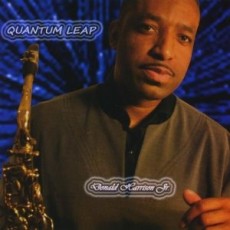
Donald Harrison, Jr. was born June 23, 1960 in New Orleans, Louisiana. He studied at the New Orleans Center for Creative Arts, and then went on to study at Berklee College of Music. In the 80s he became a Jazz Messenger, played with Roy Haynes, Jack McDuff, Terence Blanchard and Don Pullen, and was part of the re-formed Headhunters band in the Nineties.
By1991 Don had recorded “Indian Blues” capturing the sound and culture of New Orleans’ Congo Square in a jazz context and by mid-decade created the “Nouveau Swing” jazz style, merging the swing beat with many of today’s popular dance styles of music as well as those prominent from his cultural experiences in his hometown.
Harrison has performed in the smooth jazz arena, is a producer, singer and rapper in the traditional Afro-New Orleans Culture and hip-hop genres with his group, The New Sounds of Mardi Gras and is the Big Chief of the Congo Nation Afro-New Orleans Cultural Group that keeps alive the traditions of Congo Square.
Not limited by his music crossing genres in his compositions and playing, Don has created large orchestral pieces, was featured in Spike Lee’s HBO documentary “When The Levees Broke”, directed the New Jazz School for the Isidore Newman School, is the director of Tipitina’s Intern Program and has nurtured a number of young musicians including his nephew and Grammy-nominated trumpeter Christian Scott, Mark Whitfield, Cyrus Chestnut, Christian McBride and the Notorious B.I.G.
Give The Gift Of Knowledge
More Posts: saxophone