

Daily Dose Of Jazz…
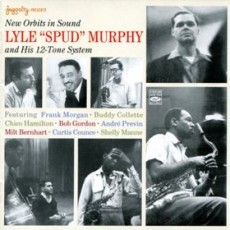
Lyle Stephanovic was born Miko Stefanovic to Serbian émigré parents in Berlin, Germany on August 19, 1908. Better known in the jazz world as Spud Murphy, he grew up in Salt Lake City, Utah where he took the name of a childhood friend. Murphy studied clarinet and saxophone when young and took trumpet lessons from Red Nichol’s father.
He worked with Jimmy Joy in 1927-28 and with Ross Gorman and oboist Slim Lamar in 1928. He worked the early 1930s as saxophonist-arranger for Austin Wylie, Jan Garber, Mal Hallett and Joe Haynes, and then became a staff arranger for Benny Goodman from 1935 to 1937. At the same time he also contributed charts to the Casa Loma Orchestra, Isham Jones, Les Brown and many others.
From 1937 to 1940 Murphy led a big band and recorded for Decca and Bluebird Records in 1938-39. In the 1940s he relocated to Los Angeles where he did work in the studios and with film music, in addition to authoring and teaching the 1200-page “System of Horizontal Composition” also known as the “Equal Interval System”. The Equal Interval System is a modern system of music composition, developed by Murphy over a lifetime of research.
Spud recorded two jazz albums in the 1950s, but his later career was focused on classical and film music. In 2003, orchestra leader Dean Mora, a close friend of Murphy’s, recorded some two dozen of his arrangements in a tribute CD, “Goblin Market”.
Multi-instrumentalist, bandleader and arranger Spud Murphy died in Los Angeles, two weeks short of his 97th birthday on August 5, 2005.

Give The Gift Of Knowledge
Daily Dose Of Jazz…
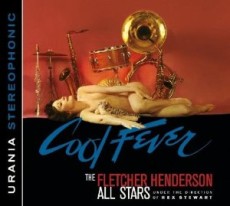
Hilton Jefferson was born on July 30, 1903 in Danbury, Connecticut. He began his professional career in 1929 with Claude Hopkins and throughout the 1930s was busy working for the big bands of Chick Webb, Fletcher Henderson and McKinney’s Cotton Pickers.
From 1940-49 Hilton led the saxophone section of Cab Calloway’s band then went on to perform with Duke Ellington for a year in 1952 but ultimately became a bank guard to support himself with a steady income. He continued to perform through the Fifties, especially with Rex Stewart, ‘Buster Bailey, Red Richards, Gene Ramey, Vic Dickerson, Herman Autrey and some former members of the Fletcher Henderson band.
Hilton Jefferson, alto saxophonist with a soft, delicate sound and exquisite sensibility passed away on November 14, 1968.
Give The Gift Of Knowledge
More Posts: saxophone
Daily Dose Of Jazz…
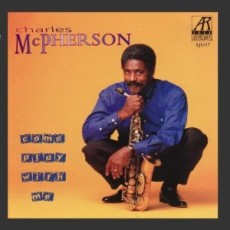
Charles McPherson was born on July 24, 1939 in Joplin, Missouri but grew up in Detroit, Michigan. As a teenager he played with Barry Harris, played the Detroit scene through the Fifties and in 1959 moved to New York City. Along with his Detroit partner Lonnie Hillyer joined Charles Mingus in 1960, a relationship that lasted until 1972.
The alto saxophonist, had a short-lived quintet with Hillyer in ’66, and then broke out on his own after leaving Mingus to become a full-time leader. A move to San Diego in 1978 became home while recording for such labels as Prestige, Mainstream, Xanadu, Discovery and Arabesque during his prolific career.
McPherson, a Charlie Parker disciple, who brought his own lyricism to the bebop idiom, was commissioned to help record ensemble renditions of pieces from Charlie Parker used on the 1988 “Bird” film soundtrack. To date he has 25 albums as a leader to his credit and another sixteen as a sideman working with the likes of Toshiko Akiyoshi, Kenny Drew, Charles Tolliver, Clint Eastwood, Art Farmer and Sam Jones. The saxophonist has remained a stable figure in modern mainstream jazz.
Jazz Is Global – Share
More Posts: saxophone
Daily Dose Of Jazz…
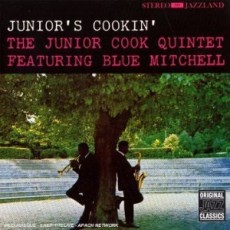
Herman “Junior” Cook was born on July 22, 1934 in Pensacola, Florida. After playing with Dizzy Gillespie in 1958, Cook gained some fame for his longtime membership in the Horace Silver Quintet until 1964. He went on to play with band mate Blue Mitchell until ’69.
Through his association with Mitchell he would play alongside Freddie Hubbard, Elvin Jones, George Coleman, Louis Hayes, Bill Hardman, McCoy Tyner, Bertha Hope and Horace Silver to name a few. In addition to many appearances as a sideman in which he contributed his talents on more than three-dozen sessions, Cook recorded as a leader for Jazzland, Affinity, Catalyst, Muse, and Steeplechase.
As an educator, he taught at Berklee School of Music during the 1970s and by the early 1990s he was playing with Clifford Jordan and also leading his own group. Junior Cook, the tenor saxophonist who played in the hard bop style, died in his New York City apartment on February 3, 1992.
Give The Gift Of Knowledge
More Posts: saxophone
Daily Dose Of Jazz…
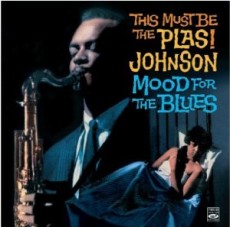
Plas John Johnson Jr. was born on July 21, 1931 in Donaldsonville, Louisiana. Along with his pianist brother Ray, he first recorded as the Johnson Brothers in New Orleans in the late 1940s. He then toured with R&B singer Charles Brown and after military service moved to Los Angeles and began session recordings as a full-time musician. There he backed artists such as B. B. King and Johnny Otis as well as scores of other R&B performers.
An early supporter was Maxwell Davis, who hired him to take over his own parts so that he could concentrate on producing sessions for the Modern record label. Recruited by Capitol Records in the mid-1950s, Johnson also played on innumerable records by Peggy Lee, Nat King Cole, Frank Sinatra and others.
For the next twenty years Plas remained a leading session player averaging two sessions a day and playing everything from movie soundtracks to rock and roll singles, by such artists as Ricky Nelson, Bobby Vee, the Beach Boys and a number of instrumental groups.
By 1963, Johnson soloed for the television series The Odd Couple’s theme, recorded Ella Fitzgerald’s Jerome Kern, Harold Arlen and Johnny Mercer Songbooks; and worked with Motown playing with the likes of Marvin Gaye and The Supremes.
In 1970, Johnson joined the studio band of the Merv Griffin Show while playing with a number of jazz and swing bands of the period. The soul-jazz and hard bop tenor saxophonist is probably most widely known for his solo on Henry Mancini’s “The Pink Panther Theme”. He continues to record and perform, particularly at jazz festivals.
Take A Dose On The Road
More Posts: saxophone