

Daily Dose Of Jazz…
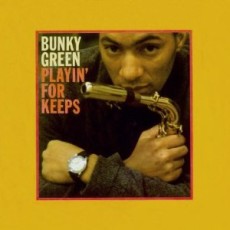
Vernice “Bunky” Green was born on April 23, 1935 in Milwaukee, Wisconsin. Originally strongly influenced by Charlie Parker, it was Charles Mingus’ sparing use of notation and his belief that there was no such thing as a wrong note that made a deep impression and had a lasting influence on Green’s own style.
Green began playing the alto saxophone around Milwaukee, mainly at a local club called “The Brass Rail.” His first big break came when he was hired in New York City by Charles Mingus to replace Jackie McLean in the 1960s. This was followed by a move to Chicago, Illinois that gave him the opportunity to perform with Sonny Stitt, Louie Bellson, Andrew Hill, Yusef Lateef and Ira Sullivan.
Gradually withdrawing from the public eye to develop a career as a leading jazz educator, Bunky taught at Chicago State University from 1972-1989 and in the 1990s took up the directorship of the Jazz Studies Program at the University of North Florida in Jacksonville. He also served a term as the president of the IAJE/International Association for Jazz Education and has been elected to the Jazz Education Hall of Fame.
Green recorded several fine albums beginning in the 1960s working with Wynton Kelly, Jimmy Cobb, Elvin Jones, Jason Moran and Lonnie Plaxico; was leader of the Vanguard label in the 70s, and awarded the coveted 5 Star Review from Down Beat Magazine for his 1989 commemoration of his parents death with “Healing The Pain”. Bunky Green continues to record and pursue his educator endeavors. He is currently Professor Emeritus and Director of Jazz Studies Emeritus at the University of North Florida.

Give The Gift Of Knowledge
Daily Dose Of Jazz…
Alejandro Santos was born on April 11, 1956 in Buenos Aires, Argentina. He is widely-recognized both in his home country of Argentina and internationally as an extraordinary flutist and multi-instrumentalist playing the piccolo, bass flute, native wood-flutes, tenor and soprano sax, piano, and synthesizers.
He has developed a career as a composer with a unique style, which fuses modern jazz with traditional Argentinean rhythms like candombe, tango, and folk music. He has collaborated on recording and performing projects with Dino Saluzzi, Gonzalo Rubalcaba, Anthony Jackson, Bob Moses, Claudio Roditi, Toquinho, Maria Creuza, Fito Paez and others. Since 2001 he has steadily worked with Al Di Meola’s World Symphony and has recorded on De Meola’s latest album “Flesh on Flesh”.
Alejandro released three solo albums with RCA and GNA/Invasion Records, one of them: 5 Carnavales 4, released in the States, received excellent reviews and reached into the top 30 jazz playlist of the Gavin Report magazine. Alejandro Santos currently performs with his quartet that includes bandoneon, bass and drums.
Jazz Is Global – Share
More Posts: flute,piano,piccolo,saxophone,synthesizer
Daily Dose Of Jazz…
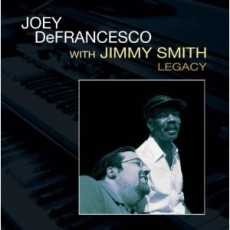
Joey DeFrancesco was born in Springfield, Pennsylvania on April 10, 1971 into a family of musicians – a multi-instrumentalist grandfather and Hammond B3 player father. Joey DeFrancesco started playing the piano at the age of four, switching to the B3 shortly after. By age six, he was sitting in on his father’s gigs; by ten playing out on his own and sitting in with organ legends like Jack McDuff and Richard “Groove” Holmes. He went to high school with bassist Christian McBride, where the two were often scolded for altering their big band charts.
At seventeen years old Miles Davis asked Joey to join his band, touring Europe and recording Amandla with Davis. He became well known in the 1990s, however, through his work with John McLaughlin’s trio Free Spirits. He has also played with jazz guitarists Pat Martino, Paul Bollenback, Jimmy Bruno, Dave Stryker, Danny Gatton as well as trumpet player Big Jim Henry and many others.
DeFrancesco’s career as a leader began with his first recordings on Columbia, and later with Muse, Big Mo, and HighNote. He listened to and learned from Jimmy Smith, ultimately paying homage with his 1999 release “The Champ”. In 2000 he recorded the album “Incredible!” with Jimmy and finished “Legacy” shortly before Smith’s passing in 2005. He has also paid tribute to Don Patterson with “Tribute to Don Patterson: The Philadelphia Connection” released in 2004.
Jazz organist, trumpeter and vocalist Joey DeFrancesco, who has been selected by the Down Beat Critics and Readers Poll as the top jazz organist every year since 2003 and who consistently played an average of 200 nights a year on the road with various musicians, transitioned on August 25, 2022 at the age of 51.
Put A Dose In Your Pocket
More Posts: hammond organ,keyboard,saxophone,trumpet,vocal
Daily Dose Of Jazz…
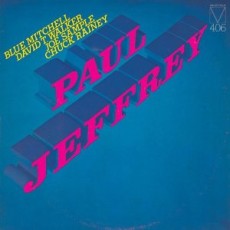
Paul Jeffrey was born in New York City on April 8, 1933 and started learning to play the saxophone as a child. After graduating from Kingston High School in 1951, he received his B.S. in music education at Ithaca College in 1955. He spent the late 1950s touring with Illinois Jacquet, Elmo Hope, Big Maybelle, and Wynonie Harris. In 1960 Jeffrey toured the US with B.B. King, and freelanced around New York City and toured with bands led by Howard McGhee, Clark Terry, and Dizzy Gillespie.
1968 marked Paul’s first studio work as a leader, recording the “Electrifying Sounds” for Savoy Records. He toured with the Count Basie Orchestra, began working with Thelonious Monk from 1970-1975, was hired by George Wein to organize a 15-piece band for a tribute concert to Monk at Carnegie Hall in 1974 at which Monk made a surprise appearance, replacing Barry Harris on the piano.
Jeffrey also enjoyed a lasting association with Charles Mingus throughout the 1970s while making three additional studio recordings as leader on the Mainstream Records label. He also enjoyed a prolific career as an educator teaching saxophone, arranging and jazz history at Columbia University, Jersey City State College, Livingston College of Rutgers University, as jazz ensemble director at the University of Hartford, and artist in residence and director of jazz studies at Duke University; a position he held until his retirement in 2003.
He also organized the NC/Umbria Jazz Festival and the Mary Lou Williams Jazz Festival while serving on the NC Council of the Arts and the Durham Arts Council. In 2009, tenor saxophonist and arranger Paul Jeffrey recorded a tribute to Thelonious Monk for the French label Imago Records.
More Posts: saxophone
Daily Dose Of jazz…
Stanley William Turrentine was born in the Hill District of Pittsburgh, Pennsylvania on April 5, 1934 into a musical family. His father, Thomas Turrentine, Sr., was a saxophonist with Al Cooper’s Savoy Sultans, his mother played stride piano, and his older brother Tommy Turrentine became a professional trumpet player.
Turrentine began his prolific career with blues and rhythm and blues bands, and was at first greatly influenced by Illinois Jacquet. In the 1950s, he went on to play with the groups of Lowell Fulson, Earl Bostic and at the turn of the decade with Max Roach.
1960 saw Stanley marrying organist Shirley Scott and the two frequently played and recorded together. During this decade he also started working with organist Jimmy Smith, making several soul jazz recordings both with Smith and as a leader.
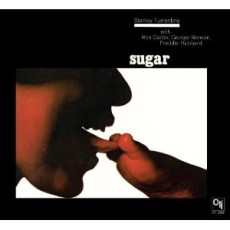
By the 1970s, after his professional and personal divorce from Scott, Turrentine left hard bop and soul jazz for jazz-fusion. He signed with Creed Taylor’s CTI label and released his debut album “Sugar” that became one of his biggest successes and a seminal recording for the label. He worked with Freddie Hubbard, Milt Jackson, Bob James, Richard Tee, Idris Muhammad, Ron Carter and Eric Gale, to name a few.
In the 80s and 90s Stanley returned to soul jazz though throughout his career along with his CTI releases, he recorded for Blue Note, Fantasy, Prestige, and Impulse record labels. Tenor saxophonist, bandleader and composer Stanley Turrentine passed away from a stroke in New York City on September 12, 2000.
More Posts: saxophone