

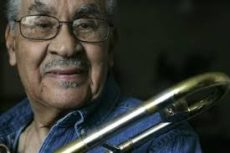
Three Wishes
The Baroness inquired of Jimmy Wilkins as to what his three wishes would be and he responded by saying:
-
-
“I wish my first wife would hurry up and give me a fu**ing divorce.”
-
“I wish I could put my day gig down and play some music.”
-
“I wish I was rich.”
-
*Excerpt from Three Wishes: An Intimate Look at Jazz Greats ~ Compiled and Photographed by Pannonica de Koenigswarter

More Posts: baroness,history,instrumental,jazz,music,pannonica,three,trombone,wishes
Daily Dose Of Jazz…
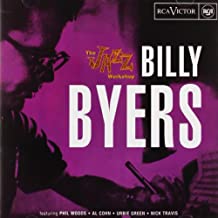
Billy Byers was born on William Mitchell Byers on May 1, 1927 in Los Angeles, California. He picked up the trombone and played with Karl Kiffle before serving in the Army in 1944–45. In the second half of the 1940s, he arranged and played trombone for Georgie Auld, Buddy Rich, Benny Goodman, Charlie Ventura, and Teddy Powell.
Following this period of playing, Byers composed for WMGM (AM) radio and television in New York City. During the mid-1950s, he was living and arranging in Paris, France where he also led a session as a leader, released as Jazz on the Left Bank, at this time. Later in the 1950s in Europe, he played with Harold Arlen (1959–1960) and with the Quincy Jones Orchestra. Becoming Quincy’s assistant at Mercury Records in the Sixties, he arranged for Count Basie albums.
He also led some recording sessions of Duke Ellington standards, toured Europe and Japan alongside Frank Sinatra in 1974, and had extensive credits arranging and conducting for film. Billy won the Drama Desk Award for Outstanding Orchestrations for the City of Angels.
He recorded with Count Basie, Bob Brookmeyer, Al Cohn, Billy Eckstine, Coleman Hawkins, J. J. Johnson, Lee Konitz, Jack McDuff, Gary McFarland, Hal McKusick, Carmen McRae, Joe Newman, Lalo Schifrin, Bud Shank, Charlie Shavers, Julius Watkins, Andy Williams, Cootie Williams, Kai Winding, and Frank Zappa. With four albums as a leader and another twenty-eight as a sideman, trombonist Billy Byers, passed away in Malibu, California, on May 1, 1996.

More Posts: arranger,bandleader,history,instrumental,jazz,music,trombone
Daily Dose Of Jazz…
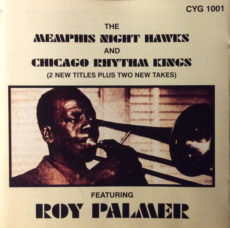
Roy Palmer was born on April 2, 1892 in the Carrollton neighborhood of uptown New Orleans, Louisiana. He learned to play violin, guitar, and trumpet and began his career in 1906 in the Big Easy as a guitarist with the Rozelle Orchestra. Leaving the orchestra he began playing the trombone in Storyville with Papa Celestin, Richard M. Jones, Freddie Keppard, Willie Hightower, during the DepressionTuxedo Brass Band, and Onward Brass Band.
In 1917 he left New Orleans and moved to Chicago, Illinois where he worked with King Oliver, Lawrence Duhe, and Doc Cook. From the 1920s on Palmer recorded with Johnny Dodds, Jelly Roll Morton, Ida Cox, the Alabama Rascals, and the State Street Ramblers. By the 1930s during the Depression, he curtailed his performing worked in a factory and began his career as a music teacher, which included students Preston Jackson and Albert Wynn.
Trombonist Roy Palmer passed away on December 22, 1963, in Chicago, Illinois.

More Posts: history,instrumental,jazz,music,trombone
Daily Dose Of Jazz…
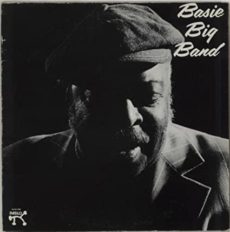
Bill Hughes was born William Henry Hughes in Dallas, Texas on March 28, 1930. His family moved to Washington, D.C., when he was nine years old where his father worked at the Bureau of Engraving and played trombone in the Elks Club marching band. He began learning to play the trombone around age twelve and was performing in Washington jazz venues by the age of sixteen. One of the clubs was the 7T Club, where he met and performed with saxophonist and flutist Frank Wess.
While students at Howard University, Hughes and Wess played in the Howard Swingmasters, along with bassist Eddie Jones. Though interested in music he originally wanted to pursue a career as a pharmacist and graduated from the University’s School of Pharmacy in 1952 and began working at the National Institutes of Health.
His career plans changed the following year when Wess, a member of the Count Basie Orchestra, suggested that Count Basie invite him to join the band. Also asked to join the Duke Ellington Orchestra, he declined and in 1953, he joined the Basie band where he already knew members Frank Wess, Eddie Jones, and Benny Powell. He played in a three-piece tenor trombone section with Powell and Henry Coker until 1957, when he decided to take a break from touring in order to help raise his family.
During this hiatus, Bill worked for the United States Postal Service and played trombone at the Howard Theater as well as with some small groups in Washington. A few years after returning to the band in 1963, he switched from the tenor to the bass trombone. In 2003 he took over leadership of the band following the death of Grover Mitchell. He retired from the band in 2010 and spent the last years of his life in Staten Island, New York with his wife and three children. On January 14, 2018 trombonist Bill Hughes passed away at the age of 87.
More Posts: bandleader,history,instrumental,jazz,music,trombone
Requisites
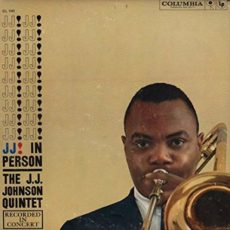
JJ! In Person is a 1958 studio recording by J. J. Johnson on the Columbia Records label. Tracks | 44:15
- Tune Up (Miles Davis) – 5:40
- Laura (David Raksin, Johnny Mercer) – 4:57
- Walkin’ (Richard Carpenter) – 6:51
- What Is This Thing Called Love? (Cole Porter) – 6:30
- Misterioso (Thelonious Monk) – 6:57
- My Old Flame (Sam Coslow, Arthur Johnston) – 3:45
- Now’s The Time (Charlie Parker) – 8:11
- J. J. Johnson – trombone
- Nat Adderley – cornet (tracks 1-5 & 7)
- Tommy Flanagan – piano
- Wilbur Little – bass
- Albert Heath – drums
JJ! In Person ~ The J.J. Johnson Quintet | By Eddie Carter
The word “deception” as described in the Merriam-Webster Online Dictionary is “the act of causing someone to accept as true or valid what is false or invalid”. I mention this definition because it’s significant to begin this week’s review with a live album that isn’t. JJ! In Person (CL 1161) by the J.J. Johnson Quintet is actually a studio recording masquerading as a live album with over-dubbed applause and fake bandstand announcements. That said, it’s not a bad album at all, quite the contrary actually. The choice of classic and contemporary tunes is exemplary, and the musicians assembled for this date are four of the best in the business; Nathaniel “Nat” Adderley on cornet, Tommy Flanagan on piano, Wilbur “Doc” Little on double bass and Albert “Tootie” Heath on drums. My copy used in this report is the original Mono Deep Groove LP and trombonist J.J. Johnson gives the introductions for all seven tunes.
The album begins with a fast-paced rendition of Miles Davis’ 1953 jazz standard Tune-Up opening with a brief introduction by Tommy before the quintet comes together to run through the melody. J.J. takes off first with a high-spirited opening statement, then Nat swings just as hard on the second reading. Tommy’s fingers fly swiftly over the keys next, then Heath wraps everything up in a heated exchange with Johnson and Adderley into the reprise, ending and introductions of the band and next tune. Laura by David Raskin is the title tune of the 1944 film with Johnny Mercer adding the lyrics after the film made the song a huge hit. A favorite of musicians and vocalists since its creation, Laura has been recorded more than four hundred times. This is a quartet feature for Johnson who takes the rhythm section through the midtempo melody completely carefree. J.J. leads off, applying a refreshing airiness to several swinging verses fueled by the trio’s supplement. Tommy follows with a gorgeous account of rhythmic vitality on a brief chorus preceding the trombone’s return for the closing coda.
The quintet returns to full voice on Richard Carpenter’s jazz classic, Walkin’ with everyone collectively cooking on the vivacious opening melody. J.J. states his thoughts economically but effectively on the lead solo. Nat offers up some brassy fire on a strikingly insightful performance next. Tommy handles the finale with a breathtaking flourish ahead of the ensemble’s climax. The first side ends vigorously on Cole Porter’s 1929 classic, What Is This Thing Called Love? An exhilarating opening solo by Flanagan segues into an effervescent theme treatment by the quintet featuring some brief comments by “Tootie”. Adderley takes over for lively, vivacious reading, then Johnson gives a joyously unrestrained performance. Little and Heath share a brief closing statement preceding the firm beat the song ends on.
The music of Thelonious Monk opens Side Two with Misterioso; the song was written in 1958, serving as a title tune of the Riverside album Monk released that year, and again as the title song for a 1965 Columbia LP he recorded while on tour. Its definition means mysterious in Italian and is given a bluesy midtempo treatment after the opening chorus. Nat and J.J. are the featured soloists and the cornetist establishes a nice momentum in a relaxed mood. The leader does a happy romp with an exceptionally agile interpretation, complementing the group’s smooth sound throughout this Monk original.
My Old Flame was written in 1934 by Arthur Johnston and Sam Coslow and featured in the film that year, Belle of The Nineties. This old evergreen is the second quartet tune featuring J.J. as the song’s only soloist. The trombonist starts the slow-tempo standard in excellent voice with a rich, warm tone producing an intimately tender statement of subtlety that’s absolutely beautiful. The album concludes with the 1945 blues by Charlie Parker, Now’s The Time, beginning with a collective medium beat on the melody that’s an irresistible toe-tapper. J.J. cruises at a moderate speed, taking the lead solo for a leisurely saunter. Nat preaches passionate phrases that are pitch-perfect on the second performance. Tommy follows with an expertly crafted interpretation of delightful pleasure. Wilbert and “Tootie” exchange one short verse each with the front line, ending the album on an upbeat note. The sound quality on this Mono LP is stupendous because of the amazing acoustics within the Columbia 30th Street Studio. Many of the label’s top jazz musicians and vocalists, Dave Brubeck, Buck Clayton, Miles Davis, Duke Ellington, Benny Goodman, Billie Holiday, Charles Mingus, Sarah Vaughan, and others used the space to create some of the greatest albums ever recorded.
This album was produced by George Avakian who in addition to his work on Columbia LPs, also produced albums on Decca Records, RCA Records, Warner Bros. Records, and World Pacific Records. The original recording engineer was Frank Laico who worked at both the Columbia 30th Street Studio and CBS Studios in New York City and was also the man behind the dials on albums for Atlantic, Cadence, Colpix, Dot Records, Epic, Reprise, United Artists Records and Verve Records to name of few. For the life of me, I can’t think of any reason why Columbia felt they needed to label this record a live album when it clearly wasn’t. Anyway, that’s a mystery for another day. As I stated at the beginning of this report, J.J. In Person is actually a very good and enjoyable album. It’s also a title I recommend that’s worthy of an audition for a spot in any jazz library, especially if you’re a fan of J.J. Johnson. There was only the one issue of this album in Mono, the Stereo release (CS 8009) hit the stores a year later in 1959. To hear the album as it was originally recorded, it can be found on the 1996 Mosaic Records eleven LP box set, The Complete Columbia J.J. Johnson Small Group Sessions!
George Avakian, Frank Laico, Misterioso (Riverside RLP 12-279/RLP 1133), (Columbia CL 2416/CS 9216); The Complete Columbia J.J. Johnson Small Group Sessions (Mosaic Records MQ11-169) – Source: Discogs.com
Laura, My Old Flame – Source: JazzStandards.comMisterioso, Now’s The Time, Tune-Up, Walkin’, What Is This Thing Called Love? – Source: Wikipedia.org

More Posts: choice,classic,collectible,collector,history,instrumental,jazz,music,trombone