

Daily Dose Of Jazz…
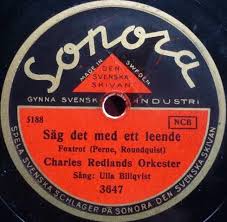
Charles Redland was born Carl Gustaf Mauritz Nilsson on July 7, 1911 in Södertälje, Sweden. The son of a musician, he learned several instruments when he was young.
In the 1930s he was a member of bands in which he played alto saxophone, clarinet, trumpet, and trombone. During that decade he also worked as a leader.
On clarinet, he recorded with Benny Carter in Sweden in 1936. He composed and arranged jazz and popular music. He also composed for more than 80 films, as well as for radio and television programs. Alto saxophonist, Charles Redland passed away on August 18, 1994 in Stockholm, Sweden.

More Posts: bandleader,clarinet,history,instrumental,jazz,music,saxophone,trombone,trumpet
Daily Dose Of Jazz…
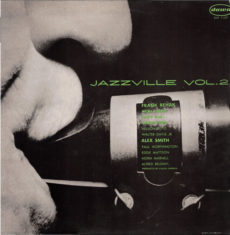
Frank Rehak was born on July 6, 1926, in New York City and started on piano and cello before switching to trombone. He was a member of the Gil Evans band and worked with Miles Davis, appearing with Davis on the broadcast The Sounds of Miles Davis.
As a leader he recorded Jazzville Vol. 2 on the Dawn label but as a sideman he had a prolific career. He recorded with Tony Bennett, Al Cohn, Dizzy Gillespie, Woody Herman, Quincy Jones, Gene Krupa, Hugo Montenegro, Cat Anderson, Ernestine Anderson, Charlie Barnet, Big Maybelle, Art Blakey, Bob Brookmeyer, Ruth Brown, Cándido Camero, Chris Connor, Urbie Green, Johnny Hartman, Michel Legrand, Melba Liston, Mundell Lowe, Teo Macero, Carmen McRae, Red Mitchell, Whitey Mitchell, Blue Mitchell, André Previn, Gerry Mulligan, Kai Winding and the list goes on.
Along with a failed marriage to nightclub dancer Jerri Gray, he also had a heroin addiction, which combined with other financial problems led to his withdrawal from music. With that, he lapsed into relative obscurity.
In an effort to deal with these issues he spent time at Synanon, which led to his mention in Art Pepper’s autobiography. Trombonist Frank Rehak passed away on June 22, 1987 in Badger, California.
More Posts: bandleader,cello,history,instrumental,jazz,music,piano,trombone

Daily Dose Of Jazz…
Milt Bernhart was born on May 25, 1926 in Valparaiso, Indiana and began on tuba but switched to trombone in high school. At 16 he worked in Boyd Raeburn’s band and later had some gigs with Teddy Powell. After time in the Army he worked, off and on, with Stan Kenton for the next ten years. In 1955 Bernhart recorded his first album as a leader. In 1986 he was elected President of the Big Band Academy of America.
Although known as mild-mannered or humorous, he spent a brief period with Benny Goodman, who brought out his ire. He indicated working with Goodman was “the bottom” of his first 23 years of life, except for basic training in the Army. He called Goodman a bore and claimed he did nothing about the treatment Wardell Gray faced at a segregated club in Las Vegas and he even alleges that he quit because Goodman publicly humiliated Gray in front of an audience.
The West Coast jazz trombonist recorded more than a hundred albums as a sideman working with Maynard Ferguson, Henri Rene, Shorty Rogers, Pete Rugolo, Howard Rumsey, Lalo Schifrin, Chet Baker, Sammy Davis Jr., June Christy, Astrud Gilberto, Peggy Lee, Johnny Mandel, and Henry Mancini among numerous others.
He recorded with Frank Sinatra, supplying the solo in the middle of Sinatra’s 1956 recording of I’ve Got You Under My Skin conducted by Nelson Riddle. Trombonist Milt Bernhart passed away from congestive heart failure at the Adventist Health in Glendale, California at the age of 77 on January 22, 2004.

More Posts: bandleader,history,instrumental,jazz,trombone
Daily Dose Of Jazz…
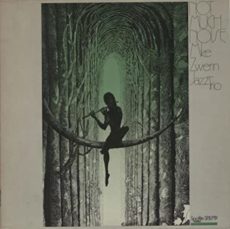
Mike Zwerin was born in New York City on May 18, 1930, where he studied at the High School of Music and Art. He began leading bands in his teens, employing several up-and-coming musicians. He went on to attend the Univerity of Miami and after graduation, he went into his father’s business, the Capitol Steel Corporation.
At the age of 18, while on his summer holidays from the University of Miami, he was spotted by Miles Davis at Minton’s in Harlem, while sitting in with Art Blakey. He was immediately drafted into the rehearsal band for what would become immortalized as Birth of the Cool, while the regular trombonist Kai Winding was indisposed. Also present were Gerry Mulligan, Max Roach, and Lee Konitz. His contribution, in particular, his solo on the track Move, can be heard on The Complete Birth of the Cool. A few muddy recordings exist of radio broadcasts by the band during Zwerin’s time in it, which gave him a lifelong reputation as a jazz musician lucky enough to have been at the cutting edge of a new movement.
Abandoning his musical life for much of the 1950s and after a spell in France, he returned to New York in 1958 and played the trombone in several big bands. Among his other recordings are Getting Xperimental over U, and Mack the Knife, an album of Kurt Weill songs that he produced and arranged himself. He also appears on Archie Shepp’s 1968 album The Magic of Ju-Ju.
Before moving permanently to Europe in 1969, he was a jazz critic for the Village Voice and focusing on journalism, writing for Down Beat, Rolling Stone, and Penthouse before joining the Herald Tribune. Zwerin’s move to London, England in 1969 and then to Paris, France in 1972, would be his home for the rest of his life. Nevertheless, he kept his hand in as a trombonist throughout the 1980s, working with his fellow expatriate Hal Singer and with the guitarist Christian Escoudé. In 1988 he toured with the Charles Mingus Big Band, having played briefly with the Swiss bandleader George Gruntz and played with the French fusion band Telephone.
Zwerin’s lasting claim to fame, however, is, perhaps, not his trombone playing but his book La Tristesse de Saint Louis: Swing Under the Nazis (1985). He spent two years researching it, traveling across France, Austria, Poland and Germany to interview survivors and unearthing the story of how jazz was banned by the Nazis as degenerate music, and yet somehow survived as what Zwerin called a metaphor for freedom.
Cool and progressive jazz trombonist and bass trumpeter Mike Zwerin passed away on April 2, 2010 after a long illness in Paris at the age of 79.
More Posts: bandleader,critic,history,instrumental,jazz,music,trombone,trumpet

Daily Dose Of Jazz…
Pee Wee Hunt was born Walter Gerhardt Hunt on May 10, 1907 in Mount Healthy, Ohio. Developing a musical interest at an early age, his mother played the banjo and his father played the violin. The teenager was a banjoist with a local band while he was attending college at Ohio State University where he majored in Electrical Engineering. During his college years, he switched from banjo to trombone. Graduating from the Cincinnati Conservatory of Music, he joined Jean Goldkette’s Orchestra in 1928.
Pee Wee was the co-founder and featured trombonist with the Casa Loma Orchestra, but he left the group in 1943 to work as a Hollywood radio disc jockey before joining the Merchant Marine near the end of World War II. He returned to the West Coast music scene in 1946 and his Twelfth Street Rag became a three million-selling number one hit in 1948.
Hunt was satirized as Pee Wee Runt and his All-Flea Dixieland Band in Tex Avery’s animated MGM cartoon Dixieland Droopy in 1954. His second major hit was Oh! in 1953, his second million-selling disc, which reached number three in the Billboard chart.
Trombonist Pee Wee Hunt passed away after a long illness at age 72, on June 22, 1979 in Plymouth, Massachusetts.
More Posts: bandleader,banjo,history,instrumental,jazz,music,trombone