
Daily Dose Of Jazz…
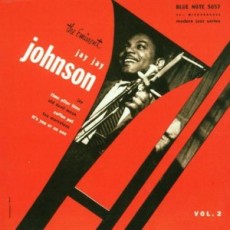
J. J. Johnson was born James Louis Johnson in Indianapolis, Indiana on January 22, 1924. He started studying piano at the age of 9 and at fourteen decided to play the trombone. By 1941 he began his professional career with Clarence Love and followed by Snookie Russell in ’42, then playing through the forties with the Benny Carter Orchestra, participating in the first Jazz At The Philharmonic organized by Norman Granz in Los Angeles.
He would tour and record with the Count Basie band, Illinois Jacquet and then began leading and recording small groups featuring Max Roach, Sonny Stitt and Bud Powell. By 1951 he took a job as a blueprint inspector but never abandoned his love for music as documented by his compositions Enigma and Kelo recorded by Miles Davis, garnering an invitation to play on the 1954 classic Davis Blue Note session, Walkin’.
Johnson went on to lead groups with Kai Winding, arranging for and backing Sarah Vaughan, following with a successful solo career touring the U.S., the U.K. and Scandinavia. He recorded a wide range of albums with notables as Bobby Jaspar, Clifford Jordan, Freddie Hubbard, Tommy Flanagan, Cedar Walton, Andre Previn and the list goes on and on.
In 1958-59 Johnson was one of three plaintiffs in a court case that hastened the abolition of the cabaret card system. By the sixties he was concentrating more on composition, writing a number of large-scale works that incorporated elements of both classical and jazz.
The 70’s saw J.J. in Hollywood scoring for film and television – Across 110th Street, Starsky & Hutch, and the Six Million Dollar Man but racism and other prejudices kept a black jazz musician from securing the amount and quality of work he was qualified to perform. However, his compositions including “Wee Dot”, “Lament” and “Enigma” have become jazz standards.
The trombonist, composer and arranger also authored a book of original exercises and etudes and a biography titled “The Musical World Of J.J. Johnson. He was voted into the Down Beat Hall of Fame in 1995. Diagnosed with prostate cancer, on February 4, 2001, he committed suicide by shooting himself.

Daily Dose Of Jazz…
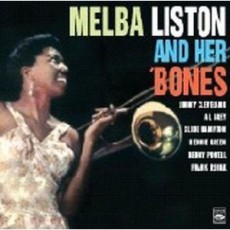
Melba Doretta Liston was born on January 13, 1926. Growing up in Kansas City, MO the young trombonist studied with Alma Hightower and played in youth bands. At 17 the talented trombonist joined Gerald Wilson’s big band and by the mid-1940’s Melba began working with the emerging beboppers like Dexter Gordon, Dizzy Gillespie, Paul Gonsalves, John Coltrane and John Lewis. She toured with Count Basie and Billie Holiday in the late 40’s but was so profoundly affected by audience indifference and the rigors of the road she quit playing.
For the next few years she did clerical work and supplemented her income working as an extra in Hollywood appearing in The Prodigal and The Ten Commandments. By the mid 50’s Melba was back playing, touring with Dizzy Gillespie for the U.S. State Department and recording with Art Blakey’s Jazz Messengers. In 1958 she formed her all-women quintet and with her show “Free and Easy” she toured Europe with Quincy Jones as her musical director.
The 60’s saw Melba collaborating with pianist Randy Weston, arranging primarily her own compositions for mid-size to large ensembles and are widely acknowledged as jazz classics. Melba worked with the likes of Milt Jackson, Clark Terry, and Johnny Griffin as well as arranging for various Motown records. In 1971 she became the musical director for Stax Records, working with Stevie Wonder, Joe Sample, Wilton Felder, Arthur Adams and jazz drummer Paul Humphrey whose uncharted album released in 1972 contains some of Melba’s finest works ever.
Melba Liston was a trombonist, composer and an important jazz arranger whose collaboration with pianist/composer Randy Weston continued until her death on April 23, 1999.
More Posts: trombone
Daily Dose Of Jazz…
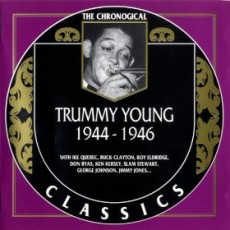
Trummy Young was born James Young in Savannah, GA on January 12, 1912 but grew up in Washington, DC. He originally started out as a trumpeter but by the time he debuted in 1928, he had switched to trombone and soon became one of the finest trombonists of the swing era. From 1933 to ’37 Young was a member of Earl Hines’ orchestra and later joined Jimmie Lunceford from ‘37 to 1943.
Although he was never really a star or bandleader, Trummy had one hit with his version of “Margie” and with Sy Oliver wrote the tune “Tain’t What You Do (It’s The Way You Do It)” that became a hit for both Lunceford and Ella Fitzgerald in 1939.
Young played with Charlie Parker and Dizzy Gillespie on a Clyde Hart led session in 1945 and with the Jazz At The Philharmonic. In 1952 he joined the Louis Armstrong All Stars and stayed a dozen years recording St. Louis Blues in ’54 and performing in the 1956 musical High Society. 1964 saw Young quitting the road to settle in Hawaii where on September 10, 1984 he succumbed to a cerebral hemorrhage.

More Posts: trombone

Daily Dose Of Jazz…
Jack Purvis was born John Purvis on December 11, 1906 in Kokomo, Indiana. After his mother’s death in 1912 his behavior became uncontrollable, and, as a result of many acts of petty larceny that would remain a part of his adult life, he was sent to a reform school. While there, he discovered that he had an uncanny musical ability, and soon became proficient enough to play both the trombone and trumpet professionally. This also enabled him to leave the reformatory and continue his high school education, while he was playing paying gigs on the side.
One of the earliest jobs he had as a musician was with a band led by the Royal Canadian Mounted Police and not long afterward he was working with the Hal Denman dance band. After high school he played with the Original Kentucky Night Hawks, then Bud Rice, Whitey Kaufman’s Original Pennsylvanians, Arnold Johnson’s orchestra, and then traveled to France with the George Carhart band. The balance of the decade he spent recording as a leader and sideman with several bands.
In 1930, Purvis led a couple of racially mixed recording sessions including the likes of J.C. Higginbotham and Adrian Rollini. He would work with the Dorsey Brothers, Fletcher Henderson, Fred Waring, Charlie Barnet and the New Orleans Symphony Orchestra. His move to California had him in radio broadcasting, working at Warner Studios and with the George Stoll Orchestra.
By the mid Thirties he was back in New York playing with Frank Froeba’s Swing Band but this engagement and subsequent recordings were the end of his recording career. He disappeared from the music world, ultimately being sent to jail in Texas for robbery. After his second conviction and release Purvis worked as a chef, aviator, carpenter, radio repairman and even a mercenary in South America.
One account of trumpeter Jack Purvis’ death is that he gassed himself in San Francisco, California on March 30, 1962. However, his death certificate indicates the cause of death to be fatty degeneration of the liver. He was best known as the composer of Dismal Dan and Down Georgia Way, also played trombone, harp and a number of other instruments, and was one of the earliest trumpeters to incorporate the innovations pioneered by Louis Armstrong.

Daily Dose Of Jazz…
Steve Davis was born in Worcester, Massachusetts on April 14, 1967 but was raised in Binghamton, New York. He grew up with jazz music being played in the household listening to his father’s record collection and his grandparents played. With mentors Doug Beardsley and Al Hamme, he was fortunate to play with his peers Kris Jensen, Tony Kadleck, Tom Dempsey, Dena DeRose and John Hollenbeck among many others.
He went on to study jazz under Dr. Jackie McLean at The Hartt School of the University of Hartford in Connecticut. While in school, Davis also gained valuable experience sitting-in and gigging with Hotep Galeta, Nat Reeves, Don DePalma, Larry DiNatale and others at The 880 Club. A recommendation to Art Blakey saw Steve joining the Jazz Messengers at Sweet Basil in New York City in 1989. Following Blakey’s death, he joined the Hartt faculty in 1991 where he continues to teach today, and taught at The Artist’s Collective in Hartford.
He gained further international recognition playing with McLean’s sextet for five years and for four in Chick Corea’s Origin. Trombonist Steve Davis has played and recorded with Freddie Hubbard and The New Jazz Composers Octet, Benny Golson’s New Jazztet, Hank Jones, Cecil Payne, Horace Silver, Cedar Walton, Harold Mabern, Larry Willis, Eddie Henderson, Roy Hargrove, Avishai Cohen, Wynton Marsalis and the Lincoln Center Jazz Orchestra, and Michael Weiss.
Davis has been a member of the cooperative sextet One for All since its inception in 1996, alongside Eric Alexander, Jim Rotondi, David Hazeltine, John Webber and Joe Farnsworth. He also currently plays with Larry Willis’s Quintet, The Dizzy Gillespie Alumni All-Star Big Band/Septet, leads The Steve Davis Quintet and remains a fixture on the New York and Hartford jazz scenes.
More Posts: trombone