

Daily Dose Of Jazz….
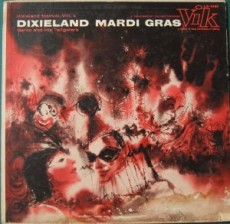
Santo Pecoraro was born on March 31, 1902 in New Orleans, Louisiana but was better known as Santo Pecora. The jazz trombonist distinguished his name due to a cousin, a drummer with the same name, though the two sometimes performed together in ensembles.
Santo began his musical endeavors playing the French horn but settled on the trombone while still a teenager. He played in orchestras accompanying silent films as well as in big bands led by Johnny De Droit and Leon Roppolo. He toured with Bee Palmer, a singer in the early 20’s, and then joined the New Orleans Rhythm Kings by the middle of the decade.
Towards the end of the twenties he moved to Chicago, playing both jazz bands and theatre palaces. He became a big band sideman in the thirties, toured with Sharkey Bonano and played with Wingy Manone in California.
Returning to New Orleans in the 40’s, he gigged on the riverboats and in nightclubs while continuing to work with Bonano. He longtime association with Dixieland and the New Orleans music scene established him as a staple well into the Sixties. Santo Pecora passed away on May 29, 1984 in his beloved Crescent City.

More Posts: trombone
Daily Dose Of Jazz…
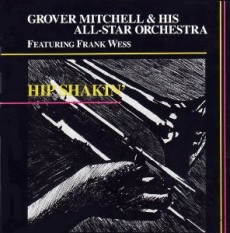
Trombonist and bandleader Grover Curry Mitchell was born on March 17, 1930 in Whatley, Alabama. By age eight he was living in Pittsburgh where jazz took hold of him. During his teen years after an initial desire to play trumpet, the school took note of his long arms and trained him to play the trombone.
After high school he enlisted playing in the U.S. Marine Band, then went on to play with Lionel Hampton and Duke Ellington. But his best-known association was with Count Basie from 1962 to 1978, when he founded his own band, the Jazz Chronicles.
In the seventies he started writing music for television and film including the 1972 Lady Sings The Blues. returned to the Count Basie Band in 1980 and continued to lead the band and served as the director from ’95 until his death, winning a Grammy for the Best Large Jazz Ensemble Album twice.
The mellow-toned trombonist lost a quiet battle with cancer on August 6, 2003 in New York City’s Sloan Kettering Hospital. Grover Mitchell was inducted posthumously into the Alabama Jazz Hall of Fame in 2008.

More Posts: trombone
Daily Dose Of Jazz…
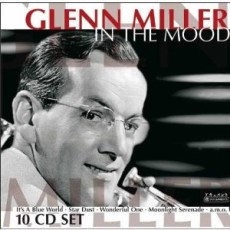
Glenn Miller was born Alton Glenn Miller on March 1, 1904 on a farm in Clarinda, Iowa. Though his early musical schooling was in Nebraska by 1915 his education continued in Missouri. Working to save money by milking cows, he bought his first trombone and played in the town orchestra. By high school his interest turned towards a new style of music called “dance band” and led a band with classmates. His unsuccessful foray into college caused him to concentrate on becoming a professional musician.
The mid-twenties saw Glenn touring with several bands including Red Nichols in Broadway show pits performing with band mates were Benny Goodman and Gene Krupa. In 1929 he was part of the band backing a recording of “If I Could Be With You One Hour Tonight” featuring Pee Wee Russell, Eddie Condon, Gene Krupa and Coleman Hawkins.
He went on to work with the Dorsey brothers and British bandleader Ray Noble, then transitioning into motion pictures for Paramount and 20th Century with such stars as Bing Crosby, George Burns and Gracie Allen, Ethel Merman, Bill “Bojangles” Robinson, Dorothy Dandridge and the Nicholas Brothers.
From 1938 to 1942 Miller amassed great fame with his songs “Tuxedo Junction”, “Moonlight Serenade”, “Little Brown Jug” and “Chattanooga Choo-Choo” breaking all sales and chart records. In 1942 Glenn joined the war effort joining first the Army and then the Army Air Force forming marching bands and orchestras and performing for soldiers. Sadly, on a flight from England to Paris on December 15, 1944, Glenn Miller’s plane went missing over the English Channel. His body was never recovered.
The jazz musician, arranger, composer and swing era bandleader was posthumously issued a postage stamp, three songs are in the Grammy Hall of Fame and in 2003 he received a Grammy Lifetime Achievement Award.
More Posts: trombone
Daily Dose Of Jazz…
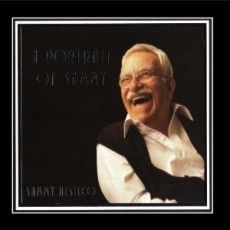
Sammy Nestico was born Samuel Lewis Nestico on February 6, 1924 in Pittsburgh, Pennsylvania. Studying and learning to play the trombone, he started his professional career in 1941 at age 17 as a staff arranger for ABC radio affiliate WCAE.
Over the course of his career he arranged for Count Basie from 1967-1984, for the US Air Force and Marine Bands for twenty years while in Washington, DC, and played trombone in Tommy Dorsey, Woody Herman, Gene Krupa and Charlie Barnet big bands.
A professor at the University of Georgia from 1998-99 Nestico taught commercial orchestration and conducting the Studio Orchestra, but was unable to find the necessary administrative support to remain there. He has also directed music programs at Los Angeles Pierce College, and the Westinghouse Memorial High School in Wilmerding, PA.
During his life in the television and film industry, Sammy has arranged and conducted projects for artists such as Bing Crosby, Sarah Vaughan, Frank Sinatra, Toni Tennille, Phil Collins, Barbra Streisand among others and orchestrated nearly seventy television programs such as Mission Impossible, Mannix, Charlie’s Angels and The Mod Squad.
He has written commercial jingles for numerous companies including Ford, Dodge, Anheuser-Busch and Mattel and has published nearly 600 numbers for school groups and professional big bands. A trombone player and a prolific, well-known composer and arranger of big band music, he is best known for his arrangements for the Count Basie orchestra. Sammy Nestico continues to compose, arrange, conduct and perform.
Daily Dose Of Jazz…
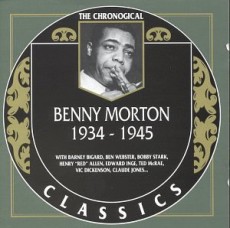
Benny Morton was born on January 31, 1907. Growing up in New York City, Benny was a graduate of the Jenkins Orphanage Band and was greatly influenced by church music as well as Dope Andrews, trombonist for Mamie Smith. By 1923, just 16 years old, he was gaining experience with the Clarence Holiday Orchestra and just three years later joined Fletcher Henderson. Swing was in and Benny moved on to spend six years with Don Redman and then three with Count Basie.
By 1938 he was recording with Clarence Holiday’s daughter Billie on My First Impression Of You and on The Sound Of Jazz. Morton went on to play with Teddy Wilson and Ed Hall in the 40’s and led his own band before playing in the Broadway pit for shows like Guys and Dolls and for Radio City Music Hall.
During the sixties and over the next two decades, the gentle and self-effacing trombonist was back in high jazz society with cornetist Wild Bill Davison and Bobby Hackett, The Saints and Sinners and the World’s Greatest Jazz Band.
One of the most sophisticated trombonists of the swing era, Benny Morton passed away on December 28, 1985.

More Posts: trombone