Daily Dose Of jazz…
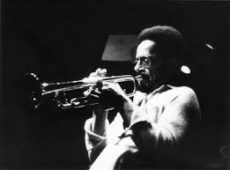
John E. Carisi was born on February 23, 1922 in Hasbrouck Heights, New Jersey. A self-taught musician early in his career began when he became a member of Babe Russin’s band, then from 1938 to 1943 he was a member of Herbie Fields’s Orchestra before becoming a part of Glenn Miller’s Army Air Force Band. After the war he left Miller he studied with acclaimed composer Stefan Wolpe and worked with Ray McKinley, Claude Thornhill, Charlie Barnet and Benny Goodman, among others.
His minor-blues composition Israel was quickly recognized as a unique jazz classic after it was recorded by Miles Davis at the sessions which later became known as the Birth of the Cool. Other notable versions have been recorded by Bill Evans, and the Gerry Mulligan Concert Jazz Band. Another well known Carisi piece, Springsville, was also recorded by Miles Davis and arranged by Gil Evans on the classic album, Miles Ahead.
In 1957 he arranged the music for Urbie Green’s album, All About Urbie Green and in 1959 with the music for a set by Harry Galbraith’s Guitar Choir. 1960 saw the trumpeter on a State Department tour of South East Asia and the Middle East. Visiting the Taj Mahal became the inspiration for an album he shared with Cecil Taylor that was released as Into the Hot under Gil Evans‘ name for Impulse! in 1961, and then Carisi arranged Marvin Stamm’s 1968 album Machinations.
Johnny continued to perform and arrange in both the jazz and classical fields with occasional forays into ballet and pop music. He composed and scored music for Jerry Lewis’s television show on the other. In 1969 he joined the faculty of the Manhattan School of Music, but continued to play jazz off and on until 1984. Trumpeter and composer Johnny Carisi passed away October 3, 1992 in New York City, New York.
Sponsored By
![]()
#preserving genius
More Posts: trumpet

Daily Dose Of Jazz…
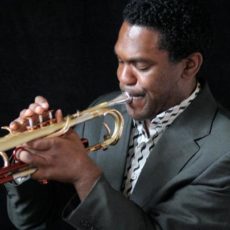
Leroy Jones was born on February 20, 1958 in New Orleans, Louisiana and began playing trumpet at the age of ten. By the time he was 12 he was leading the Fairview Baptist Church Marching Band, a group of young musicians organized by guitar and banjo player Danny Barker.
The musicians’ union forced Barker to disband the group in 1974, so Leroy became a union musician and took over the running of the group, renaming it the Hurricane Brass Band. By 1976 he had left the group, touring for a time with Eddie Vinson and Della Reese before forming his own group, the Leroy Jones Quintet.
In 1991 Jones joined the big band of Harry Connick, Jr., and that exposure with the band, including the opportunity for the Leroy Jones Quintet to open for Connick. This in turn led to him releasing his first album under his own name titled Mo’ Cream From The Crop on the Columbia Records in 1994. Trumpeter Leroy Jones, who has ten albums as a leader, has also appeared with the Preservation Hall Jazz Band and Dr. John and continues to tour and record with his quintet.
Sponsored By

Voices From The Community
![]()
#preserving genius
More Posts: trumpet

Daily Dose Of Jazz…
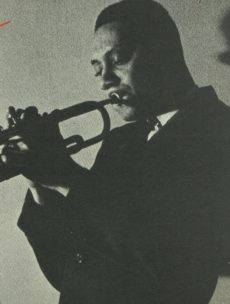
Taft Jordan was born on February 15, 1915 in Florence, South Carolina and as a trumpeter was heavily influenced by Louis Armstrong. Early in his career he played with the Washboard Rhythm Kings before joining Chick Webb’s orchestra from 1933 to 1942. He remained with Webb after Ella Fitzgerald became its frontwoman, trading duties with Bobby Stark as the orchestra’s main trumpet soloist.
From 1943 to 1947 Taft played with Duke Ellington, then with Lucille Dixon at the Savannah Club in New York City from 1949 to 1953. After this stint he played less often, though he toured with Benny Goodman in 1958, played on the Miles Davis album Sketches of Spain, and worked with the New York Jazz Repertory Company.
In 1935 Jordan recorded four tunes, Night Wind, If the Moon Turns Green, Devil in the Moon, and Louisiana Fairy Tale as a leader, with Ward Silloway on trombone, Johnny Mince on clarinet, tenor saxophonist Elmer Williams, pianist Teddy Wilson, guitarist Bobby Johnson, John Kirby on string bass and drummer Eddie Dougherty. He would go on to lead his own band in 1960 and ‘61, recording LPs for Mercury, Aamco Records, and Moodsville labels, as well as with Ruth Brown on Atlantic Records and Dizzy Gillespie on the Norgran label.
Trumpeter Taft Jordan passed away on December 1, 1981 in New Orleans, Louisiana.
Sponsored By

![]()
#preserving genius
More Posts: trumpet

Daily Dose Of Jazz…
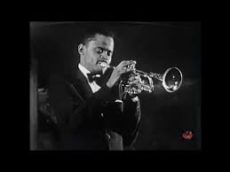
Ed Lewis was born on January 22, 1909 in Eagle City, Oklahoma. His early career saw him in Kansas City, Missouri playing with Jerry Westbrook as a baritone saxophonist, but in 1925 he switched to trumpet He played with Paul Banks and Laura Rucker before joining the Bennie Moten Orchestra, where he was the primary trumpet soloist from 1926-1932 until Hot Lips Page joined the outfit.
In the 1932 he worked with Thamon Hayes for two years followed by a three year stint with Harlan Leonard, the in 1937 played for a short time with Jay McShann. That same year Ed joined the Count Basie Orchestra, remaining until 1948 and though he recorded frequently with the orchestra, he almost never soloed.
In the 1950s Lewis led his own band in New York City for strictly local gigs, and worked for a period as a taxicab driver. He returned to play with The Countsmen in Europe in 1984, shortly before his death.
Harry “Sweets” Edison considered Lewis and Snooky Young the two greatest first trumpet players he ever played with. Trumpeter Ed Lewis, who never led his own recording session, passed away on September 18, 1985.
![]()
#preserving genius
More Posts: trumpet

Daily Dose Of Jazz…
Phillip Guilbeau was born on January 16, 1926 in Lafayette, Louisiana. Like many of his fellow musicians he took up the trumpet and during World War II served in the Navy, Honorably discharged in 1945 he moved to Detroit, Michigan and successfully became a session player. Throughout his career he recorded on hundreds of albums including sessions with Count Basie, Big Joe Turner, David “Fathead” Newman, Otis Redding, Frank Sinatra, Quincy Jones, soloist on Hank Crawford’s recording of What A Difference A Day Makes from his Soul Clinic album and with Ray Charles, he was the soloist on the landmark 1961 album Genius + Soul = Jazz.
By the Seventies Phil moved to Washington, DC and recognizing the evolution of the music, moved into the new sound called funk. He became the trumpeter and manager of the group The Young Senators, the top-rated R&B group in the area after the release of their hit, that Guilbeau penned, The Jungle. With the success of this single they were asked to tour as the backing group of Eddie Kendricks, and recorded his seminal album My People… Hold On with them. The album included what is widely considered the first ever Disco song, Girl You Need A Change Of Mind.
As a manager, Gilbeau would go on to discover another group called Black Heat, get them to Atlantic Records and record three albums before they disbanded. After a lifetime career of playing jazz, funk and rhythm & blues music that spanned five decades, trumpeter and composer Phil Guilbeau passed away on September 5, 2005 in Florida.
Sponsored By

Voices From The Community
![]()
#preserving genius
More Posts: trumpet