

Daily Dose Of Jazz…
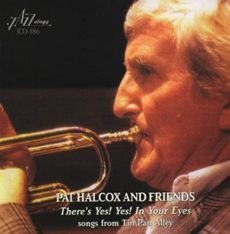
Patrick John Halcox, born March 18, 1930 in Chelsea, London, was originally offered a band spot earlier but elected to continue his studies as a research chemist. Ken Colyer was invited to fill the vacancy in 1953, which became known as the Ken Colyer Jazz Band, playing in a New Orleans style with Chris Barber, Lonnie Donegan and Monty Sunshine.
The band effectively parted company with Colyer in 1954 after a dispute about its musical direction. Halcox took Colyer’s place, in what then become Barber’s group and as the original six-piece band eventually grew to eleven members, he remained present. Although primarily the trumpet player, he had a fine singing voice and led the band’s various renditions of Ice Cream, one of their most popular standards. He also played piano on the Lonnie Donegan recording of Digging My Potatoes.
The Pat Halcox Allstars did make a recording of their own during a Chris Barber Band summer break, now re-released as a Lake Records CD. Trumpeter and vocalist Pat Halcox announced his retirement from the Chris Barber Band at the age of 78, effective in 2008 and passed away on February 4, 2013 at the age of 82.

More Posts: bandleader,hiwstory,instrumental,jazz,music,trumpet,vocal
Daily Dose Of Jazz…
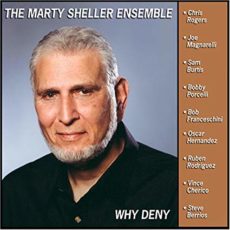
Marty Sheller was born March 15, 1940 in Newark, New Jersey and initially studied percussion, but switched to trumpet as a teenager. He first played with Hugo Dickens in Harlem, and arranged for Sabu Martinez, and began working with Afro-Latin percussionists such as Louie Ramirez and Frankie Malabe.
In 1962 he became a trumpeter in Mongo Santamaria’s band, and worked with Santamaria for more than forty years as a composer and arranger. He also had an extensive association with Fania Records as a house arranger, working with Joe Bataan, Ruben Blades, Willie Colon, Larry Harlow, Hector Lavoe, and Ismael Miranda.
Outside of Fania, he arranged for musicians such as George Benson, David Byrne, Jon Faddis, Giovanni Hidalgo, T.S. Monk, Idris Muhammad, Manny Oquendo, Dave Pike, Tito Puente, Shirley Scott, Woody Shaw, Lew Soloff, and Steve Turre.
In the 2000s, he led his own ensemble, which included the sidemen Chris Rogers, Joe Magnarelli, Sam Burtis, Bobby Porcelli, Bob Franceschini, Oscar Hernández, Ruben Rodriquez, Vince Cherico, and Steve Berrios. Trumpeter Marty Sheller continues to perform and arrange.
More Posts: arranger,history,instrumental,jazz,music,trumpet
Daily Dose Of Jazz…
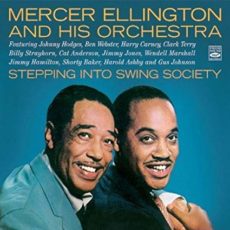
Mercer Kennedy Ellington was born on March 11, 1919 in Washington, D.C. and is the only child of the composer, pianist, and bandleader Duke Ellington and his high school sweetheart Edna Thompson. He grew up primarily in Harlem from the age of eight and by the age of eighteen, he had written his first piece to be recorded by his father, Pigeons and Peppers. He attended New College for the Education of Teachers at Columbia University, New York University, and the Juilliard School.
In 1939, 1946 through 1949, and 1959, Mercer led his own bands, many of whose members later performed with his father, or achieved a successful career in their own right including Dizzy Gillespie, Kenny Dorham, Idrees Sulieman, Chico Hamilton, Charles Mingus, and Carmen McRae. During the 1940s, in particular, he wrote pieces that became standards, Things Ain’t What They Used to Be, Jumpin’ Punkins, Moon Mist, and Blue Serge. He also wrote the lyrics to Hillis Walters’ popular song, Pass Me By in 1946), which was recorded by Lena Horne, Carmen McRae, and Peggy Lee.
Composing for his father from 1940 until 1941, he later worked as the road manager for Cootie Williams’ orchestra in 1941 until 1943 and again in 1954. Ellington returned to work for his father playing alto horn in 1950, and then as general manager and copyist from 1955 until 1959. In 1960, he became Della Reese’s musical director, then later went on to take a job as a radio DJ in New York for three years beginning in 1962. He again returned to his father’s orchestra in 1965, this time as trumpeter and road manager. When his father died in 1974, Ellington took over the orchestra, traveling on tour to Europe in 1975 and 1977.
In the early 1980s, Ellington became the first conductor for a Broadway musical of his father’s music, Sophisticated Ladies which ran from 1981 until 1983. Mercer’s Digital Duke won the 1988 Grammy Award for Best Large Jazz Ensemble Album. From 1982 until the early 1990s, the Duke Ellington Orchestra included Barrie Lee Hall, Rocky White, Tommy James, Gregory Charles Royal, J.J. Wiggins, Onzy Matthews, and Shelly Carrol among others.
Trumpeter, composer, arranger, and bandleader Mercer Ellington, who recorded ten albums as a leader and arranged Clark Terry’s Duke With A Difference album, passed away from a heart attack on February 8, 1996 at age 76 in Copenhagen, Denmark.
More Posts: and bandleader,arranger,composer,history,instrumental,jazz,music,trumpet
Daily Dose Of Jazz…
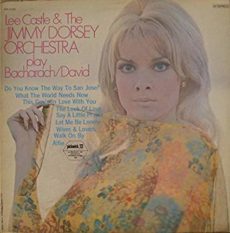
Lee Castle was born Lee Aniello Castaldo on February 28, 1915 in New York City. His first major professional job under his birth name was with Joe Haymes in 1935. This he followed by a couple of stints with Artie Shaw, Tommy Dorsey and also studied under Dorsey’s father. He also performed with Jack Teagarden, Glenn Miller, Will Bradley, and Benny Goodman.
Lee put together his own band in 1938, and continued to lead off and on through the Forties. He didn’t adopt the name Lee Castle in 1942. In 1953 he returned to duty under Tommy Dorsey and his brother Jimmy Dorsey. After Jimmy’s death, Castle became the leader of his ensemble, remaining in the position until the 1980s.
Trumpeter and bandleader Lee Castle passed away on November 16, 1990 in New York City.

More Posts: bandleader,history,instrumental,jazz,music,trumpet
Daily Dose Of Jazz…
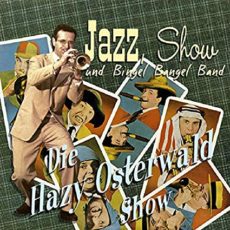
Hazy Osterwald was born Rolf Osterwald on February 18, 1922 in Bern, Switzerland. He began his career as a pianist, arranged for Fred Böhler in the late 1930s and joined him as a trumpeter in 1941. Around this time he also worked with Edmond Cohanier, Philippe Brun, Bob Huber, Eddie Brunner and Teddy Stauffer.
Hazy led his own ensemble starting in 1944, recording through the 1970s, with sidemen including Ernst Höllerhagen and Werner Dies. In the late 1940s he recorded with Gil Cuppini and played at the Paris Jazz Fair with Sidney Bechet and Charlie Parker. Trumpeter, vibraphonist, vocalist and bandleader Hazy Osterwald passed away on February 26, 2012 in Lucerne Switzerland.
More Posts: bandleader,history,instrumental,jazz,music,trumpet,vibraphone,vocal