


Daily Dose Of Jazz…
Stacy Rowles was born on September 11, 1955 to jazz pianist and composer Jimmy Rowles. Picking up an old trumpet in the family home she took right to it. She first performed with her father at the Monterey Jazz Festival and for a period she studied with vibraphonist Charlie Shoemake.
Perpetually undiscovered in America except on the West Coast but was better known in Europe. Stacy made her name partly in the company of her father, with whom she often played until shortly before his death in 1996.
She played restful, melodic solos with a warm tone and sang in a wise, honest voice, shy but swinging. She recorded her debut and only album Tell It Like It Is in 1984. Rowles recorded albums with her father titled I’m Glad There Is You, Me and the Moon and Looking Back. She also recorded with the Ben Sluijs Quartet and Frank Mantooth.
For a stretch in the early ’90s, father and daughter shared a weekly gig at Linda’s, a Los Angeles jazz club. On her own, Stacy also played regularly in several all-female jazz groups, including the all-female quintet the Jazz Birds, Maiden Voyage, in both of which she played alongside the trumpeter Betty O’Hara, the Jazz Tap Ensemble, the DIVA Big Band and the European band Witchcraft, with which she had toured since 2002.
Trumpeter, flugelhorn player and singer Stacy Rowles who had been active on the Los Angeles jazz scene since the 1980s, passed away from complications due to a car accident on October 30, 2009 at her home in Burbank, Calif. She was 54.

Jazz Is Global – Share
More Posts: flugelhorn,trumpet,vocal
Daily Dose Of Jazz…
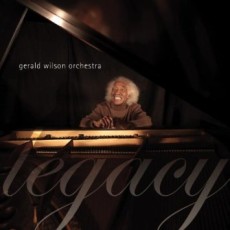
Gerald Stanley Wilson was born on September 4, 1918 in Shelby, Mississippi. At age 16 he moved to Detroit, Michigan where he attended with Wardell Gray and graduated from Cass Technical High School. He joined the Jimmie Lunceford Orchestra in 1939, replacing its star trumpeter and arranger Sy Oliver. While with the band, Wilson contributed numbers to the band’s book, including “Hi Spook” and “Yard-dog Mazurka”, the first being influenced by Ellington’s Caravan and the latter being a big influence on Stan Kenton’s Intermission Riff.
During World War II he performed for a brief time with the U.S. Navy with musicians including Clark Terry, Willie Smith and Jimmy Nottingham, among others. Gerald formed his own band, with some success in the mid-1940s, but by 1960, he formed a Los Angeles-based band that began a series of critically acclaimed recordings for the Pacific Jazz label. His band at various times included Snooky Young, Carmell Jones, Bud Shank, Joe maini, Harold Land, Teddy Edwards, Don Raffell, Joe Pass, Richard Holmes, Riy Ayers, Bobby Hutcherson, Mel Lewis and Mel Lee.
Wilson continued leading bands and recording in later decades for the Discovery and MAMA labels, many of his compositions reflected Spanish/Mexican themes and many were named after his family members. His later bands included Luis Bonilla, Rick Baptist, Randall Willis, son-in-law Shuggie Otis, son Anthony Wilson, grandson Eric Otis, Jimmy Owens, Oscar Brashear, Ron Barrows and Jon Faddis..
In 1998, Wilson received a commission from the Monterey Jazz Festival for an original composition, resulting in “Theme for Monterey”, performed at that year’s festival. He went on to form orchestras on the West and East coasts, each with local outstanding musicians. He also made special appearances as guest conductor with the Carnegie Hall Jazz Band, the Lincoln Center Jazz Orchestra, the Chicago Jazz Ensemble, BBC Big Band and other European radio jazz orchestras.
Gerald hosted an innovative show in the 1970’s, on KBCA in Los Angeles, California with co-host Dennis Smith, taught at California State University – Northridge and Los Angeles, Cal Arts, and University of California both in Los Angeles, and his 1998 album Theme For Monterey and his final 2011 recording Legacy were both nominated for a Grammy.
Throughout his career he wrote arrangements for the likes of Duke Ellington, Sarah Vaughan, Ray Charles, Julie London, Dizzy Gillespie, Ella Fitzgerald, Benny Carter, Lionel Hampton, Billie Holiday, Dinah Washington and Nancy Wilson just to name a few. Trumpeter, bandleader, composer, arranger and educator Gerald Wilson passed away on September 8, 2014 in his home in Los Angeles, California after a brief illness that followed a bout of pneumonia. He was 96 years old.
Jazz Is Global – Share
More Posts: trumpet
Daily Doe Of Jazz…
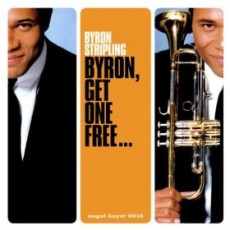
Byron Stripling was born as Lloyd Byron Stripling on August 20, 1961, in Atlanta, Georgia. He attended Eastman School of Music in Rochester, New York, and the Interlochen Arts Academy in Michigan.
Following his studies, Stripling was featured as lead trumpeter and soloist with the Count Basie Orchestra when Thad Jones and Frank Foster were directing. His touring and recording reads like a who’s who list with Dizzy Gillespie, Woody Herman, Lionel Hampton, Clark Terry, Louis Bellson, Buck Clayton,, Gerry Mulligan,, J.J. Johnson, Jim Hall, Sonny Rollins, Paquito D’Rivera, Freddie Cole, Jack McDuff, the Lincoln Center Jazz Orchestra, the Carnegie Hall Jazz Band, the Joe Henderson Big Band and the GRP All-Star Big Band.
Byron debuted at Carnegie Hall with Skitch Henderson and the New York Pops. He took on Broadway as the lead in the musicals Satchmo and From Second Avenue to Broadway, and has had a featured cameo in the television movie The Young Indiana Jones Chronicles. He again portrayed Louis Armstrong in Dave Brubeck’s revival of his The Real Ambassadors.
He has been a featured soloist at the Newport Jazz Festival, Hollywood Bowl and the Vail Jazz Festival as well as with the Boston Pops, Cincinnati Pops, Baltimore Symphony, St. Louis Symphony and Vancouver Symphony Orchestras, and the Seattle, Utah and Minnesota Symphonies, and The American Jazz Philharmonic.
In 2002 Stripling was selected to succeed Jazz Arts Group founder, Ray Eubanks, as the Artistic Director of the Columbus Jazz Orchestra. He continues to serve in that role, while also performing throughout the world with symphony orchestras and his own small group.
Give A Gift Of Jazz – Share
More Posts: trumpet
Daily Dose Of Jazz…
Tim Hagans was born on August 19, 1954 and grew up in Dayton, Ohio. His early inspiration came from Miles Davis, Freddie Hubbard and Thad Jones. In 1974 he joined the Stan Kenton band with whom he played until 1977, when he then toured with Woody Herman. Leaving for Europe he lived in Malmo, Sweden, which was a hotbed of the European jazz scene. He toured extensively and played with Dexter Gordon, Kenny Drew, Horace Parlan and Thad Jones. He would later dedicate For the Music Suite, a 40-minute piece for jazz orchestra to Jones.
Tim’s first recorded composition, I Hope This Time Isn’t The Last, appears on Thad Jones Live at Slukefter. In 1987 he moved to New York City and has since performed with Maria Schneider, the Yellowjackets, Steps, Secret Society, and Gary Peacock. He has worked extensively with producer and saxophonist Bob Belden on a variety of recordings and live performances, including their ongoing Animation/Imagination project.
As an educator Hagans has taught master classes at universities both stateside and abroad including the University of Cincinnati and Berklee College of Music. He has held the position of Artistic Director and Composer-in-Residence for the Norrbotten Big Band in Lulea, Sweden for which his Avatar Seesions: The Music of Tim Hagans was nominated for a Grammy. He has had several commissions by the NDR Big Band, Jazz Baltica, and the Barents Composers Orchestra.
Trumpeter Tim Hagans has been honored with awards, a featured subject in the documentary Boogaloo Road, a featured soloist on the soundtrack for the film The Score with Marlon Brando, Edward Norton and Robert DeNiro. He currently performs, tours, and records with the Tim Hagans Quartet: Tim Hagans, trumpet; Vic Juris, guitar; Rufus Reid, bass, and Jukkis Uotila, drums.
Inspire A Young Mind
More Posts: trumpet
Daily Dose Of Jazz…
Eddie Shu was born Edward Shulman on March18, 1918 in New York City and learned violin and guitar as a child before picking up the saxophone as a teenager. He began his professional career in 1935 in Brooklyn and for the seven years leading up to his service in the U.S. Army, he performed in vaudeville and night clubs as a ventriloquist and played harmonica with the Cappy Barra harmonica Band.
While serving in the Army from 1942 to 1945 with Stan Harper, the two were assigned to a special unit to entertain the troops. He also played in various bans including with Maurice Evans in the Pacific. After the war and through the 1950s Eddie performed with Tadd Dameron, George Shearing, Johnny Bothwell, Buddy Rich, Les Elgart, Lionel Hampton, Charlie Barnet, Chubby Jackson, and Gene Krupa.
By the 1960s Shu moved to Florida, playing locally as well as with the Louis Armstrong All-Stars, Lionel Hampton and Gene Krupa once again. He was a member of the vocal jazz group Rare Silk in 1980. During this period, he performed with this group in and around Boulder, Colorado and also performed a 6-week Department of Defense tour. He would record his final date on the Island Jazz Label “Shu-Swings” With The Joe Delaney Trio, playing tenor and alto saxophones, clarinet, trumpet and also revisit’s his 1954 78 single “Ruby” on chromatic harmonica.
Eddie Shu died on July 4, 1986 in St. Petersburg, Florida while living in Tampa. The swing and jazz multi-instrumentalist also had a high proficiency on the accordion and was a popular comedic ventriloquist.
Dose A Day – Blues Away