

Daily Dose Of Jazz…
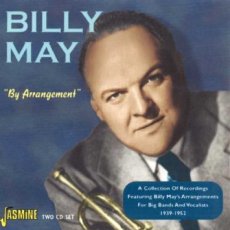
Billy May was born William E. May on November 10, 1916 in Pittsburgh, Pennsylvania and started playing the tuba in the high school band. At seventeen he began playing with Gene Olsen’s Polish-American Orchestra and a few local bands. Hearing Charlie Barnet’s band on the radio, he approached the bandleader in 1938 and asked if he could write arrangements for the band. For the next two years he arranged, played trumpet and recorded with Barnet, with his arrangement of Ray Noble’s Cherokee becoming a major hit during the swing music era.
By 1940 Glenn Miller hired May away from Barnet to arrange, play and record prior to performing the same duties with Les Brown before settling in as staff arranger for the NBC radio network and the n at Capitol Records.
He composed for television with such familiar scores as The Green Hornet, Batman, Naked City and Emergency; and for film Sergeants 3, Pennies from Heaven, Orchestra Wives, Cocoon and Cocoon: The Return among others. While at Capitol Records, Billy’s orchestra backed many of the arrangements he wrote for the top singers, including Frank Sinatra, Nat “King” Cole, Peggy Lee, Vic Damone, Rosemary Clooney, Bobby Darin, Ella Fitzgerald, Johnny Mercer, Jack Jones, Bing Crosby, Nancy Wilson and the list continues.
With his own band, May had a hit single, “Charmaine” though his most famous composition was the children’s song “I Tawt I Taw A Puddy Tat” recorded with Mel Blanc in 1950. He released an album as a leader titled Sorta-May, won a Grammy in 1959 for Best Performance By An Orchestra, went on to work with Verve, Reprise, Warner Bros. and Roulette record labels collaborating with Duke Ellington, Sammy Davis Jr., Petula Clark, Mel Torme, Jo Stafford, Dean Martin and Keely Smith on one of his final musical works. Composer, arranger and trumpeter Billy May passed away on January 22, 2004 at the age 85.

Take A Dose On The Road
More Posts: trumpet
Daily Dose Of Jazz…
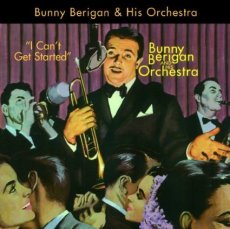
Bunny Berigan was born Rowland Bernard Berigan on November 2, 1908 in Hilbert, Wisconsin. Raised in Fort Lake the child prodigy learned violin and trumpet at an early age and played in local orchestras by his late teens. He joined the Hal Kemp Orchestra in mid 1930 recording his first trumpet solos and touring England. Upon his return in ’31 he was a sought after studio musician and recorded his first vocal “At Your Command”, then worked with the bands of Paul Whiteman and Abe Lyman by 1934.
He continued freelancing in the recording and radio studios, most notably with the Dorsey Brothers and on Glenn Miller’s earliest recording date as a leader in 1935, an association that graduated him to fame in his own right when he joined Benny Goodman’s re-formed band that included drummer Gene Krupa. The band made the legendary tour that ended with their unexpectedly headline-making stand at the Palomar Ballroom in Los Angeles, California, which has often been credited with the “formal” launch of the swing era.
Berigan went on to work with Tommy Dorsey recording one of his signature solos on the hit “Marie”, recorded under his own name his biggest hit “I Can’t Get Started”, led his own big band for three years that included Buddy Rich and Ray Conniff. He was a fixture on CBS Radio’s coast-to-coast broadcasts of Saturday Night Swing Club from 1937 to 1940, that helped further popularize jazz as the swing era climbed to its peak.
Already a heavy drinker and the band failing financially, Bunny drinking took a toll suffering pneumonia and then stricken with cirrhosis and ignoring his doctor’s advice, trumpeter, composer and bandleader Bunny Berigan, who modeled his playing in part on Louis Armstrong’s style lost his battle with alcoholism passing away of a massive hemorrhage on June 2, 1942 at age 33.
Dose A Day – Blues Away
More Posts: trumpet
Daily Dose Of Jazz…
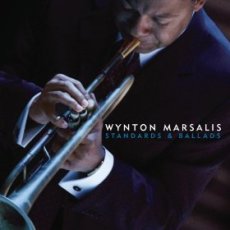
Wynton Learson Marsalis was born October 18, 1961 in New Orleans, Louisiana, the son of a jazz pianist. At an early age he exhibited an aptitude for music and by age eight he was performing traditional New Orleans music in the Fairview Baptist Church band. At 14, he performed with the New Orleans Philharmonic and during high school played with the New Orleans Symphony Brass Quintet, the New Orleans Community Concert Band, the New Orleans Youth Orchestra, the New Orleans Symphony, various jazz bands and with a local funk band, the Creators.
At age 17, Wynton was the youngest musician admitted to Tanglewood’s Berkshire Music Center where he won the school’s Harvey Shapiro Award for outstanding brass student. Moving to New York City he attended Julliard in 1979 and picked up gigs around town. He joined the Jazz Messengers led by Art Blakey in 1980 and in the years that followed he would perform with Sarah Vaughan, Dizzy Gillespie, Sweets Edison, Clark Terry, Sonny Rollins, Ron Carter, Herbie Hancock, Tony Williams and countless other jazz legends.
Marsalis has written, produced and hosted Marsalis On Music, an educational television series on jazz and classical music, National Public Radio aired the first of Marsalis’ 26-week series, titled Making the Music, was awarded a Peabody Award, has written five books, co-founded the jazz program at Lincoln Center that evolved into Jazz at Lincoln Center, opened Frederick P. Rose Hall, the first ever institution for jazz with three performance halls, recording, broadcast, rehearsal and education facilities.
Wynton Marsalis, jazz trumpeter, bandleader, composer and educator is currently the Artistic Director for Jazz at Lincoln Center and Music Director for the Jazz at Lincoln Center Orchestra. He was won nine Grammy Awards in both jazz and classical genres, and received the first ever Pulitzer Prize for Music.
Jazz Is Global – Share
More Posts: cornet,flugelhorn,flumpet,trumpet
Daily Dose Of Jazz…
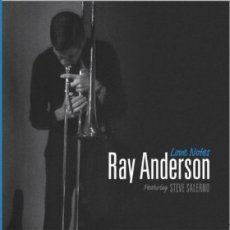
Ray Anderson was born on October 16, 1952 in Chicago, Illinois. An independent jazz trombonist and trumpeter he began training with the Chicago Symphony trombonists then spent time studying in California. By 1973 he was in New York freelancing and four years later joined Anthony Braxton’s group, then with Barry Altschul.
By the late ‘70s his influence was growing, he was leading his own groups, working with George Gruntz’s Concert Jazz Band and over the next twenty years began taking an occasional good-humored vocal singing two notes at the same time.
Anderson also plays the sousaphone, is a master at multiphonics and a supportive sideman has recorded and performed with David Murray, Charlie Haden, Dr. John, Bennie Wallace, Henry Threadgill, John Scofield and Sam Rivers among others. He also received a grant from the National Endowment For The Arts for a series of solo trombone concerts.
While pushing his sound into the future, Anderson has frequently returned to his early love of New Orleans music for inspiration as he continues to perform, record and tour. Since 2003 he has taught and conducted at Stony Brook University.
Give The Gift Of Knowledge
More Posts: sousaphone,trombone,trumpet
Daily Dose Of Jazz…
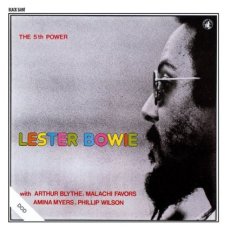
Lester Bowie was born on October 11, 1941 in the historic village of Bartonsville in Frederick, Maryland however he grew up in St. Louis, Missouri. At the age of five he started studying the trumpet with his father, a professional musician and grew up playing with Little Milton, Albert King, Solomon Burke, Joe Tex and Rufus Thomas. In 1965, he became Fontella Bass’s musical director and husband and co-founded the Black Artists Group (BAG) in St Louis.
In 1966, Bowie moved to Chicago, worked as a studio musician, meeting Muhal Richard Abrams and Roscoe Mitchell became a member of the AACM (Association for the Advancement of Creative Musicians). In 1968, he founded the Art Ensemble of Chicago and was a member of Jack DeJohnette’s New Directions Quartet. Lester lived and worked in Jamaica and Africa, recording with Fela Kuti.
In 1984, he formed Lester Bowie’s Brass Fantasy, a nonet demonstrating jazz’s links to other forms of popular music, covering songs by Whitney Houston, Michael Jackson Marilyn Manson and the Spice Girls along with more serious material. His New York Organ Ensemble featured James Carter and Amina Claudia Myers.
Although seen as part of the avant-garde, Bowie embraced techniques from the whole history of jazz trumpet, filling his music with humorous smears, blats, growls, half-valve effects, and so on. He had an affinity for reggae and ska, appeared on the Stolen Moments: Red, Hot + Cool compilation in support of the Aids epidemic in the African American community that Time Magazine named Album of the Year.
Throughout his career trumpeter Lester Bowie took an adventurous and humorous approach to music. He passed away of liver cancer on November 8, 1999 and was posthumously inducted into the Down Beat Hall Of Fame in 2000. The following year the Art Ensemble of Chicago recorded Tribute To Lester.
Jazz Is Global – Share
More Posts: trumpet