

Daily Dose Of Jazz…
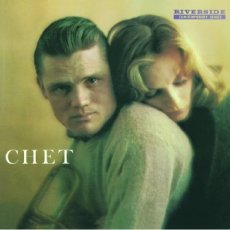
Chet Baker was born Chesney Henry Baker, Jr. on December 23, 1929 in Yale, Oklahoma. Raised in the musical household of a professional guitar player, he began his musical career singing in church, and then introduced to the trombone, but proved to large it was replaced with the trumpet.
Baker received some musical education at Glendale Junior High School, but left school at age 16 in 1946 to join the Army, serving in the 298th Army band. After his discharge in 1948, he studied theory and harmony at El Camino College in Los Angeles, dropped out in his second year and re-enlisting joined the army band at the Presidio but was soon spending time in San Francisco jazz clubs such as Bop City and the Black Hawk. Once again discharged he pursued his career as a professional musician.
Chet’s earliest notable professional gigs were with saxophonist Vido Musso band and with Stan but earned much more renown in 1951 when Charlie Parker chose him to play a series of West Coast engagements. In 1952, Baker joined the Gerry Mulligan Quartet, which was an instant phenomenon due to contrapuntal touches.
With Mulligan serving a sentence on drug charges, Pacific Jazz picked up Baker in 1956 releasing Chet Baker Sings to the consternation of purists, but it increased his profile. He would go on to perform and record with Russ Freeman, Carson Smith, Joe Mondragon, Jimmy Bond, Art Pepper and Shelley Manne among others, win the Downbeat Jazz Poll, make his acting debut in Hell’s Horizon, front his own combos, and become an icon in the West Coast cool jazz movement.
However successful Baker became his lifelong battle with heroin brought a decline to his musical career, pawning instruments, serving prison sentences, encountering expulsion and deportation from European countries, savagely beaten and losing his teeth and ability to play. Chet’s comeback came with being fitted with dentures, relocating to New York and Europe, playing with Philip Catherine, Phil Markowitz, Stan Getz and returning with his most prolific recording era between 1978 and 1988, though on mostly small European labels that never reached wide audience attention.
Chet Baker, composer, flugelhornist and trumpeter who popularity was due in part to his matinee-idol good looks and well publicized drug habit, and who was associated most prominently with his rendition of My Funny Valentine and his documentary Let’s Get Lost, passed away on May 13, 1988 in Amsterdam, Netherlands.

Take A Dose On The Road
More Posts: flugelhorn,trumpet,vocal
Daily Dose Of Jazz…
Reunald Jones Sr. was born December 22, 1910 in Indianapolis, Indiana and studied trumpet at the Michigan Conservatory. He played with territory bands such as Speed Webb’s outfit and then into the 30s worked with Charlie Johnson, the Savoy Bearcats, Chick Webb, Sam Wooding, Claude Hopkins and others.
By the 1940s he would work with Erskine Hawkins, Duke Ellington, Jimmy Lunceford, Lucky Millinder and Sy Oliver; and worked extensively as a studio musician. During the Fifties, Jones toured with Woody Herman, and played lead trumpet with the Count Basie Orchestra gaining some fame due to his “one-handed” solo style of playing, but was rarely featured.
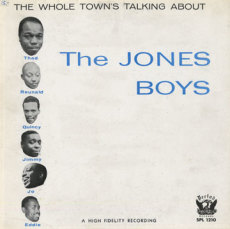
However, Jones was featured as a member of the Quincy Jones group, “The Jones Boys” from 1956-58, a session conceived by Leonard Feather featuring a number of musicians named “Jones,” though none of them were related.
The Sixties saw him playing and touring with George Shearing and with orchestra accompanying Nat King Cole. By the 70s he was playing less and on February 26, 1989 he passed away.
Dose A Day – Blues Away
More Posts: trumpet
Daily Dose Of Jazz…
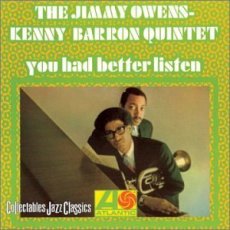
Jimmy Owens was born December 9, 1943 in New York City. In the 1960s, he was a member of the hybrid classical and rock band Ars Nova, and then became a member of the New York Jazz Sextet playing with at times were Sir Roland Hanna, Ron Carter, Billy Cobham, Benny Golson, Hubert Laws, and Tom McIntosh.
Between 1969 and 1972, Jimmy was a sideman on the David Frost Show under musical director Dr. Billy Taylor. During this stint he played alongside Frank Wess, Seldon Powell Barry Galbraith and Bob Cranshaw.
As an educator Jimmy is an active member of the jazz education community, sitting on the board of the Jazz Foundation of America and the Jazz Musicians’ Emergency Fund to help individual musicians.
Over the course of his career the trumpeter, composer, arranger, lecturer and music education consultant has performed and recorded as a leader and sideman with Lionel Hampton, Charles Mingus, Archie Shepp, Joe Zawinul, Gerald Wilson, Duke Ellington, Hank Crawford, Dizzy Gillespie, Count Basie and Herbie Mann among many others. Since 1969, he has led his own group, Jimmy Owens Plus.
Give The Gift Of Knowledge
More Posts: flugelhorn,trumpet
Daily Dose Of Jazz…
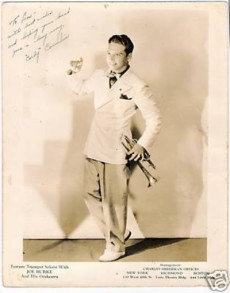
Edward “Corky” Cornelius was born in Indiana on December 3, 1914 but was raised in Binghamton, New York. Learning music from his father who worked as a drummer in regional Texas dance bands, he began his professional career in the early 1930s.
The trumpeter was first hired by Les Brown, Corky would go on to play with Frank Dailey and Buddy Rogers but by 1039 was playing alongside Gene Krupa in Benny Goodman’s band. Following his short tenure Cornelius left with Gene Krupa when the later decided to form his own band.
It was during this period that Cornelius met and married popular vocalist Irene Daye and left Krupa for the Casa Loma Orchestra from 1941 until his sudden death from kidney failure at age 28 on August 3, 1943.
Put A Dose In Your Pocket
More Posts: trumpet
Daily Dose Of Jazz…
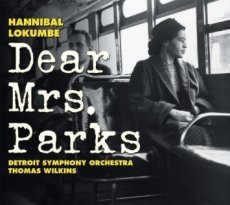
Hannibal Lokumbe was born Marvin Peterson in Smithville, Texas on November 11, 1948. As a child he was inspired by the spirituals and hymns of his grandparents but by 13 was given a trumpet and a year later his band The Soul Masters was backing icons such as Jackie Wilson, Otis Redding, Etta James, Lightning Hopkins and T-Bone Walker.
He attended North Texas State University from 1967 to 1969, and then moved to New York in 1970. Lokumbe spent the next twenty-five years in New York City playing trumpet and recording with some of his jazz heroes including Gil Evans, Pharaoh Sanders, Roy Haynes, Elvin Jones, and McCoy Tyner among many others. In 1974 he formed the Sunrise Orchestra and for more than fifteen years toured the world playing in every major music festival from Istanbul to China.
The recipient of numerous awards including the Bessie’s, the NEA, and a Lifetime Achievement Award from the Detroit Symphony Orchestra, Hannibal has composed works for The Kronos String Quartet, the Philadelphia, Baltimore, Cleveland, Detroit and Houston Symphonies. His groundbreaking opera African Portraits was performed and recorded by The Chicago Symphony under the direction of Daniel Barenboim and has been performed nearly two hundred times since its November 11, 1990 Carnegie Hall debut.
His works range from string quartets to full orchestral and choral compositions; he has written two books of poems, wrote and starred in an autobiographical play entitled Diary of an African American, and has lectured extensively at The University of Pennsylvania and at Harvard University. He currently has a catalogue of 14 recordings as a leader and twenty-two as a sideman having worked with Richard Davis, Grachan Moncur, Elvin Jones, Pharoah Sanders and numerous others. Trumpeter Hannibal Lokumbe steadfastly composes works for choir, jazz and vocal soloist; mentors and teaches children in history, music composition, teaching choral music to his community choir and he also gardens.
Give The Gift Of Knowledge
More Posts: trumpet