

Daily Dose Of Jazz…
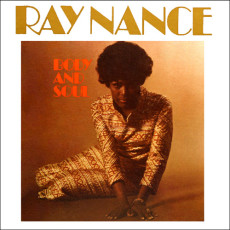
Ray Willis Nance was born on December 10, 1913 in Chicago, Illinois and as a child he studied piano, took violin lessons and was self-taught on trumpet. He led small groups from 1932-1937, then spent periods with the orchestras of Earl Hines and Horace Henderson through to 1940, however, he is best known for his long association with Duke Ellington through most of the 1940s and 1950s, after he was hired to replace Cootie Williams.
Shortly after joining the band, Nance was given the trumpet solo on the first recorded version of “Take The “A” Train” which became the Ellington theme, a major hit and jazz standard. Nance’s “A Train” solo is one of the most copied and admired trumpet solos in jazz history that even Williams upon his return to the some twenty years later would play Nance’s solo almost exactly as the original.
Ray was often featured on violin and was the only violin soloist ever featured in Ellington’s orchestra. He is also one of the well-known vocalists from the Ellington orchestra, having sung arguably the definitive version of “It Don’t Mean A Thing (If It Ain’t Got That Swing). It was Nance’s contribution to take the previously instrumental horn riff into the lead vocal, which constitute the now infamous, “Doo wha, doo wha, doo wha, doo wha, yeah!” The multi-talented trumpeter, violinist, vocalist and dancer earned him the nickname “Floorshow”.
He left the Ellington band in 1963 after having switched to and playing cornet alongside his predecessor Cootie Williams for a year. Over the course of his career he recorded a few albums as a leader and with Earl Hines, Rosemary Clooney and others. Ray Nance passed away on January 28, 1976 in New York City.

Daily Dose Of Jazz…
Donald Byrd was born Donaldson Toussaint L’Ouverture Byrd II on December 9, 1932 in Detroit, Michigan. He studied music and trumpet at Cass Technical High School, performing with Lionel Hampton prior to graduating. Joining the Air Force he played with the band, followed by matriculation through Wayne State University and the Manhattan School of Music.
He came to prominence while at the Manhattan School when he joined Art Blakey’s Jazz Messengers replacing Clifford Brown. By 1955 he was recording with Jackie McLean and Mal Waldron, left the Messengers a year later and performed with John Coltrane, Sonny Rollins, Herbie Hancock and Thelonious Monk.
Byrd’s first full-time band was a quintet that he co-led from 1958-61 with Pepper Adams, an ensemble with hard driving performances as captured live on “At The Half Note Café”. In June 1964, Byrd jammed with jazz legend Eric Dolphy in Paris and throughout the rest of the decade and into the 70s was a leader and notable sidemen for Blue Note’s stable of jazz greats.
In the 1970s, Donald moved away from his previous hard-bop jazz base and began to record jazz-fusion, jazz-funk, soul-jazz, and rhythm and blues. Teaming up with the Mizell Brothers, he recorded Black Byrd in 1972 that subsequently became Blue Note’s highest selling album ever. Three subsequent big selling albums called “Street Lady”, Places and Spaces, and “Steppin’ Into Tomorrow” followed this. In 1973, he created the Blackbyrds, a fusion group consisting of his best students that scored several major hits including “Happy Music”, “Walking In Rhythm” and “Rock Creek Park”. Byrd is best remembered as one of the only bebop jazz musicians who successfully pioneered the funk and soul genres while simultaneously remaining a pop artist.
Dr. Donald Byrd holds three master degrees, a law degree and a doctorate and has pursued a career as an educator teaching at Rutgers University, Hampton Institute, New York University, Howard University, Queens College, Oberlin College, Cornell University and was named artist-in-residence at Delaware State University. The trumpeter passed away at the age of 80 in Teaneck, New Jersey on February 4, 2013 leaving a legacy of recordings that spanned the jazz idiom.
More Posts: trumpet
Daily Dose Of Jazz…
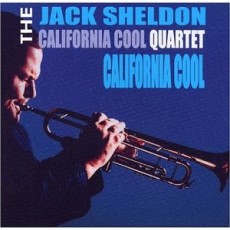
Jack Sheldon was born November 30, 1931 in Jacksonville, Florida became a professional trumpet player at the age of thirteen. It was during his teen years he moved to Los Angeles and subsequently joined the air force playing in military bands in Texas and California. He first gained recognition as part of the West Coast jazz movement in the 1950s performing and recording with Art Pepper, Gerry Mulligan and Curtis Counce.
Sheldon played the trumpet, sang, performed and was the sidekick and comedic foil on the Merv Griffin show. During the sixties he ventured further into television as an actor on such shows as Dragnet, The Girl With Something Extra, the Cara Williams Show and Run Buddy Run. He was also the voice used for “Conjunction Junction” and “I’m Just A Bill” on Schoolhouse Rock. He voice later appeared on such sitcoms as The Simpsons and Family Guy.
He has played with Jimmy Guiffre, Herb Geller, Mel Torme, Wardell Gray, Helen Humes, Gary Burton, June Christy, Rosemary Clooney and the big bands of Stan Kenton, Bill Berry, Tom Kubis and Benny Goodman.
Jack performed the trumpet solo for the theme song “The Shadow Of Your Smile” on the soundtrack of the 1965 movie, The Sandpiper, appeared in the Oscar-nominated documentary “Let’s Get Lost” about the life of fellow jazz trumpeter Chet Baker, performed a trumpet solo in the Coppola film “One From The Heart”, appeared as an ill-fated trumpeter in Radioland Murders, and is the subject of an award winning feature documentary, “Trying to Get God: The Jazz Odyssey of Jack Sheldon”. The trumpeter continued to be an active performer of the bebop and cool jazz schools until his transition on December 27, 2019.
Give A Gift Of Jazz ~ Share

#preserving genius
More Posts: trumpet
Daily Dose Of Jazz…
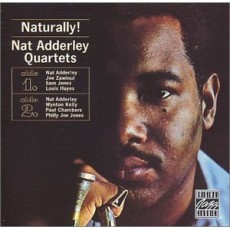
Nathaniel Adderley was born on November 25, 1931 in Tampa, Florida but grew up in Tallahassee when both his parents were hired to teach at Florida A&M University. While living in Tallahassee in the early 40s, he and his brother Julian played with Ray Charles, in the ‘50s he worked with his brother’s original group, and with Lionel Hampton and J. J. Johnson.
In 1959 joined his brother’s new quintet and stayed with it until Cannonball’s death in 1975. It was during this tenure that Nat composed “Work Song,” “Jive Samba,” and “The Old Country” for this group that have since become jazz standards.
After his brother’s death he led his own groups and recorded extensively working with Ron Carter, Sonny fortune, Johnny Griffin, Antonio Hart and Vincent Herring, among others. Adderley moved to Harlem in the 1960s, Teaneck, New Jersey in the 1970s, before moving to Lakeland, Florida where he was instrumental in the founding and development of the annual Child of the Sun Jazz Festival, held annually at Florida Southern College.
Nat Adderley, cornetists and trumpeter in the hard bop and soul jazz genres, lived with diabetes throughout his career, an illness that resulted in his death from complications on January 2, 2000. He left the jazz world a body of work that has been memorialized by a host of jazz musicians.

Daily Dose Of Jazz…
Arturo Sandoval was born in Artemisa, Cuba on November 6, 1949 and began to play music at age 12 in the village band. After playing many instruments, he fell in love with the trumpet. In 1964, he began three years of serious classical trumpet studies at the Cuban National School of Arts. By the age of 16 he had earned a place in Cuba’s all-star national band and was totally immersed in jazz influenced by Charlie Parker, Clifford Brown and with Dizzy Gillespie as his idol and later mentor and colleague.
In 1971 he was drafted into the military. Luckily, Sandoval was still able to play with the Orquesta Cubana de Musica Moderna. In Cuba, Sandoval co-founded the band Irakere with Chucho Valdes and Paquito D’Rivera. They quickly became a worldwide sensation. Their appearance at the 1978 Newport Jazz Festival introduced them to American audiences and garnered them a recording contract with Columbia Records.
Arturo defected to the United States while touring in Spain with Dizzy in 1990, becoming a naturalized citizen in 1999 and has enjoyed a successful career. He has played with Woody Herman, Herbie Hancock, Woody Shaw, Stan Getz, Celine Dion, Tito Puente, Patti LaBelle, Frank Sinatra, Paul Anka, Gordon Goodwin and numerous others.
His life was the subject of the 2000 TV film For Love or Country: The Arturo Sandoval Story, starring Andy Garcia. He currently continues to perform, tour and record around the globe.
More Posts: flugelhorn,piano,trumpet