

Daily Dose Of Jazz…
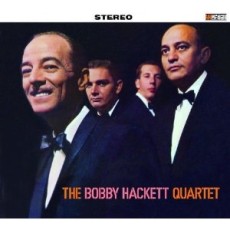
Bobby Hackett was born January 31, 1915 and raised in Providence, Rhode Island. At an early age he played the ukulele and by the time he was twelve, he was playing guitar, violin and had bought his first cornet. Leaving high school after his freshman year he took a steady job with a band that performed seven days a week at the Port Arthur and playing guitar regularly at the Rhodes and Arcadia ballrooms that often broadcasted on Providence radio and when Cab Calloway arrived short-handed and invited him to fill in.
In the fall of 1932 Bobby was recruited by The Herbie Marsh Orchestra, spent the summer of 1933 playing with Payson Re’s band, met Pee Wee Russell, by 1934, and playing college gigs with his band The Harvard Gold Coast Orchestra on weekends between Providence and Boston throughout 1935 and 36.
He worked with a new band at Nick’s in Greenwich Village, with Benny Goodman, Eddie Condon, Jack Teagarden and Teddy Wilson, played the new York World’s Fair in 1939, did the club circuit in New York, toured, recorded with his own band on MCA, took a seat with the Horace Heidt Musical Knights and recorded on the soundtrack of Fred Astaire vehicle “Second Chorus”.
After a dental surgery Bobby’s lip was in bad shape making it difficult for him to play, however, Glenn Miller offered him a job as a guitarist with the Miller Band and playing short trumpet solos. During the 1950s, he made a series of albums of ballads with a full string orchestra, produced by Jackie Gleason, in the Sixties toured with singer Tony Bennett, and by the early 1970s, Hackett performed separately with Dizzy Gillespie and Teresa Brewer. In his later years, he continued to perform in a Dixieland style even as trends in jazz changed.
Trumpeter Bobby Hackett passed away on June 7, 1976 from a heart attack. In 2012, he was selected to be inducted into the Rhode Island Music Hall of Fame.
More Posts: bandleader,cornet,guitar,trumpet
Daily Dose Of Jazz…
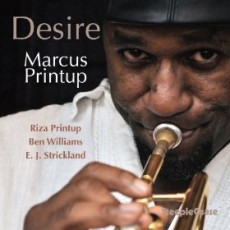
Marcus Printup was born on January 24, 1967 in Conyers, Georgia. His first musical experiences hearing the fiery gospel music his parents sang in church and didn’t discover jazz until he was a senior in high school.
He is a versatile musician who started playing trumpet in the fifth grade, played funk as a teenager, and while attending the University of North Florida on music scholarship, won the “International Trumpet Guild Jazz Trumpet Competition”, and was a member of a ten-piece group called “Soul Reason for the Blues”. In 1991 he met pianist Marcus Roberts, his mentor to this day, who introduced him to Wynton Marsalis, and was induction into the Jazz @ Lincoln Center Orchestra two years later.
Marcus has performed and/or recorded with Betty Carter, Dianne Reeves, Eric Reed, Cyrus Chestnut, Wycliffe Gordon, Carl Allen, Marcus Roberts among many others, not to mention a few of his projects as a leader, Song for the Beautiful Woman, Hub Songs, The New Boogaloo, Bird of Paradise, London Lullaby and his most recent, Desire.
Printup’s screen debut was in the 1999 movie “Playing By Heart” and also recorded on the film’s soundtrack. He tours annually with the Lincoln Center Jazz Orchestra, spending one-third of his year touring world wide, and nourishes his educator side by teaching youth and experienced musicians and contributing to several camps annually.
More Posts: trumpet

Daily Dose Of Jazz…
Valery Ponomarev was born January 20, 1943 in Russia and the young trumpeter became interested in jazz after hearing it on Voice of America. Feeling a particular affinity for Clifford Brown, he dedicated countless hours to transcribing, studying and memorizing legendary jazz trumpet solos. Fleeing the Soviet Union in 1973 he emigrated to the U.S. where he joined Art Blakey’s Jazz Messengers, an association that lasted four years.
Valery’s tenure with Blakey afforded him the opportunity to perform the major concert venues, clubs and festivals around the world, recording eleven albums and television appearances in Europe, Japan, Brazil and the United States. After his departure from The Jazz Messengers, Valery formed his own band “Universal Language”.
Ponomarev has performed or collaborated with Max Roach, Harold Land, George Morrow, Sam Dockery, Evelyn Blakey, Curtis Fuller, Bobby Watson and others. He is currently a member of the memorial Art Blakey & The Jazz Messengers band led by Benny Golson. He also tours with his big band playing some originals and some music from the Jazz Messengers repertoire.
Considered by many as an outstanding educator and mentor, Valery teaches privately and as part of the Wells Fargo Jazz for Teens program in Newark, New Jersey. He has had a documentary made about his life, “Messenger From Russia” and released his autobiographical book “On The Flip Side of Sound” in 2009.
More Posts: trumpet
Daily Dose Of Jazz…
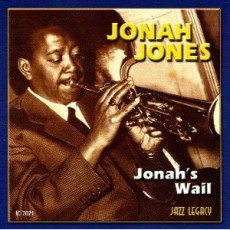
Jonah Jones was born Robert Elliott Jones in Louisville, Kentucky on December 31, 1909. He started playing alto sax at the age of 12 in the Booker T. Washington Community Center band in Louisville before quickly transitioning to trumpet where he excelled immediately. Jones began his career in the 1920s playing on a riverboat named “Island Queen” which plied between Kentucky and Ohio.
By 1928 he joined with Horace Henderson, later worked with Jimmie Lunceford, had an early and successful collaboration with Stuff Smith from 1932-1936, and by the Forties he was working in big bands like Benny Carter’s and Fletcher Henderson. He would spend most of the decade with Cab Calloway’s band that later became a combo.
Starting in the 1950s he had his own quartet and began concentrating on a formula that gained him wider appeal for a decade. The quartet consisted of George “River Rider” Rhodes on piano, John “Broken Down” Browne on bass and “Hard Nuts “Harold Austin on drums. The most mentioned accomplishment of this style is perhaps their version of “On The Street Where You Live”. This effort succeeded and he began to be known to a wider audience. This led to his quartet performing on “An Evening With Fred Astaire” in 1958 and winning a Grammy Award for Best Jazz Performance by a group in 1960.
Jonah went on to become a sensation in France, returned to more “core” jazz work with Earl Hines, played in the pit orchestra for the stage play Porgy and Bess starring Cab Calloway, was inducted into the Big Band and Jazz Hall of Fame in 1999. Trumpeter Jonah Jones passed away on April 29, 2000.
Daily Dose Of Jazz…
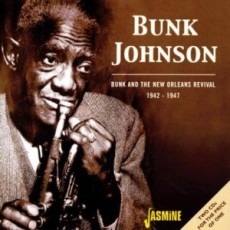
Willie Gary “Bunk” Johnson was born December 27, 1879 although there is some speculation surrounding his birth year as 1889. He received lessons from Adam Olivier, began playing professionally in Olivier’s orchestra and spent some adolescent years occasionally playing with Buddy Bolden’s band.
During the decade 1905-1915 Bunk was regarded as one of the top trumpeters in New Orleans in between repeatedly leaving to tour with minstrel shows and circus bands. In 1931 he lost his trumpet and front teeth when a violent fight broke out at a dance that put an end to his playing. He thereafter worked in manual labor, occasionally giving music lessons on the side when he could.
The later years of the thirties saw writers researching jazz history and trading letters with Johnson in which he stated he could play again if he had new teeth and trumpet. Writers and musicians took up a subsequent collection and got his new dentures via Sidney Bechet’s dentist brother, a new horn and made his first recording in 1942.
This propelled Bunk into public attention, attracting a cult following and he played New Orleans, San Francisco, Boston and New York City. His work in the 1940s show why he was well regarded by his fellow musicians—on his best days playing with great imagination, subtlety and beauty. Earlier fame eluded him for he was unpredictable, temperamental, with a passive-aggressive streak and a fondness for drinking alcohol to the point of serious impairment. In 1948, jazz trumpeter Bunk Johnson suffered from a stroke and died the following year in New Iberia on July 7, 1949.
More Posts: trumpet