

Daily Dose Of Jazz…
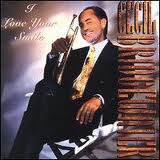
Cecil Bridgewater was born on Oct. 10, 1942 in Urbana, Illinois and studied music at the University of Illinois. Along with his brother Ron, they formed the Bridgewater Brothers Band in 1969. In 1970 he played with Horace Silver following this stint with a Thad Jones/Mel Lewis association from 1970 to 1976. During this period of the Seventies he married Dee Dee Bridgewater and played with Max Roach starting a decades-long association.
Cecil recorded his debut album “I Love Your Smile” in 1992, has enjoyed playing the sideman on some two dozen recordings with Dizzy Gillespie, Art Blakey, Randy Weston, Charles McPherson, Joe Henderson, Roy Brooks, Abdullah Ibrahim and Sam Rivers; and has composed works premiered by the Cleveland Chamber Orchestra and Meet the Composer.
Bridgewater has become a great supporter of The Jazz Foundation of America in their mission to save the homes and the lives of America’s elderly jazz and blues musicians including musicians that survived Hurricane Katrina. Cecil performed at the 2008 Benefit Concert, “A Great Night in Harlem” at the World Famous Apollo Theater. He continues to perform while currently teaching as adjunct faculty at Manhattan School of Music, New School, William Patterson and The Julliard School.
More Posts: trumpet
Daily Dose Of Jazz…
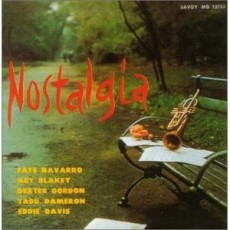
Theodore “Fats” Navarro was born on September 24, 1923 in Key West, Florida to Cuban-Black-Chinese parentage. He began playing piano at age six, but did not become serious about music until he began playing trumpet at age of thirteen. By the time he graduated from Douglass High School he wanted to be away from Key West and joined a dance band headed for the mid-west.
Tiring of the road life after touring with many bands and gaining valuable experience, including influencing a young J. J. Johnson when they were together in Snookum Russell’s territory band. Navarro settled in New York City in 1946, where his career took off. He met and played with, among others, Charlie Parker, but was in a position to demand a high salary, so Fats didn’t join one of Parker’s regular groups. Unfortunately he developed a heroin addiction, which, coupled with tuberculosis and a weight problem led to a slow decline in his health.
Through his short-lived career, trumpeter Fats Navarro played with among others Andy Kirk, Billy Eckstine, Benny Goodman and Lionel Hampton big bands, and also participated in small group recording sessions with Kenny Clarke, Tadd Dameron, Eddie “Lockjaw” Davis, Coleman Hawkins, Illinois Jacquet, Howard McGhee, Bud Powell and Charles Mingus, with whom he had a deep friendship.
Hospitalized on July 1st after his final performance with Charlie Parker at Birdland, the pioneering bebop jazz improvisation trumpeter Fats Navarro passed away at the age of 26 on July 7, 1950.
More Posts: trumpet
Daily Dose Of Jazz…
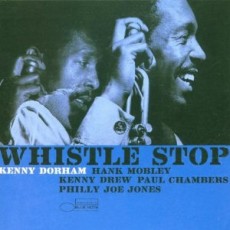
Kenny Dorham was born McKinley Howard Dorham on August 30, 1924 in Fairfield, Texas. One of the most active trumpeters of the bebop era, he played in the big bands of Billy Eckstine, Dizzy Gillespie, Lionel Hampton, Mercer Ellington and Charlie Parker’s quintet. A charter member of the original Jazz Messengers, throughout his career he recorded as a sideman with Thelonious Monk, Sonny Rollins, Jackie McLean, Cedar Walton, Andrew Hill, Milt Jackson and Max Roach among others.
In 1956 Kenny led his own groups, including the Jazz Prophets that featured the young pianist Bobby Timmons, bassist Sam Jones and tenorist J. R. Monterose. With guest guitarist Kenny Burrell, they recorded “Round About Midnight” at the Café Bohemia.
Dorham’s original quintet consisted of pianist Tommy Flanagan, Paul Chambers, and Art Taylor, and in 1963 he added 26-year-old tenor saxophonist Joe Henderson to his group. This friendship between Dorham and Henderson led to a number of other albums, such as Henderson’s “Page One”, “Our Thing”, “In ‘n’ Out” and “Una Mas” featuring a youthful Tony Williams.
Frequently lauded by critics and other musicians for his talent, he never received the kind of attention from the jazz establishment that many of his peers did. From 1953 to 1964 he recorded eighteen albums as a leader and held sideman duties on another forty-seven recordings. During his final years Kenny Dorham suffered from kidney disease, from which he succumbed on December 5, 1972, at age 48.
More Posts: trumpet
Daily Dose of Jazz…
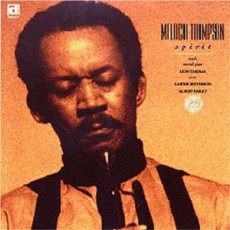
Malachi Richard Thompson was born on August 21, 1949 in Princeton, Kentucky and moved to Chicago as a child. He credited his interest in the trumpet to hearing Count Basie’s band at the Regal Theatre when he was 11 years old. Malachi worked in the rhythm and blues scene on Chicago’s South Side as a teen and in 1968 he joined the Association for the Advancement of Creative Musicians (AACM), spending some time in the AACM big band. Thompson graduated from Governor’s State University in 1974 with a degree in music composition.
He performed and toured with the Operation Breadbasket Big Band, which was affiliated with the Southern Christian Leadership Conference. He has worked with saxophonists Joe Henderson, Jackie McLean, Frank Foster and Archie Shepp among other musicians while living in New York City. He formed his “Freebop” band in 1978, eventually relocating to Washington, D.C., working with Lester Bowie’s Hot Trumpets Repertory Company and formed Africa Brass, inspired by traditional New Orleans brass bands.
With a goal of preserving the Sutherland Theater on Chicago’s South Side, Thompson founded the Sutherland Community Arts Initiative in 1991, a non-profit corporation, and wrote incidental music for a play about the theater. Diagnosed in 1989 with T-cell lymphoma and learning he had one year to live, Thompson claimed he was healed by radiation and reading about jazz. He died in Chicago from a relapse of his cancer on July 16, 2006.
More Posts: trumpet
Daily Dose Of Jazz…
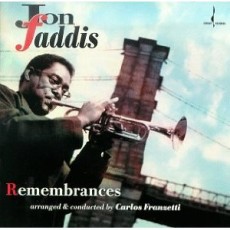
Jon Faddis was born July 24, 1953 in Oakland, California and studied music and trumpet as a child. At 18, he joined Lionel Hampton’s big band followed with tenure in the Thad Jones/Mel Lewis Orchestra as lead trumpet. After playing with Charles Mingus, he became a noted studio musician in New York, appearing on many pop recordings in the late 1970s and early 1980s.
The mid-Eighties saw Jon leaving the studios to pursue his solo career, which resulted in albums like Legacy, Into The Faddisphere and Hornucopia. Becoming the director and main trumpet soloist of the Dizzy Gillespie 70th Birthday Big Band and Dizzy’s United Nation Orchestra, in 1992 he began leading the Carnegie Hall Jazz Band at Carnegie Hall, conducting over 40 concerts in ten years.
Faddis has led the Dizzy Gillespie Alumni All-Stars and the Dizzy Gillespie Alumni All-Stars Big Band, was appointed artistic director of the Chicago Jazz Ensemble, heads the Jon Faddis Jazz Orchestra of New York. As an educator he teaches at The Conservatory of Music at Purchase College-SUNY and is a guest lecturer at Columbia College Chicago.
A jazz trumpeter, conductor, composer, and educator renowned for both his highly virtuosic command of the instrument and for his expertise in the field of music education, trumpeter Jon Faddis also leads master classes, clinics and workshops around the world often bringing promising students along to his gigs to sit in, and has produced a number of CDs for up-and-coming musicians.
More Posts: trumpet