

Daily Dose Of Jazz…
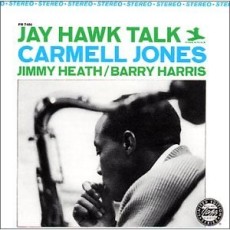
Carmell Jones was born in Kansas City, Kansas on July 19, 1936 and was reared by parents how were both teachers. He became interested in music and jazz, by his own admission, at the age of two. Piano lessons began at age five, gave way to the “that’s for sissy’s attitude” and trumpet started at seven.
He spent two years in the army followed by two years at the University of Kansas as a music education and trumpet major. Leaving the Midwest for the Pacific coast, he became a California studio musician in 1960 recording with such artists as Sammy Davis Jr., Bob Hope, and Nelson Riddle. During this chapter in his success story, he was being compared to Clifford Brown and Fats Navarro. Carmell developed a close association with Bud Shank as a member of his quintet. He recorded with many other notables and most importantly he recorded his first album under his own name and contract with Pacific Jazz – “The Remarkable Carmell Jones”.
In ‘64 moving to New York he joined the Horace Silver Quintet recording three albums with Silver including “Song For My Father”. Down Beat Magazine awarded Jones the designation of “New Star Trumpeter” and signing with Prestige, he recorded what he considers his most successful personal album, “Jay Hawk Talk”, with pianist Barry Harris, tenor Jimmy Heath, drummer Roger Humphreys and bassist Teddy Smith. This album received the critics 5 Star Best Album Award.
The next year Carmell left the U.S. for Germany and spent the next fifteen years working with Milo Pavlovic, Herb Geller, Leo Wright and Eugene Cicero, the SFB Big Band and Radio Free Berlin recording 8 hours a day, composing and arranging for radio, TV and film. Upon his return to the States he devoted much of his time building new musicians from the ground up teaching music in his hometown elementary schools.
Carmell Jones, trumpeter, composer, arranger, music publisher, educator and recording artist with over sixty albums to his credit passed away in Kansas City, Kansas on November 7, 1996.
Daily Dose Of Jazz…
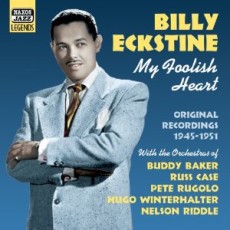
William Clarence Eckstine was born on July 8, 1914 in Pittsburgh, Pennsylvania but grew up in Washington, DC of Prussian and African American heritage. He began singing at the age of seven, entering amateur talent shows while dreaming of a football career that was sidelined when he broke his collarbone. Focusing on music he worked his way west to Chicago, joining Earl Hines’ Grand Terrace Orchestra as vocalist and occasionally trumpeter from1939 – 1943. During his tenure he made a name for himself through the Hines band’s radio shows with such jukebox hits as “Stormy Monday Blues” and his own “Jelly Jelly”.
Eckstine formed the first bop big band in 1944 making it a fountainhead for young musicians who would reshape jazz by the end of the decade, including Dizzy Gillespie, Dexter Gordon, Miles Davis, Art Blakey, Charlie Parker, Fats Navarro and Sarah Vaughn, with Tadd Dameron and Gil Fuller were among the band’s arrangers. Billy hit the charts often during the mid-’40s, with Top Ten entries including “A Cottage For Sale” and “Prisoner of Love”.
Breaking down barriers throughout the Forties as a leader of the original bop big band and as the first romantic black male in popular music, Mr. B, as he was affectionately known, went solo in 1947. His seamless transition to string-filled balladry saw him recording more than a dozen hits by the end of the decade and winning numerous awards from Esquire, Down Beat and Metronome magazines. His 1950 appearance at New York’s Paramount Theatre greatly surpassed Sinatra’s audience draw at the same venue.
Over the course of the next two decades Billy appeared on every major television variety show from Ed Sullivan to Nat King Cole, Jack Paar, Steve Allen, Joey Bishop, Flip Wilson and Playboy After Dark. After a long series of hit tunes and recordings by the 70’s Billy’s recordings came sparingly although he still performed before adoring audiences throughout the world. He made his final Grammy-nominated recording singing with Benny Carter in 1986.
Billy Eckstine, vocalist, bandleader, trumpeter, valve trombonist and guitarist passed away on March 8, 1993, at age 78, in his hometown of Pittsburgh.
More Posts: bandleader,guitar,trombone,trumpet,vocal
Daily Dose Of Jazz…
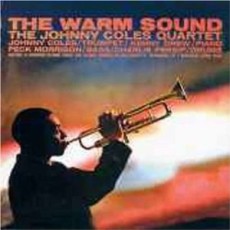
Trumpeter Johnny Coles was born on July 3, 1926 in Trenton, New Jersey. He spent his early career playing with R&B groups, including those of Eddie Vinson, Bull Moose Jackson, and Earl Bostic from 1948-1956). He joined James Moody for two years in 1956, then played with Gil Evans’s orchestra between 1958 and 1964 and was a part of the Miles Davis ensemble on Sketches of Spain.
Following this period, Coles worked with the Charles Mingus sextet which also included Eric Dolphy, Clifford Jordan, Jaki Byard, and Dannie Richmond. From 1968 to 1986 he played with Herbie Hancock, Ray Charles, Duke Ellington, Art Blakey, Dameronia, Mingus Dynasty and the Count Basie Orchestra under Thad Jones’ direction.
Coles recorded as a leader several times over the course of his career for Epic, Blue Note, Mainstream and Criss Cross record labels. As a sideman he recorded sessions with Tina Brooks, Booker Ervin, Grant Green, Horace Parlan and Duke Pearson among others.
Nicknamed “Little Johnny C”, the trumpeter passed away of cancer on December 21, 1997 in Philadelphia, Pennsylvania.
More Posts: trumpet

Daily Dose Of Jazz…
Jaki (John) Byard was born on June 15, 1922 in Worcester, Massachusetts and began playing professionally at age 15. Adept not only on the piano, he played trumpet and saxophone among other instruments. After serving in WWII he toured with Earl Bostic in the late 40s, based himself in Boston and had his recording debut with Charlie Mariano in 1951.
Known for his eclectic style, Byard added everything from ragtime to free jazz in his delivery. Through the fifties and into the sixties he was a member of Herb Pomeroy’s band followed by a stint with Maynard Ferguson.
Moving to New York, Byard recorded extensively with Charles Mingus from 1962 to 1964 and in 1970, touring Europe with him in 1964. He also made important recordings as a sideman with Eric Dolphy, Booker Ervin and Sam Rivers.
As a leader, he recorded a string of albums for the Prestige label during the 1960s and fronted an occasional big band, the Apollo Stompers. He taught at the New England Conservatory, Manhattan School of Music, Hartt School of Music, and the New School for Social Research.
Jaki Byard was shot dead on February 11, 1999 in New York City. The circumstances surrounding his death have not been determined. Phil Woods described him as “one of the most compelling and versatile pianists in jazz”.
Daily Dose Of Jazz…
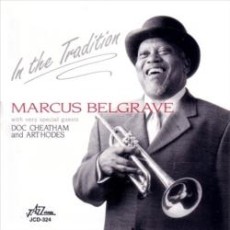
Marcus Belgrave was born June 12, 1936 in Chester, Pennsylvania and was tutored on trumpet by Clifford Brown when he was 17. Belgrave toured with Ray Charles from 1954-59 and later played with Charles Mingus and Max Roach.
In 1963 Marcus moved to Detroit and established himself as an educator and studio musician. He has recorded with Motown and Blue Note Record labels, The Lincoln Center Jazz Orchestra, Tony Bennett, Sammy Davis Jr., Dizzy Gillespie, Ella Fitzgerald and a host of other luminaries in jazz.
His reputation as a clinician and instructor led Marcus to cultivate young jazz talent over the years like Regina Carter, Rodney Whitaker, Kenny Garrett, James Carter, Geri Allen, Bob Hurst, Carlos McKinney and Karriem Riggins.
In 2006 he lent his expertise to the Young Musicians Program (YMP) summer program at the University of California Berkeley helping out student with coaching and private lessons. He was a frequent faculty member at Stanford Jazz Workshop and was a visiting professor of jazz trumpet at the Oberlin Conservatory.
Trumpeter Marcus Belgrave transitioned on May 23, 2015, in Ann Arbor, Michigan of heart failure after being hospitalized since April with complications of chronic obstructive pulmonary disease and congestive heart failure.
More Posts: trumpet