


Review: Dangerus & The Freedom Fighters
Dangerus was born on March 26, 1990 in Uster, Switzerland to a Black American father and a Serbian mother, and the singer, lyricist, composer and bandleader grew up listening to rock, jazz, reggae and classical music that his father played in the house. In grammar school he sang songs in music class and sat at the feet of his father as he composed, often using melodies in his songs that his son would hum. These experiences became the foundation of his musical education and now this multi-faceted singer is adding piano to his musical arsenal.
In 2014 forming his band, The Freedom Fighters, he has brought together a multicultural and international sextet of accomplished musicians featuring Brazilian producer, arranger and keyboardist Julinho Martins, drummer Herby Casseley from Jamaica, jazz bassist Merlin Mathews of Portuguese and Canadian heritage, Chineyem Okolo, a guitarist from Nigeria and Severin Blaser, a Swiss jazz saxophonist.
Why Dangerus, is an often asked question when interviewed. The answer is quite simple. Break down his name to Danger and Us, you will understand his dis-ease. He believes his generation, like every generation before him, is in danger of inheriting a world that will not sustain them and is doing nothing to correct the situation. Poverty, oppression, hunger, genocide, the ecology and their very existence is in danger of implosion. This dynamic group of Freedom Fighters are socially and politically conscious of the destructive system that is ultimately threatening humanity. They also see themselves as one instrument of change and a danger to that very system of oppression and slavery. They are warriors of the light and music is their weapon, operating in the footsteps of Fela Kuti.
Their logo is a lion, known globally as the king of the jungle, the protector of the pride. His job, like the logo, is black and white. There is no grey area, but there are those who seek to undermine humanity for selfish gains, tending to operate in the grey between dawn and sunrise, dusk and sunset. In those cases, these warriors see themselves as guardians of their urban concrete jungle and the earth that has given them birth.
However, this is much more than a picture of a lion as it has symbolism well beyond. Look closely and one will see the lion’s teeth are his lethal weapons, represented by keyboards and guitars, the tongue is a road, implying the way of one’s journey. The nose and whiskers are two arms chained together, depicting unity, and holding the barb-wires of oppression that are his whiskers. The eyes are fire and they are the force to be unleashed upon the world through their music. The mane let’s all know they are descendants of royalty and their bearing is regal..
Never straying far from his cultural roots or the diaspora, Dangerus delivers his songs with a fervor and passion, inspired by the trials and triumphs of today’s world. If you listen closely you will hear the influences of reggae with jazz, ska, bossa nova and samba, in what can only be described as an homage to Bob Marley, Black Uhuru, Peter Tosh, Jimmy Cliff and others who spoke of love, beauty, strength, politics and freedom. Dangerus and the Freedom Fighters continue this tradition, standing on the shoulders of those musical ancestors.
It is evident that this poet is contemplative and compassionate in his search for answers about an unstable world not of his making that will be left for his generation. Those of us who have marched the decades of unrest and have witnessed the beauty of the world, this is familiar territory celebrating the joy and pain of love and life. We understand, it is their generation’s turn to shout at the consciousness of society the gravity of their situation. Highly recommended listening but only if you are ready to expand your mind and face your convictions.
carl anthony | notorious jazz / november 29, 2017
Give A Gift Of Jazz ~ Share 
#preserving genius
More Posts: bandleader,composer,history,instrumental,jazz,music,vocal
Daily Dose Of Jazz…
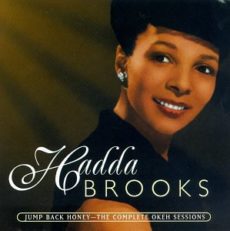
Hadda Brooks was born Hattie L. Hapgood on October 29, 1916 in Los Angeles, California. Raised in the Boyle Heights area by her parents who had migrated from the South her mother, Goldie Wright, was a doctor and her father, John Hapgood, a deputy sheriff, but it was her grandfather, who introduced her to theater and the operatic voices of Amelita Galli-Curci and Enrico Caruso. In her youth she formally studied classical music with an Italian piano instructor, Florence Bruni, with whom she trained for twenty years.
She attended the University of Chicago, later returned to Los Angeles, becoming to love the subtle comedy of black theater and vaudeville entertainer and singer Bert Williams. She began playing piano professionally in the early 1940s at a tap-dance studio owned by Hollywood choreographer and dancer Willie Covan. For ten dollars a week, she played the popular tunes of the day while Covan worked with such stars as Fred Astaire, Gene Kelly, and Shirley Temple.
Preferring ballads to boogie-woogie, Brooks worked up her style by listening to Albert Ammons, Pete Johnson, and Meade Lux Lewis records. Her first recording, the pounding Swingin’ the Boogie, for Jules Bihari’s Modern Records, was a regional hit in 1945, and her most famous song Out of the Blue, the title track to the film of the same name she appeared in on the recommendation of Benny Goodman.
She went on to begin singing with the encouragement Charlie Barnet, and recorded her first vocal recording You Won’t Let Me Go, played the small part of a lounge piano player in films, and was the second Black woman to host her own television show in 1957 with The Hadda Brooks Show after The Hazel Scott Show on DuMont in 1950. She toured Europe, Australia
In the 1970s, she commuted to Europe for performances in nightclubs and festivals, but performed rarely in the United States, living for many years in Australia and Hawaii. Retiring from music for sixteen years, she resurfaced to open Perino’s in Los Angeles and clubs in San Francisco and New York City as well as resuming her recording career. She continued appearing in films throughout the rest of her career, received the Pioneer Award from the Smithsonian and the Los Angeles Music Awards honored her with the Lifetime Achievement Award.
Pianist, vocalist and composer Hadda Brooks, who got her name from Jules Bihari, passed away Los Angeles, following open-heart surgery at age 86 on November 21, 2002.

Daily Dose Of Jazz…
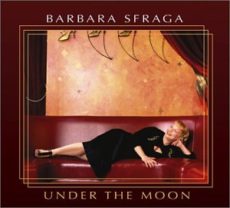
Barbara Sfraga was born on October 28, 1956 in Bay Shore, Long Island, New York. Pursuing her vocal talent she attended Long Island University from 1974-76 before moving to Connecticut, attending the University of Bridgeport from 1976-78 and majoring in classical voice.
After discovering the music of Ella Fitzgerald, Sarah Vaughan and Anita O’Day, she became seriously interested in jazz singing. This was soon followed with her discovery of the innovations of Mark Murphy, Betty Carter and Lambert, Hendricks & Ross, and in the 1980s, she began singing jazz in New York clubs.
In 1996, Barbara founded In Concert with our Community, an organization whose initial goal was using cultural events to raise funds for children’s organizations. 1998 saw her recording her debut album as a leader titled Oh, What A Thrill, bringing in guests as Mark Murphy, who wrote the liner notes and pianist Fred Hersch.
In 2003, her sophomore album, Under the Moon, was released by the Chicago-based A440 label. the risk-taking jazz vocalist and lyricist Barbara Sfraga, who sings in the avant-garde and post bop genres, continues to perform, tour and write.
More Posts: vocal
Daily Dose Of Jazz…
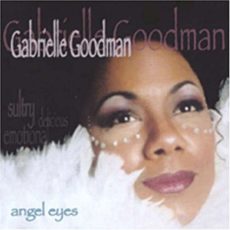
Gabrielle Goodman was born on October 23, 1964 in Baltimore, Maryland and raised in a musical family. Her mother was a classical singer and her father was a jazz trombonist. She attended Peabody preparatory school and briefly Oberlin College before transferring to the Peabody Institute Conservatory, where she studied until graduating in 1990 under the direction of Alice Gerstl Duschak and Gordon Hawkins.
As a protege of Roberta Flack she began her international performance career as a backing singer for the singer in the mid-1980s and continued to tour and record with the legend for several years opening for Miles Davis, Ray Charles, the Crusaders and among others in Japan, Switzerland and Brazil.
Her first break as a solo recording artist came when she was lead singer on producer Norman Connors 1988 album Passion on Capitol Records. She later recorded two albums Travelin’ Light and Until We Love on the JMT/Verve label with German producer Stefan Winter that feature her with Kevin Eubanks, Christian Mcbride, Gary Bartz, Gary Thomas, and Terri Lyne Carrington. Gabrielle has gone on to work with Walter Beasley, David Bunn, Tony Bunn, Patrice Rushen, Dee Dee Bridgewater, Michael Bublé, Patti Labelle, Nona Hendryx, Jennifer Hudson, Mary J. Blige, Freddie Jackson, Brian Ferry, Chaka Khan and the late George Duke.
As an educator she has held the position of associate professor of voice at Berklee College of Music and in-between vocalist Gabrielle Goodman continues to record and perform.
More Posts: vocal
Daily Dose Of Jazz…
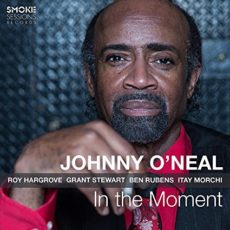
Johnny O’Neal was born October 10, 1956 in Detroit, Michigan and his playing was influenced by pianists Oscar Peterson and Art Tatum. In 1974, he moved to Birmingham, Alabama and worked as a musician, never needing a day job to make ends meet. There he worked with locals Jerry Grundhofer, Dave Amaral, Cleveland Eaton, and Ray Reach.
Moving to New York City in 1981 to perform with Clark Terry, he also landed a regular job at the Blue Note, accompanying among numerous others, Dizzy Gillespie, Ray Brown, Nancy Wilson, Joe Pass and Kenny Burrell. From 1982 to 1983 Johnny was a member of Art Blakey and the Jazz Messengers and made his Carnegie Hall debut in 1985.
During the Nineties he lived in Atlanta, Georgia and performed prolifically at Churchill Grounds and Just Jazz, before settling in Canada for a few years. He has recorded with Art Blakey, Russell Malone, Magic City Jazz Orchestra, SuperJazz Big Band and the Alabama Jazz Hall of Fame All-Stars, among others.
On the recommendation of Oscar Peterson, O’Neal portrayed Art Tatum in the 2004 movie Ray, recreating Tatum’s sound on the song Yesterdays. He has been profiled in the 2006 DVD Tight, was featured in Lush Life: Celebrating Billy Strayhorn, performing with the Jazz at Lincoln Center Orchestra and received a standing ovation.
Neo-bop pianist, vibist and vocalist Johnny O’Neal, whose playing ranges from the technically virtuosic to the tenderest of ballad interpretations, was a 1997 inductee of the Alabama Jazz Hall of Fame and continues his career performing, recording and touring.

More Posts: piano,vibraphone,vocal