

Hollywood On 52nd Street
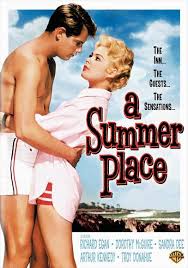
A Summer Place was adapted from the Sloan Wilson novel into a 1959 film of the same name, at a time when divorce, adultery and teenage sexuality were taboo subjects and very controversial. The theme song which became a jazz standard was composed by Mack Discant and Max Steiner.
The Story: Focuses on the adult lives of two one-time teenage lovers, Ken and Sylvia, who were from different social strata. Ken was self-supporting, working as a lifeguard at a Maine island resort, while Sylvia’s family stayed as guests of the owners, one summer between years at college. After their summer love affair, they married other people, but rediscovered each other later in life. At that time, Sylvia has a son, Johnny, and Ken a daughter, Molly. While Ken and Sylvia renew their love affair, their children begin a romance.
Sponsored By

www.whatissuitetabu.com
More Posts: comedy,dance,drama,hollywood,instrumental,jazz,musical,suite ta bu,vocal
Hollywood On 52nd Street
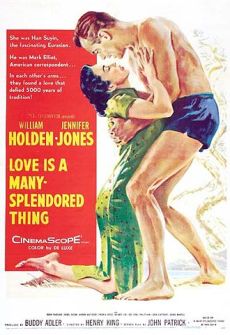
Love Is A Many-Splendored Thing is a pop song that became a jazz standard with music by Sammy Fain and lyrics by Paul Francis Webster. The song was publicized first as the theme in the 1955 movie of the same name, winning the Academy Award for Best Original Song. The music was commissioned for the movie and initially featured as background music. Lyrics were subsequently added to make it eligible for the Best Original Song category of the Academy Awards. From 1967 to 1973, it was used as the theme song to the television soap opera, Love Is A Many Splendored Thing, based on the movie.
The Story: Set in 1949–50 Hong Kong it tells the story of a married, but separated, American correspondent Mark Elliot (played by William Holden), who falls in love with a Eurasian doctor Han Suyin originally from China (played by Jennifer Jones). Though they find temporary happiness, she encounters prejudice from her family and ostracized from Hong Kong society. After losing her position at the hospital, Suyin and her adopted daughter go to live with a friend while Mark is on an assignment during the Korean War. They write to each other constantly.
Sponsored By
www.whatissuitetabu.com
More Posts: comedy,dance,drama,hollywood,instrumental,jazz,musical,suite ta bu,vocal
Daily Dose Of Jazz…
Vaughn Wilton Monroe was born on October 7, 1911 in Akron, Ohio and didn’t study music until attending the New England Conservatory in 1935 and then only one semester of voice. By 1940 he formed his first orchestra becoming lead vocalist and recording for the Bluebird label. That same year he built The Meadows, a restaurant/nightclub outside Boston and hosted the Camel Caravan radio program on location in 1946.
Monroe recorded extensively for RCA Victor into the 1950s and his signature tune was “Racing with the Moon” among his many other hits such as In The Still Of The Night, There I’ve Said It Again, Let It Snow, Let It Snow, Let It Snow; and Riders In The Sky are just a few. A composer, he also wrote a number of songs.
His interest turned to acting and as the movies also beckoned he pursued but with little vigor. He co-authored The Adventures of Mr. Putt Putt, a children’s book about airplanes and flying, published in 1949.
He hosted The Vaughn Monroe Show on CBS television in the Fifties, and appeared on Bonanza, the Mike Douglas Show, the Ed Sullivan Show, the Jackie Gleason Show and American Bandstand. A major stockholder in RCA, Monroe appeared in print ads and television commercials for the company’s TV and audio products.
Vaughan Monroe, baritone singer, trumpeter, bandleader actor and composer died on May 21, 1973 shortly after having stomach surgery. He has two stars on the Hollywood Walk of Fame for recording and radio.

Dose A Day – Blues Away
Hollywood On 52nd Street
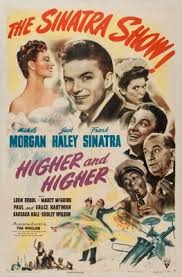
A Lovely Way To Spend An Evening enters into jazz history from the creative minds that scored the music and lyrics, Jimmy McHugh and Harold Adamson, respectively. Taken from the 1944 musical film Higher and Higher starring Michele Morgan, Jack Haley and Frank Sinatra. Written It is loosely based on the 1940 Broadway musical written by Gladys Hurlbut and Joshua Logan. The film version diverges significantly from its source.
The Story: The household staff of millionaire Cyrus Drake hasn’t been paid for months when his bankruptcy is announced. With the wife and daughter of Cyrus on a long trip abroad, a scheme is formed to pass off the attractive young maid Millie as the socialite daughter, Pamela Drake, and marry her off to a rich man so there’ll be money for all.
The valet, Mike O’Brien, helps with the transformation, unaware that Millie is secretly in love with him. Asked if she’d ever been courted, Millie mentions that she likes the way a young man next door sometimes sings to her. His name is Frank.
The social secretary Sandy begins to teach Millie the proper etiquette and how to walk and talk like a debutante. At a coming-out ball, where Georgia Keating, a high-society friend of the Drakes, wants her daughter Katherine to be considered the most desirable deb, Millie is nudged toward Sir Victor Fitzroy, a nobleman she should marry.
No one there knows Victor can’t even pay his hotel bill. He’s hoping to catch a rich girl to pay off his own debts. Millie isn’t in love, but agrees to marry him for everyone’s sake. Mike mistakenly thinks she’s in love with Frank, so he helps Millie get out of the wedding at the last minute. To his surprise, Frank ends up paired up with Katherine, which frees Mike and Millie to finally begin their romance.
Sponsored By
www.whatissuitetabu.com
More Posts: comedy,dance,drama,hollywood,instrumental,jazz,musical,suite ta bu,vocal
Daily Dose OF Jazz…
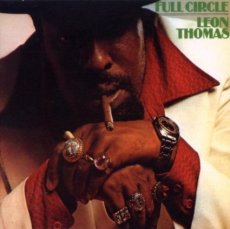
Amos Leon Thomas Jr was born on October 4, 1937 in East St. Louis, Illinois. He studied music at Tennessee State University and went on to become the vocalist for Count Basie and others in the Sixties. In 1969, Leon released his first solo album for the prestigious Flying Dutchman label, however, an earlier album he recorded still remains unreleased.
Thomas is best known for his work with Pharoah Sanders, particularly the 1969 song “The Creator Has a Master Plan” from the Karma album. His most distinctive attribute was that he often broke out into yodeling in the middle of a vocal, developed after he fell and broke his teeth before a show. This style influenced singers James Moody and Tim Buckley.
Thomas toured and recorded as a member of the band Santana in 1973 but was largely forgotten until a resurgence of interest in soul jazz and several of his tracks have been sampled in hip-hop and down-tempo records. Leon Thomas, jazz singer, often in the avant-garde genre, died of heart failure on May 8, 1999.
Jazz Is Global – Share
More Posts: vocal