

Daily Dose OF Jazz…
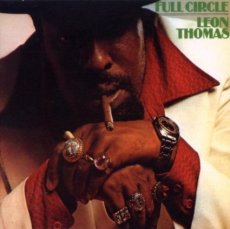
Amos Leon Thomas Jr was born on October 4, 1937 in East St. Louis, Illinois. He studied music at Tennessee State University and went on to become the vocalist for Count Basie and others in the Sixties. In 1969, Leon released his first solo album for the prestigious Flying Dutchman label, however, an earlier album he recorded still remains unreleased.
Thomas is best known for his work with Pharoah Sanders, particularly the 1969 song “The Creator Has a Master Plan” from the Karma album. His most distinctive attribute was that he often broke out into yodeling in the middle of a vocal, developed after he fell and broke his teeth before a show. This style influenced singers James Moody and Tim Buckley.
Thomas toured and recorded as a member of the band Santana in 1973 but was largely forgotten until a resurgence of interest in soul jazz and several of his tracks have been sampled in hip-hop and down-tempo records. Leon Thomas, jazz singer, often in the avant-garde genre, died of heart failure on May 8, 1999.

Jazz Is Global – Share
More Posts: vocal
Daily Dose OF Jazz…
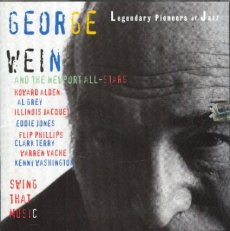
George Wein was born on October 3, 1925 in Boston, Massachusetts. As a youth he was a jazz pianist and while studying at Boston University led a small group, playing professionally around the Boston area. In 1950 he opened a jazz club and record label called Storyville.
In 1954 Newport residents Louis and Elaine Lorillard invited him to organize a festival in their hometown of Newport, Rhode Island, with funding to be provided by them; the subsequent festival was the first outdoor jazz festival in the United States, becoming an annual tradition. Wein went on to start a number of festivals in other cities, including the New Orleans Jazz & Heritage Festival, the Playboy Jazz Festival in Los Angeles and the Newport Folk Festival. In the 60s he set up Festival Productions, a company dedicated to promoting large-scale jazz events.
Pioneering the idea of corporate sponsorship, his “Schlitz Salute to Jazz” and “Kool Jazz Festival” were the first jazz events to feature title sponsors. His JVC Jazz Festivals are worldwide hosting New York, Los Angeles, Chicago, Paris, Warsaw and Tokyo.
Wein has received a wide array of honors for his work with jazz concerts being honored at the White House by both Presidents Carter and Clinton. He has also received the Patron of the Arts from the Studio Museum in Harlem, France’s Legion d’Honneur and appointed Commandeur de L’Ordre des Arts et Lettres and named a Jazz Master by the National Endowment for the Arts to name a few.
He has written his autobiography, Myself Among Others: A Life in Music, received honorary degrees from the Berklee College of Music and the Rhode Island College of Music, is a Lifetime Honorary Trustee of Carnegie Hall and sits as a distinguished member of the Board of Directors Advisory committee of The Jazz Foundation of America.
Put A Dose In Your Pocket
Daily Dose OF Jazz…
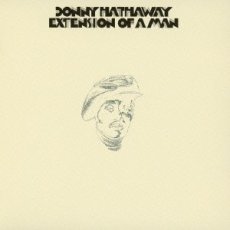
Donny Edward Hathaway was born on October 1, 1945 in Chicago, Illinois and was raised by his grandmother in the projects of St. Louis, Missouri. He began singing at age three in a church choir with his grandmother, a professional gospel singer. Graduating from high school he studied music at Howard University. Forming a jazz trio to work around D.C. but left Howard in 1967 without a degree, after receiving job offers in the music business.
Hathaway worked as songwriter, session musician and producer in Chicago at Twinight Records, arranged for The Unifics, worked with the Staple Singers, Jerry Butler, Aretha Franklin, The Impressions and Curtis Mayfield. He became house producer for Curtom Records, recorded as a member of the Mayfield Singers and dropped his first single “The Ghetto” in 1970. He recorded several albums following this debut.
Donny went on to contribute to soundtracks, recorded the theme to the TV series Maude, composed and conducted the soundtrack for the 1972 film Come Back Charleston Blue and wrote several hits such as his collaboration with Roberta Flack – Where Is The Love – that garnered them both a Grammy and This Christmas that has become a seminal holiday song.
However, genius has its detractors and during the best part of his career he began to suffer from severe bouts of depression and was found suffering from paranoid schizophrenia. On January 13, 1979 the body of Donny Hathaway was discovered on the sidewalk outside the luxury Central Park South hotel Essex House in New York City. His death was ruled a suicide.
Take A Dose On The Road
Daily Dose Of Jazz…
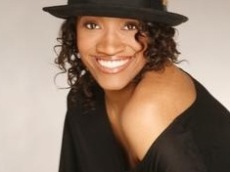
Nefertari Bey was born on September 29, 1980 in Oakland, California, but had the privileged of growing up in places such as Detroit, Chicago, South Carolina & North Carolina. Having such strong musical influence at home she naturally gravitated toward music and began singing at the age of 5. By 16, Nefertari was embarking on her first European tour.
With a Bachelor of Arts in Vocal Performance/Music Engineering Technology from Hampton University, and a Masters in Music from Georgia State University, Nefertari has used her musical education and talent to master the powerful art of musical storytelling and become a profound advocate of music education for all ages.
Bey, who is also a pianist, composer and arranger draws her musical style from influences such as Dinah Washington, Aretha Franklin, Nina Simone, John Coltrane and Liz Macomb. She has lent her rhythmic skill, style and sound to performances with notable artist such as Kenny Barron, Curtis Lundy and Louis Hayes.
Nefertari Bey unparalleled talent and sultry voice continues to perform.
Inspire A Young Mind
More Posts: vocal
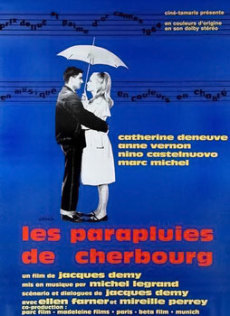
Hollywood On 52nd Street
Watch What Happens and I Will Wait For You The film score established composer Michel Legrand’s reputation in Hollywood, where he later scored other films, winning three Oscars . In North America, two of the film’s songs, the main theme “I Will Wait For You” and “Watch What Happens” originally titled Recit de Cassard or Cassard’s Song. They became hits and were recorded by many artists. Both were given new English lyrics by lyricist Norman Gimbel and Tony Bennett’s classic performance of the theme song was added to one version of the soundtrack CD.
The Story: The Umbrellas of Cherbourg or the French translation Les Parapluies de Cherbourg is a 1964 French musical film directed by Jacques Demy, starring Catherine Deneuve and Nino Castelnuovo. The film dialogue is all sung as recitative, even the most casual conversation.
Umbrellas is the middle film in an informal “romantic trilogy” of Demy films that share some of the same actors, characters and overall look; it comes after Lola (1961) and before The Young Girls of Rochefort (1967)
More Posts: comedy,dance,drama,hollywood,instrumental,jazz,musical,suite ta bu,vocal