


From Broadway To 52nd Street
Lady In The Dark took the stage at the Alvin Theatre on January 23, 1941. The musical starred Gertrude Lawrence, McDonald Carey, Dianne Kaye and Victor Mature with the music composed by Kurt Weill and lyrics by Ira Gershwin. It ran for four hundred and sixty-seven performances. Beyond its Broadway run, Lady In The Dark would b staged in the United Kingdom in 1981, was also made into a 1944 film and a live 1954 television special. Except for the final song, all the music in the play is heard in three extended dream sequences: the Glamour Dream, the Wedding Dream, and the Circus Dream which, to some extent, become three small operettas integrated into a straight play. The final song, “My Ship”, which went on to become a jazz standard, functioned as a leitmotif for Liza’s insecurity: as each dream commences, a snippet of the tune is heard, as it is a haunting melody which Liza recognizes but cannot name, or sing with words, until her anxiety is resolved.
The Story: The protagonist, Liza Elliott, is the unhappy albeit successful editor of a fashion magazine, Allure, who is undergoing psychoanalysis. Relating a dream to her analyst, all the familiar male figures in her life appear in her dream but they act in unfamiliar ways. By recounting her dream, Liza realizes that her father’s disdain for her as a child has warped her relations with men.
Broadway History: Innovations to Broadway would come in 1943 with Rodgers & Hammerstein’s Oklahoma, which integrated music, song, and dance with a detailed plot. West Side Story followed in these footsteps in 1957 by introducing serious themes, causing the genre to be called simply “musicals”. In 1967 Hair would herald the rock musical to prominence.
Sponsored By
www.whatissuitetabu.com
Daily Dose Of Jazz…
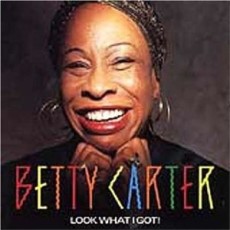
Betty Carter was born Lillie Mae Jones on May 16, 1929 in Flint, Michigan but grew up in Detroit. The first music she heard was church music as her father led a choir. She studied piano at the Detroit Conservatory and winning a talent contest became a regular on the local club circuit. By 16 she was singing with Charlie Parker and would later perform with Dizzy Gillespie and Miles Davis.
Honing her scatting while touring with Lionel Hampton in the late 40s, it was Hampton’s wife Gladys who nicknamed her “Betty Bebop”, a name she reportedly detested. In the fifties she recorded with King Pleasure and Ray Bryant, and released her first solo LP, Out There With Betty Carter in 1958.
Although her career was eclipsed somewhat through the 60s and 70s, she made a series of duets with Ray Charles that rendered “Baby, It’s Cold Outside” which brought her a modicum of new recognition. She established Bet-Car in 1970, her own record label, after an A&R man attempted to run off with her master recordings. Her private label produced some of her most famous recordings including the double album “The Audience With Betty Carter”.
In the last decade of her life she won a Grammy for “Look What I Got”, appeared on the Cosby show, performed at the White House, was awarded the National Medal of Arts by President Clinton and headlined Verve’s 50th Anniversary at Carnegie Hall.
Betty Carter remained active in jazz until her death from pancreatic cancer on September 26, 1998 at the age of 69. The singer renowned for her improvisational technique and idiosyncratic vocal style was devoted to the jazz idiom. Her fellow vocalist Carmen McRae once claimed: “There’s really only one jazz singer – only one Betty Carter”.
More Posts: vocal
Daily Dose Of Jazz…
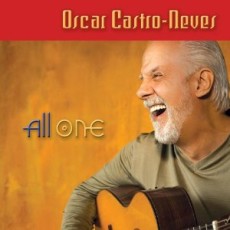
Oscar Castro-Neves was born one of triplets on May 15, 1940 in Rio de Janiero. Discovering his interest in music at an early age, by six he was playing the little viola and the cavaquinho and forming a band with his brothers. He found his musical interest in the synthesis of European classical influenced altered chords with the bittersweet samba-cancao.
He would learn from Johnny Alf who was deeply influenced by jazz, as would all musicians who chose the path to bossa nova. However it wasn’t until the 60s that it would catch on and in 1962 he was part of the historic Carnegie Hall Bossa Nova Festival.
Soon after he befriended Paul Winter and recorded his debut Oscar! on Paul’s label Living Music. That recording led to other sessions as a leader and performances with the likes of Vinicius de Moraes, Dorival Caymmi, and Quarteto em Cy. In 1966 he recorded with Tom Jobim on his Apresenta album before joining Sergio Mendes and Brazil 66 and recording Fool On The Hill. Having recorded three albums, he had already gained immediate fame blending commercially Brazilian, jazz and American pop.
As an arranger he has worked for Quincy Jones, Flora Purim, Laurindo Almeida, Joao Gilberto, played with Yo Yo Ma, Michael Jackson, Barbra Streisand, Toots Thielemans, Stevie Wonder, John Klemmer and Stan Getz and been involved in projects with Dave Grusin, Herbie Hancock and Michael Brecker.
Guitarist Oscar Castro-Neves continues to record, compose, arrange, score movies and television, perform and tour worldwide.
Daily Dose Of Jazz…
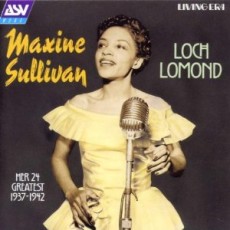
Maxine Sullivan was born Marietta Williams on May 13, 1911 in Homestead, Pennsylvania who developed a subtle and lightly swinging jazz style. Maxine possessed an affable delivery that slighted no lyric.
Over the course of her long career Sullivan first moved to New York and sang during intermissions at the Onyx Club. It was here she was discovered by Claude Thornhill who recorded her in front of a septet singing standards and a couple of Scottish tunes in swinging fashion. One of those tunes “Loch Lomond” would become her big hit and her career signature song.
During the forties Maxine appeared in movies opposite Louis Armstrong, on Broadway in Swingin’ The Dream, with then husband John Kirby and his sextet, and starred a radio show “Flow Gently Sweet Rhythm” for two years receiving reasonable success with a solo career.
By the 50s she became trained as a nurse and over the next several years was absent from music. However, 1968 saw Sullivan’s comeback performing at festivals and even playing a little valve trombone and flugelhorn.
During the later years of her career she intermittently appeared with the World’s Greatest Jazz Band, sang with mainstream jazz groups and recorded in concert her first hit Loch Lomond. Passing away on April 7, 1987 in New York City, vocalist Maxine Sullivan was inducted into the Big Band Hall of Fame in 1998.
More Posts: vocal
Daily Dose Of Jazz…
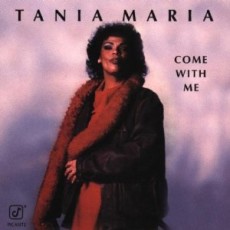
Tania Maria was born on May 9, 1948 in Sao Luis, Maranhao in northern Brazil. She began playing piano at 7, became a leader at 13 of a band organized by her father, won first place in a local music contest and began playing dances, in clubs and on the radio. It was her father who encouraged her to study piano so that she could play in his weekend jam sessions. By doing so she absorbed the rhythms and melodies of samba, jazz, pop and Brazilian chorinho. Since then she has never worked in anyone else’s group.
Tania released her first album ”Apresentamos” in 1969 with a second in 1971 but it was her move to France that exploded her on the international scene. She began touring and while performing in Australia she caught the ear of guitarist Charlie Byrd who recommended her to Concord Records.
Tania’s formidable musical precision and freewheeling spirit has been heard at virtually every important jazz festival in the world and has appeared on countless television and radio shows. She has recorded numerous albums, has been nominated for a Grammy in the category of “Best Jazz Vocal Performance, Female, and has played with such greats as Steve Gadd, Anthony Jackson, Sammy Figueroa and Eddie Gomez to name a few.
The Brazilian artist, singer, composer, bandleader and pianist also has a law degree She sings mostly in Portuguese but also English. Her music is sometimes pop, jazz, and unmistakably Brazilian. Whether playing fiery samba, tranquil bossa or any other style, Tania Maria maintains a style that is uniquely her own. Her vibrant voice, brilliant piano work and outstanding performances have made an artist of increasing international popularity.