

Daily Dose Of Jazz…
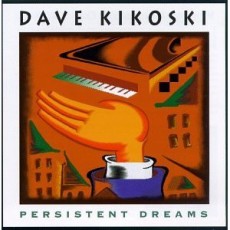
Dave Kikoski was born on September 29, 1961 in New Brunswick, New Jersey and learned to play the piano from his father who started him out at age six. In his early teens he played with his father, jazz and rock bands, and won “The New Jersey Allstate Jazz Competition”. Graduating from high school he headed to Boston’s Berklee School of Music, had a stream of trio gig while matriculating, met Pat Metheny who sat in on a gig and later recorded with him along with Roy Haynes.
Mid 80s found Dave in New York performing and recording several different dates through the end of the decade with Roy Haynes, Randy Brecker, Bob Berg and Billy Hart. In 1989 he recorded “Presage”, his first date as a leader with Eddie Gomez and Al Foster. His sophomore project “Persistent Dreams” featured a larger ensemble with Randy Brecker and Billy Hart. Since the nineties he has been kept busy as a sideman, session player and leader working with the likes of John Patitucci, Jeff “Tain” Watts, Red Rodney, Craig Handy, Ralph Moore, Didier Lockwood, Joe Locke, the Mingus Big Band, Victor Lewis, Roy Hargrove, Dave Holland and others.
Pianist Dave Kikoski has recorded sixteen albums as a leader and four as a sideman and co-collaborator, toured worldwide, played prestigious festivals and continues to perform, record, compose and expand his own voice.

More Posts: piano
From Broadway To 52nd Street
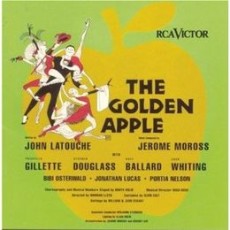
The Golden Apple was staged for it’s initial performance at the Phoenix Theatre on March 11, 1954 and ran for one hundred and seventy-three performances. The stars of the musical were Kay Ballard, Dean Michener, Jonathan Lucas, Jack Whiting, Stephen Douglass, Bibi Osterwald and Priscilla Gillette. Jerome Morross composed the music with libretto written by John Latouche and their composition Lazy Afternoon emerged from the musical to make the pantheon of jazz standards.
The Story: In a small turn-of-the-century American village called Angel’s Roost, nothing of importance seems to happen until a traveling salesman arrives at the annual fair in a balloon. He so beguiles the wife of the sheriff that she elopes with him to the neighboring town. The mayor throws roadblocks in the pursuer’s path. After the sheriff outclasses the salesman in a boxing match, he returns home to find love from another woman waiting for him. Recreation of Homer’s The Iliad & The Odyssey.
Broadway History: The Off-Broadway theatre is a professional New York City venue with a seating capacity between 100 and 499, much smaller than those on Broadway. An Off-Broadway production is a production of a play, musical or revue that appears in such a venue, and which adheres to related trade union and other contracts.
The Off-Broadway movement started in the 1950s, as a reaction to the “perceived commercialism of Broadway” and provided an “outlet for a new generation” of creative artists. This fertile breeding ground, away from the pressures of commercial production and critical brickbats, helped give a leg up to hundreds of future Broadway greats. The first great Off-Broadway musical was the 1954 revival of the Brecht/Weil Three Penny Opera.
Sponsored By

www.whatissuitetabu.com
Daily Dose Of Jazz…
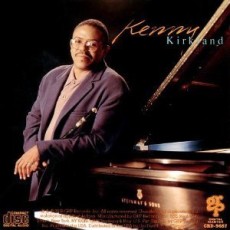
Kenneth David “Kenny” Kirkland was born September 28, 1955 in Newport, New York and when only six sat down at a piano keyboard. Following years of Catholic school Kenny enrolled in the Manhattan School of Music and studied classical piano performance, theory and composition. He first worked professionally touring through Europe with Polish fusion violinist Michal Urbaniak in 1977 and recording with him on “Urbaniak” and “Daybreak”. His next high-profile gig was with Miroslav Vitous with subsequent recording dates on “First Meeting” and “Miroslav Vitous Group”.
In the early 80s, Kirkland toured Japan with trumpeter Terumasa Hino, met Wynton Marsalis and their long association began with him playing on Marsalis’ self-titled debut album and sharing duties with Herbie Hancock. He became the sole pianist on Marsalis’ subsequent releases “Think Of One”, “Hothouse Flowers” and “Black Codes (From The Underground)”. Following this stint he joined Branford’s band After his association with Wynton Marsalis, Kirkland joined Branford Marsalis’ band and is featured on the albums “Royal Garden Blues”, “Renaissance”, “Random Abstract”, “Crazy People Music”, “I Heard You Twice The First Time”, “Buckshot Lefonque”.
Kenny worked for a short period as The Tonight Show pianist during Branford’s tenure but returned to the East coast and session work. Contrary to jazz orthodoxy Kirkland stretched to include keyboards and synthesizers coupled with straying from traditional jazz to work with Sting, on the documentary “Bring On The Night”, and in 1991 released his debut “Kenny Kirkland” for GRP and “Thunder and Rainbows/J.F.K.” on Sunnyside followed.
Leading up to June 1998, Kirkland worked diligently with long-time associate Jeff “Tain” Watts on the drummer’s debut recording “Citizen Tain” but his health was failing due to abuse and neglectful physical exercise. Jazz pianist Kenny Kirkland, most often associated with Sting, Branford Marsalis, Wynton Marsalis, and Kenny Garrett, passed away quietly in his Queens apartment of congestive heart failure on November 12, 1998.
In his more than twenty-year career, Kirkland performed or recorded with such artists as Don Alias, Carla Bley, Terence Blanchard, Michael Brecker, Stanley Clarke, Kevin Eubanks, Charles Fambrough, Chico Freeman, Dizzy Gillespie, Elvin Jones, Arturo Sandoval and the list of jazz greats continues along with Ben E. King, Angela Bofill, Youssou N’Dour, Stephen Stills and David Crosby.
More Posts: piano
Daily Dose Of Jazz…
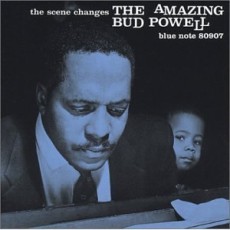
Bud Powell was born Earl Rudolph Powell in New York City on September 27, 1924. Following a family musical legacy, his grandfather a flamenco guitarist, father a stride pianist, older brother William a trumpeter and younger pianist brother Richie, Bud learned classical piano from an early age and by age 8 became interested in jazz. Playing his own transcriptions of Art Tatum and Fats Waller, by 15 he was playing in William’s band. Thelonious Monk was an important early teacher, mentor and close friend who dedicated the composition “In Walked Bud” to him.
The early Forties saw Powell playing in a number of bands, including that of Cootie Williams, who had to become Powell’s guardian because of his youth. His first recording date was with Williams’ band in 1944 and this session produced the first ever recording of Monk’s “Round Midnight”. Monk also introduced him to the circle of bebop musicians starting to form at Minton’s Playhouse and playing on early recording sessions with Frank Socolow, Dexter Gordon, J. J. Johnson, Sonny Stitt, Fats Navarro and Kenny Clarke.
Powell soon became renowned for his ability to play accurately at fast tempos, his inspired bebop soloing, and his comprehension of the ideas that Charlie Parker had found from the chords of “Cherokee” and other song-forms. Powell’s first session as a leader was a trio setting in 1947 with Curly Russell and Max Roach and later recording on a Charlie Parker date with Miles, Max and Tommy Potter. Bud Powell is the most important pianist in jazz and one of the most underrated but his best work is on Blue Note and for Mercury, Norgran, Clef and later Verve Records under Norman Granz. His prolific career had him playing with a who’s who list of musicians like Buddy Rich, Ray Brown, Art Blakey, George Duvivier, Osie Johnson and so on. By the late fifties and into the 60s his playing was far removed from his earlier standard and his talent was in eclipse.
With his health deteriorating he was hospitalized after months of increasingly erratic behavior and self-neglect. Jazz pianist Bud Powell, described as one of “the two most significant pianists of the style of modern jazz that came to be known as bop”, died of tuberculosis, malnutrition, and alcoholism on July 31 1966 in New York City.
More Posts: piano
Daily Dose Of Jazz…
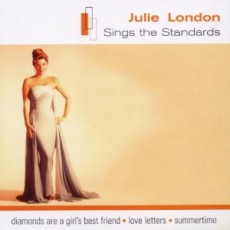
Julie London was born Gayle Peck in Santa Rosa, California on September 26, 1926 to a vaudeville song-and-dance team. At 14, her family moved to Los Angeles and shortly after she bean appearing in movies she graduated from the Hollywood Professional School in 1945.
The pin-up girl of WWII met and married the streetwise technique of actor Jack Webb in 1947, an unlikely union arising out of their love for jazz but only lasted until 1954. Becoming somewhat reclusive following the divorce she met jazz composer and musician Bobby Troup and although her career really took off in 1955, Julie had been singing in her teens long before she began acting.
London’s career began in 1955 with a live performance at the 881 Club in Los Angeles. Billboard named her the “Most Popular Female Vocalist” for 1955, 1956, and 1957 and she was the subject of a 1957 Life cover article in which she was quoted as saying, “It’s only a thimbleful of a voice, and I have to use it close to the microphone. But it is a kind of over-smoked voice, and it automatically sounds intimate.”
Julie London’s debut recordings were for the Bethlehem Record label but while shopping for the record deal, she recorded 4 tracks backed by Troup, “Don’t Worry About Me”, “Motherless Child”, “A Foggy Day” and “You’re Blasé”, that would later be included on the compilation albums “Bethlehem’s Girlfriends” in 1955. London’s most famous single, “Cry Me A River”, written by her high-school classmate Arthur Hamilton would become a million-seller after its release in December 1955. Throughout her singing career she recorded thirty-two albums with her last recording of “MY Funny Valentine” was produced for the soundtrack of the 1981 Burt Reynolds film Sharkey’s Machine.
She went on to have a prolific acting career on the stage, television and film that lasted 35 years concluding with the role of Dixie McCall on the tv series Emergency, executive produced by Jack Webb, and costarred her then husband Bobby Troup, a marriage that lasted until her death from poor health due to her long-term cigarette habit on October 18, 2000 in Encino, California at the age of 74.
More Posts: vocal