

Daily Dose Of Jazz…
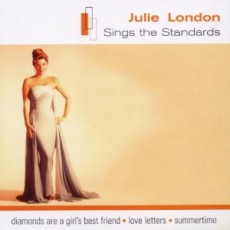
Julie London was born Gayle Peck in Santa Rosa, California on September 26, 1926 to a vaudeville song-and-dance team. At 14, her family moved to Los Angeles and shortly after she bean appearing in movies she graduated from the Hollywood Professional School in 1945.
The pin-up girl of WWII met and married the streetwise technique of actor Jack Webb in 1947, an unlikely union arising out of their love for jazz but only lasted until 1954. Becoming somewhat reclusive following the divorce she met jazz composer and musician Bobby Troup and although her career really took off in 1955, Julie had been singing in her teens long before she began acting.
London’s career began in 1955 with a live performance at the 881 Club in Los Angeles. Billboard named her the “Most Popular Female Vocalist” for 1955, 1956, and 1957 and she was the subject of a 1957 Life cover article in which she was quoted as saying, “It’s only a thimbleful of a voice, and I have to use it close to the microphone. But it is a kind of over-smoked voice, and it automatically sounds intimate.”
Julie London’s debut recordings were for the Bethlehem Record label but while shopping for the record deal, she recorded 4 tracks backed by Troup, “Don’t Worry About Me”, “Motherless Child”, “A Foggy Day” and “You’re Blasé”, that would later be included on the compilation albums “Bethlehem’s Girlfriends” in 1955. London’s most famous single, “Cry Me A River”, written by her high-school classmate Arthur Hamilton would become a million-seller after its release in December 1955. Throughout her singing career she recorded thirty-two albums with her last recording of “MY Funny Valentine” was produced for the soundtrack of the 1981 Burt Reynolds film Sharkey’s Machine.
She went on to have a prolific acting career on the stage, television and film that lasted 35 years concluding with the role of Dixie McCall on the tv series Emergency, executive produced by Jack Webb, and costarred her then husband Bobby Troup, a marriage that lasted until her death from poor health due to her long-term cigarette habit on October 18, 2000 in Encino, California at the age of 74.
More Posts: vocal
Daily Dose Of Jazz…
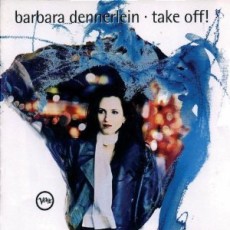
Barbara Dennerlein was born on September 25, 1964 in Munich, Germany. The hard bop/post bop Hammond B3 organist began playing electric organ at age 11. After starting organ lessons, she learned to play the two-manual organ with a bass pedal board. After one and a half years of lessons she continued to study without formal instruction and by 15, she playing in a jazz club for the first time. When leading her own bands, she was often the youngest musician in the group, learning to cooperate with more experienced musicians. Her local reputation as the “Organ Tornado from Munich” spread after her first television appearance in 1982.
With her career jumpstarted Barbara recorded her first two albums and by her third “Bebab”, she started her own record label, receiving the German Jazz Critics Award. She signed with Enja Records for three recordings, moved to Verve’s international label for three more sessions working with Ray Anderson, Randy Brecker, Dennis Chambers, Roy Hargrove, Mitch Watkins, and Jeff “Tain” Watts.
Her performances include solo performances as well as quintets and she has worked on a variety of projects with the pipe organ, church organ and symphonic orchestras. She has recorded twenty-three albums to date and her compositions range from traditional blues, romantic melancholic ballads and up-tempo drives with elements of swing, bebop, funk and Latin rhythms. Barbara Dennerlein continues to compose, record, perform and tour.
More Posts: organ
Daily Dose Of Jazz…
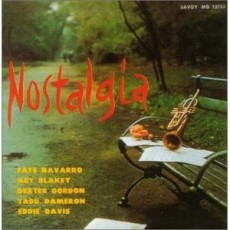
Theodore “Fats” Navarro was born on September 24, 1923 in Key West, Florida to Cuban-Black-Chinese parentage. He began playing piano at age six, but did not become serious about music until he began playing trumpet at age of thirteen. By the time he graduated from Douglass High School he wanted to be away from Key West and joined a dance band headed for the mid-west.
Tiring of the road life after touring with many bands and gaining valuable experience, including influencing a young J. J. Johnson when they were together in Snookum Russell’s territory band. Navarro settled in New York City in 1946, where his career took off. He met and played with, among others, Charlie Parker, but was in a position to demand a high salary, so Fats didn’t join one of Parker’s regular groups. Unfortunately he developed a heroin addiction, which, coupled with tuberculosis and a weight problem led to a slow decline in his health.
Through his short-lived career, trumpeter Fats Navarro played with among others Andy Kirk, Billy Eckstine, Benny Goodman and Lionel Hampton big bands, and also participated in small group recording sessions with Kenny Clarke, Tadd Dameron, Eddie “Lockjaw” Davis, Coleman Hawkins, Illinois Jacquet, Howard McGhee, Bud Powell and Charles Mingus, with whom he had a deep friendship.
Hospitalized on July 1st after his final performance with Charlie Parker at Birdland, the pioneering bebop jazz improvisation trumpeter Fats Navarro passed away at the age of 26 on July 7, 1950.
More Posts: trumpet
Daily Dose Of Jazz…
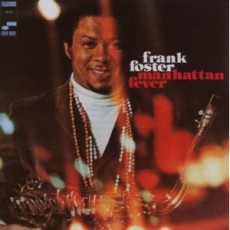
Frank Benjamin Foster III was born September 23, 1928 in Cincinnati, Ohio and began his musical career when he took up the clarinet at 11. Two years later he was playing the alto saxophone, quickly advanced and played with local bands by 14. He began composing and arranging at 15, leading his own 12-piece band while still in high school. He received his continued musical education at Wilberforce University but left with Snooky Young, moved to Detroit, playing the local jazz scene with Wardell Gray.
From 51-53 he served in Korea followed by joining Count Basie’s Big Band, contributed both arrangements and original compositions to Count Basie’s band including the standard, “Shiny Stockings” and other popular songs such as “Down for the Count,” “Blues Backstage,” “Back to the Apple,” “Discommotion,” and “Blues in Hoss Flat” as well as arrangements for the entire “Easin’ It” album.
From 1970 to 1972 he played with Elvin Jones, and in 1972 and 1975 with the Thad Jones-Mel Lewis big band. Frank went on to form and lead several groups, most notably Living Color and The Loud Minority while also co-leading a quintet with Frank Wess in 1983, and toured Europe with Jimmy Smith’s quintet in 1985.
By June 1986 Foster succeeded Thad Jones as leader of the Count Basie Orchestra and during his tenure Dr. Foster received two Grammy Awards for his big band arrangement of the Diane Schuur composition “Deedles’ Blues” and for his arrangement of the renowned guitarist/vocalist George Benson’s composition “Basie’s Bag”.
Over his career he was never far from education spending time teaching at the New England Conservatory of Music, New York City Public School System in Harlem, and State University of New York, Buffalo. Suffering a stroke in 2001, Frank Foster discontinued his playing but continued to lead The Loud Minority on limited engagements but soon passed the helm to trumpeter Cecil Bridgewater.
The tenor and soprano saxophonist and flautist amassed throughout his career twenty-six albums as a leader, thirty-four as a sideman and arranged five albums for Sarah Vaughan, Diane Schuur, Frank Sinatra, George Benson and Count Basie. Saxophonist Frank Foster continued to compose and arrange until his passage on July 26, 2011 at the age of 82.

The Jazz Voyager
Rest’Ô Jazz: 8, rue Amélie, Toulouse, France. Telephone: +33 5 61 57 96 95 Fax: +33 5 61 57 96 95 Contact: Yannick Orthlieb. The Rest’Ô Jazz is open from Tuesday to Saturday with live jazz every night.
Since 2004, the Rest’Ô Jazz has presented the tradition of New Orleans Jazz Clubs distilling a unique atmosphere in Toulouse. All year long, jazz influences adapt to any purpose. From Louis Armstrong to The Mississippi Jazz Band, from Django Reinhardt to Gadjo Zaz Trio, from Count Basie to The Philippe Laudet Jazz Odyssée.