

Daily Dose Of Jazz…
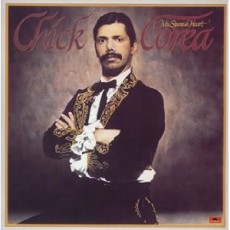
Chick Corea was born Armando Anthony Corea on June 12, 1941 in Chelsea, Massachusetts of Sicilian and Spanish descent. His father, a jazz trumpeter led a Dixieland band introduced him to the piano at the age of four. Growing up surrounded by jazz music, he was influenced at an early age by bebop stars Dizzy Gillespie, Charlie Parker, Bud Powell, Horace Silver and Lester Young. At eight Corea added drums, which later influenced his use of the piano as a percussion instrument.
Corea started taking piano lessons and musical composition at age eight and went on to spend several years in the drum and bugle corps, the Knights of St. Rose. By high school he was gigging, listening to Herb Pomeroy’s band at the time, and had a trio that performed Horace Silver’s music at a local jazz club.
A move to New York had him studying music at Columbia University and The Julliard School but found them both disappointing, subsequently immersing himself in the New York jazz scene. Corea’s first major professional gig was with Cab Calloway, followed by Blue Mitchell, Herbie Mann, Willie Bobo and Mongo Santamaria. He released his debut album Tones For Joan’s Bones in 1966 and has followed with an impressive discography.
He would venture into the avant-garde with Miles Davis on Filles de Kilimanjaro, In A Silent Way and Bitches Brew; and on Joe Farrell’s Song of the Wind. Hew would record and tour with Davis into the 70s until leaving to form the group “Circle” with Dave Holland, pushing more free jazz. Striking out on his own, in 1971 he formed the fusion band Return To Forever that featured Flora Purim on vocals and has spawned a multitude of albums with his most popular tune “Spain” coming from the Light As A Feather album.
He has done duet projects, delved into electric instrumentation, has won 18 Grammys out of 51 nominations, two Latin Grammy awards, has been inducted into the Grammy Hall of Fame for Now He Sings, Now He Sobs, formed the 5 Peace Band and continued to perform, tour and record until his death. Pianist, keyboardist, and composer Chick Corea passed away of a rare form of cancer at his home near Tampa Bay, Florida on February 9, 2021, at age 79
More Posts: piano
Daily Dose Of Jazz…
Turk Mauro was born Mauro Turso on June 11, 1944 in New York City into a family of first-generation Italian-Americans and he first experienced jazz when his father who played in local swing bands and began playing alto saxophone at 14. He soon met his mentor, trumpeter Henry Allen, who started getting him gigs around the city until he graduated from high school in 1962.
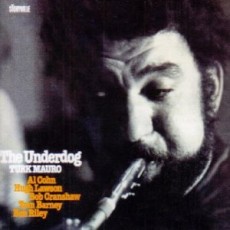
Mauro worked in a mailroom while playing jazz, got married, had two children, hit the road and his marriage fell apart by the mid-70s. While touring he met Billy Mitchell, a member of Dizzy Gillespie’s band, that led to a few hits with Gillespie but a permanent spot in Buddy Rich’s band. His reputation as a perfectionist made him a popular sideman in the New York area, and in 1977 he release his debut album, The Underdog.
He would go on to play the Blue Note, release his sophomore project The Heavyweight, which unfortunately flopped. This began a dry period for Turk through the ’80s and he abandoned jazz for taxi and limo driving. However, in 1987 after running into Sonny Rollins who suggested Europe, Mauro packed up and moved to France. He found work as a sideman and renewed success in Paris. But success was fleeting and with work drying up in Paris and another failed marriage, his second dry spell ensued by the Nineties.
By 1994 Mauro was back in the States with his new wife taking care of his father in Florida. He managed to play at the few jazz clubs in South Florida at the time but also began to gamble in attempt to regain the good times of Paris. Health problems came by the end of the decade and a burst colon hospitalized the saxophonist. An physical altercation in which he punched local singer Beverly Barkley in the early 2000s sidelined the musician after being arrested for battery. This incident put a halt to his career and with a year probation and 50 hours of community service, since the turn of the century the hard bop saxophonist Turk Mauro has only been able to get the occasional gig around the Florida area.

More Posts: saxophone
Daily Dose Of Jazz…
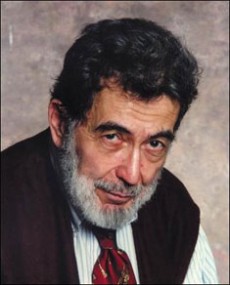
Nat Hentoff was born Nathan Irving Hentoff on June 10, 1925 in Boston, Massachusetts. He graduated from the Boston Latin School, matriculated through Northeastern University with honors, did graduate work at Harvard University and was a Fulbright fellow at the Sorbonne in Paris.
He became an American historian, novelist, jazz and country music critic and a syndicated columnist having written for Down Beat, Jazz Times as well as the New York Times, the Washington Post, the Village Voice, The New Yorker amongst others.
Hentoff joined Down Beat Magazine as a columnist in 1952 and from 1953 through 1957 was an associate editor. In 1958 he co-founded The Jazz Review, a magazine that he co-edited with Martin Williams until 1961. His broadcast career began with a notable radio show called “JazzAlbum”, that would continue into the 50s. During this period he would also host radio shows “Evolution of Jazz” and “The Scope of Jazz”.
In June 1955, Hentoff co-authored with Nat Shapiro “Hear Me Talkin’ to Ya: The Story of Jazz by the Men Who Made It”. The book features interviews with some of the best-known names in jazz, including Dizzy Gillespie, Duke Ellington and Paul Whiteman. He went on to author numerous other books on jazz.
Hentoff is a Guggenheim Fellow, NEA Jazz Master, and has been honored y Northeastern University, National Press Foundation, Human Life Foundation and the American Bar Association. He has written twenty non-fiction books and nine novels, of which eight are dedicated to jazz. Writer, author and record producer Nat Hentoff passed away of natural causes at his Manhattan apartment on January 7, 2017.
More Posts: writer
Daily Dose Of Jazz…
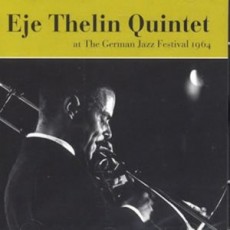
Eje Thelin was born Eilert Ove Thelin on June 9, 1938 in Jönköping, Sweden. He started his own quintet in 1961 and from 1969 to 1972 he was on the faculty of the Music Academy in Graz, Austria. For the rest of the 1970s, he led his own Eje Thelin Group in Sweden.
By the 1980s he expanded into composition, writing commissioned works for large European orchestras, sometimes featuring himself as soloist. In spite of the attention given to the obvious technical side of his playing, Thelin was also known for his warm approach to traditional ballads, a somewhat retro-romanticism that comes through in his later playing.
An innovator, Eje was widely admired among fellow trombonists for his facile technique, rhythmic intensity and was, perhaps, the first jazz trombonist to translate that technique into the so-called “Sheets of Sound” style that characterized much of the music of tenor saxophonist John Coltrane and, in general, free jazz of the late 1960s and 1970s. He would play with Joachim Kuhn and Don Cherry while leading his own groups.
Trombonist Eje Thelin, one of the strongest trombone voices of modal and free jazz to emerge in the European 60s, passed away on May 18, 1990.

More Posts: trombone
Daily Dose Of Jazz…
Bill Watrous was born William Russell Watrous III on June 8, 1939 in Middletown, Connecticut. Introduced to the jazz trombone at an early age by his trombonist father, it was while serving in the Navy that he studied with jazz pianist and composer Herbie Nichols. His first professional performances were in Billy Butterfield’s band.
Bill’s career blossomed in the 1960s, playing and recording with many Maynard Ferguson, Woody Herman, Quincy Jones, Johnny Richards and fellow trombonist Kai Winding. From 1965 – 68 he was a member of the house band on the Merv Griffin Show.
In the Seventies he played with the jazz-fusion group Ten Wheel Drive, formed his own band – The Manhattan Wildlife Refugee Big Band, recorded two albums for Columbia, and relocated to southern California.
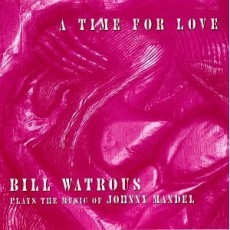
He worked actively since the 1980s as a bandleader, studio musician, and performing at various jazz clubs. He is most known for his rendition of Johnny Mandel’s “A Time For Love”. Bill Watrous continued to perform and record as a solo artist, bandleader and in various small ensembles for a number of different labels until his passing on July 2, 2018 at age 79. He published an instructional manual Trombonisms and was on the faculty of the University of Southern California Thornton School of Music.

More Posts: trombone