

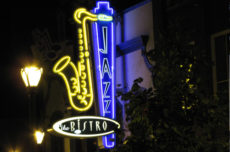
The Jazz Voyager
I’m leaving Philly on a jet plane, landing in St. Louis, Missouri and heading to 3536 Washington Avenue, 63103 to imbibed some music at Jazz At The Bistro. Opened in 1995, and situated in St. Louis’ Grand Center Arts District, this space is located in the newly renovated Ferring Jazz Bistro which is part of the Harold & Dorothy Steward Center for Jazz.
Boasting an American menu with Southern accents, this intimate jazz performance space with cabaret seating has not a bad seat in the house. It is said the acoustics are extraordinary and offers patrons one of the finest listening experiences in the nation. This Jazz Voyager aims to find out. Jazz at the Bistro is part of Jazz St. Louis, a non-profit whose aim is to promote jazz.
Seating is limited, reservations are recommended and can be made by calling 314-571-6000. Cover charge is $20.00 for adults with students $10.00. #jazzvoyager#wannabewhereyouare
Sponsored By

Voices From The Community

#preserving genius
More Posts: adventure,club,genius,jazz,music,preserving,restaurant,travel,voyager

Daily Dose Of Jazz…
Kenneth Napper was born July 14, 1933 in London, England. He started out on learning to play the piano as a child, then picked up the bass as a student at Guildhall School of Music. Entering the British military in the early 1950s, he played and recorded with Mary Lou Williams in 1953 while on leave. After completing his term of duty, he went on to play with Jack Parnell, Malcolm Mitchell, Vic Ash, and Cab Calloway.
During the late Fifties and early 1960s Kenny was the house bassist at Ronnie Scott’s Jazz Club for several years and played with many British and American jazz musicians. These musicians include Alan Clare, Ronnie Scott, Stan Tracey, Tubby Hayes, Tony Kinsey, Tony Crombie, Jimmy Deuchar, John Dankworth, Pat Smythe, Phil Seamen, Zoot Sims, Carmen McRae, and Paul Gonsalves.
By the late Sixties he worked with Ted Heath, Tony Coe, John Picard and Barney Kessel, as well as with Gonsalves, Tracey, and Dankworth. In 1970 he played with Stephane Grappelli prior to a move to Germany where he played with Kurt Edelhagen from 1970 to 1972. While residing there, Napper focused more on composition and arrangement and then in the late Seventies he moved to the Netherlands.
Through the remainder of the decade and and the Eighties he put down his bass, arranged for radio ensembles, was the staff arranger and conductor for the 50 piece Metropole Orchestra, and then directed his attention to teaching at the Royal Conservatory in The Hague. At 83 years of age, double-bassist arranger, composer, conductor and educator Kenny Napper, it is assumed he has retired and returned to the United Kingdom.
Sponsored By

#preserving genius
More Posts: bass
Daily Dose Of Jazz…
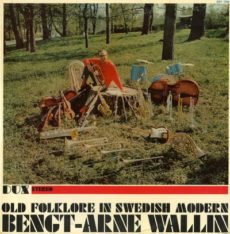
Bengt-Arne Wallin was born on July 13, 1926 in Linköping, Sweden and was also active under the pseudonym Derek Warne. He began his musical path with a homemade accordion. He then took up the trumpet and by the Forties he was playing trumpet in Linköping, followed by time spent in Gothenburg playing with Malte Johnsson’s Orchestra and in Stockholm Seymour Österwall at Nalen (National Palace) from 1951-1952.
In the years that followed from 1953-1965 he played in Arne Domnérus’s big band and between 1955 and 1965 was also in Harry Arnold’s radio band, after which he put the trumpet on the shelf.
Bengt took a position as an educator in 1972 and for the next twenty-one years he taught at the Music School of Stockholm. By the late 1990’s he started playing the trumpet again, now with his group Five to Five .
For the production show from Barnrike he was awarded the international radio prize Triumph Varieté. He went on to compose music for a variety of musicals and a larger number of television productions, such as The Magic Box. He was also the conductor of various major bands.
Trumpeter, composer, arranger, educator Bengt Arne Wallin, who was also trained in aeronautics, passed away November 23, 2015 in the Sollentuna Parish of Stockholm County, Sweden.
Sponsored By

#preserving genius
More Posts: trumpet
Daily Dose Of Jazz…
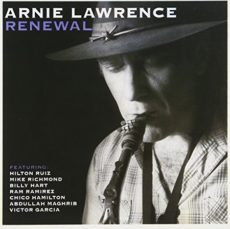
Arnie Lawrence ,was born Arnold Lawrence Finkelstein on July 10, 1938 in Brooklyn, New York. He studied clarinet in his youth before switching to saxophone and from the age of 12 he was playing in clubs in the Catskills, and by age 17 was performing at Birdland, at one point working a double bill with John Coltrane.
He played with Charles Mingus, Thad Jones, Maynard Ferguson, Clark Terry and Duke Pearson but did not make his first recordings until 1966, playing on Chico Hamilton’s The Dealer. Working for several years with Hamilton and becoming a soloist on The Tonight Show from 1967 to 1972, Arnie made his first records as a leader in 1968.
In the early 1970s Lawrence played with Willie Bobo, then joined Blood, Sweat & Tears in 1974. He did a world tour with Liza Minnelli in 1978–79, and released a few more records under his own name before touring with Louie Bellson and Elvin Jones in the early 1980s. He composed a symphony he titled Red, White and Blues, which was premiered by an orchestra in Williamsburg, Virginia. It featured himself, Dizzy Gillespie and Julius Hemphill all soloing in the performance.
Putting on his educator hat he taught from the middle of the 1970s, working as an artist in residence in Kentucky and Kansas. By 1986 he had stopped recording and touring and founded the New School for Jazz and Contemporary Music in New York City. Among the program’s students were Roy Hargrove, Brad Mehldau, Larry Goldings, John Popper, Peter Bernstein and Spike Wilner of Smalls Jazz Club. Moving to Israel in 1997, where he founded the International Center for Creative Music, an education facility open to both Jewish and Arab students. He played regularly in Israel and owned his own nightclub called Arnie’s Jazz Underground.
Suffered from lung and liver cancer late in life, alto saxophonist Arnie Lawrence passed away on April 22, 2005, in Jerusalem, Israel and Palestine, as both claim the city as their capital.
Sponsored By
Voices From The Community
#preserving genius
More Posts: saxophone
Daily Dose Of Jazz…
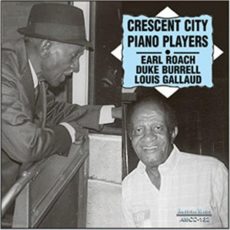
Duke Burrell was born on born July 9, 1920 in New Orleans, Louisiana and worked throughout his career in the Crescent City. He performed and recorded with Louis Jordan, Johnny Otis and on the final recordings of clarinetist Barney Bigard and the Pelican Trio along with Barry Martyn. He would reunite with Bigard for an Ellington segment recording with bassist Bobby Stone, drummer Louis Bellson and trumpeter Ray Nance.
By 1973 Duke became a bandleader and the following year formed the Louisiana Shakers that included Sammy Rimington, Sam Lee, McNeil Breaux and Teddy Edwards in the quintet lineup. He went on to lead four recording sessions between 1973 and 1976.
Pianist, composer, arranger and bandleader Duke Burrell passed away on August 5, 1993 in Los Angeles, California.
Sponsored By

www.whatissuitetabu.com
#preserving genius
More Posts: piano