


The Jazz Voyager
Located at 56 Gold Street, 94133 this Jazz Voyager is catching a flight to San Francisco, California and looking forward to stepping into Bix Restaurant this weekend to experience going back in time to the opulence of prohibition. Jazz was the soundtrack of the 1920s and it’s the soundtrack of Bix. Situated in the Barbary Coast enclave down an alley, Bix welcomes pianists and vocalists Sunday through Thursdays and jazz trios Friday and Saturday night. This supper club has a swanky 1930s ambiance, live jazz & a dining room serving American-French cuisine. Reservations recommended: opentable.com or 415-433-6300.
Sponsored By

Voices From The Community

#preserving genius
More Posts: adventure,club,genius,jazz,music,preserving,restaurant,travel,voyager
Daily Dose Of Jazz…
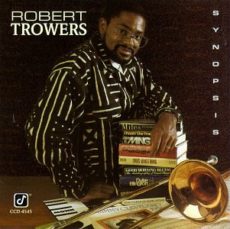
Robert Trowers was born on March 3, 1957 in Brooklyn, New York into a family of musicians that fostered a love for music at an early age. After the mandatory piano lessons during early childhood, he developed an interest in the trombone from listening to the music of the Swing Era. Among the bands that sparked his interest in jazz were those of Count Basie, Duke Ellington, Glenn Miller, and Artie Shaw. The trombonists that influenced Robert were Laurence Brown, “Tricky Sam” Nanton, Tyree Glenn, Tommy Dorsey, Glenn Miller and Jack Teagarden, J.J. Johnson, Jimmy Cleveland, Curtis Fuller, and Frank Rosolino.
During his college years Trowers played around New York City with Jaki Byard’s Apollo Stompers, Ray Abrams/Hank Doughty Big Band, Charles Byrd, Ray Draper, Cecil Payne, Harold Cumberbatch, Bill Hardman, Junior Cook, and Mario Escalera. His first European tour and Carnegie Hall date were with Abdullah Ibrahim’s band Ujammah in 1979.
In 1982, he joined Lionel Hampton for three and a half years, then a year freelancing in New York and teaching in the Public School system, before another European tour with Illinois Jacquet. Upon returning he joined the Count Basie Orchestra, under the direction of Frank Foster, playing the trombone in this band for the next eight years, leaving in 1995 to pursue other opportunities. The years with those stellar bands put him onstage with some of the greatest names in jazz, including Sarah Vaughan, Dizzy Gillespie, Billy Eckstine, Nancy Wilson, Cab Calloway, Jay McShann, Sonny Stitt, Benny Carter, Al Grey, Frank Sinatra, Joe Williams, Tony Bennett, Randy Weston, George Gee and many others.
He went on to record two albums as a leader, Synopsis and Point of View in the Eighties, toured with Lincoln Center Jazz Orchestra led by Wynton Marsalis, and later became a member of the Carnegie Hall Jazz Band under Jon Faddis. Robert worked a short tour with T.S. Monk, did a European tour with a traveling theatre production of the Broadway show Black and Blue, and gained membership into the Vanguard Jazz Orchestra.
Along with Derrick Gardner and Frank Foster, he started a nonprofit arts organization named Progressive Artistry that promoted jazz in all its various forms in concerts and lecture/demonstrations in inner city neighborhoods until 2004. Most recently, trombonist Robert Trowers has been on the faculty of North Carolina Central University.
Sponsored By

#preserving genius
More Posts: trombone
Daily Dose Of Jazz…
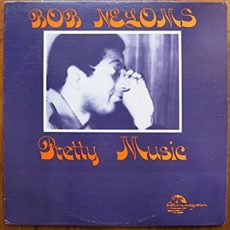
Robert James Neloms was born on March 2, 1942 in Detroit, Michigan and received piano lessons from the age of five and as a youth played in Country & Western Bands. In 1959 he received a scholarship from Downbeat to attend the Berklee College of Music.
From 1961 to 1963 he worked as a studio musician for Motown and afterwards he was active on the West Coast, founding the jazz rock band The Flower in San Francisco, California and also performed with Sly Stone. In 1969 and 1970 Bob returned to continue his studies at Berklee College, then continued to work in the Boston area.
1973 saw his move to New York City and performing with Roy Haynes, Pharoah Sanders, Pepper Adams and Clifford Jordan. Leading his own bands he enlisted Ricky Ford, Eddie Henderson and Bob Mover. In 1977 he became a member of the Charles Mingus band, with whom he went on tour and on whose last albums he participated, like Cumbia & Jazz Fusion and then became a member of the Mingus Dynasty recording of their first album. He worked with Danny Richmond, Billy Bang, Ahmed Abdullah , Allen Lowe, James Newton , Abbey Lincoln , Buddy Tate, and Hamiet Bluiett on the Soul Note label.
In 1981 he recorded his solo album for India Navigation titled Pretty Music. From the mid-1980s onwards he was mainly active as a music teacher, but occasionally performed as a soloist or in a duo with the bassist Vishnu Wood in New York. Currently residing in Birmingham, Michigan, pianist Bob Neloms continues to be active in modern jazz and music education.
Sponsored By

#preserving genius
More Posts: piano
Daily Dose Of Jazz…
Eddie Jones was March 1, 1929 in Greenwood, Mississippi and grew up in Red Bank, New Jersey. In the early 1950s with Sarah Vaughan and Lester Young.
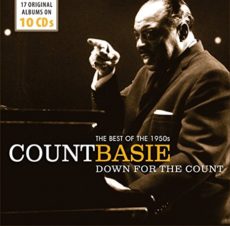
From 1951 to 1952 he taught music in South Carolina before becoming a member of Count Basie’s orchestra in 1953, a relationship that remained until 1962. During this period he recorded frequently with this ensemble, and also played with Basie in smaller ensembles, featuring Joe Newman, Frank Foster, Frank Wess, Thad Jones, Ernie Wilkins, Milt Jackson, Coleman Hawkins, Putte Wickman.
Jones quit music in 1962, took a job with IBM, then later became vice president of an insurance company. By the 1980s he returned to jazz and played on and off in swing jazz ensembles. He recorded a couple of dozen albums with Dorothy Ashby, Count Basie, Bob Brookmeyer, Jimmy Cleveland, Milt Jackson, Hank Jones, Frank Wess and Ernie Wilkins.
Double bassist Eddie Jones passed away May 31, 1997 in West Hartford, Connecticut.
Sponsored By

#preserving genius
More Posts: bass
Daily Dose Of Jazz…
Ronald Maxwell Jones was born on February 28, 1917 in London, England and together with his brother Cliff, taught himself to play the saxophone, before the two of them founded the semi-professional Campus Club Dance Band in 1930. Dissolved in 1935 he tried to establish himself as a professional musician, becoming a member of a combo led by trumpeter Johnny Claes, with musicians who played in the style of Coleman Hawkins.
In 1942 and 1943, Max worked for the BBC radio program Radio Rhythm Club; and in 1942, together with authors Albert McCarthy and Charles Fox, founded the magazine Jazz Music, which became meritorious as it set out to reassert the pioneering role of the African-American, to emphasize the music’s social dimensions, and to attack the glossy commercialism of big-band swing.
Since 1944, Jones had a full-time job writing features for the Melody Maker in the column Collectors’ Corner. In the following years he gained more and more high recognition as a proven expert of New Orleans Jazz, swing, and mainstream jazz.
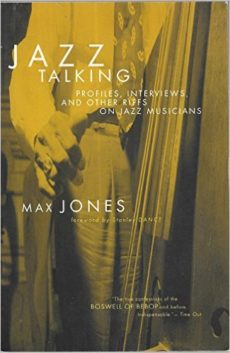
In 1971 Jones published a Louis Armstrong biography, Louis: The Louis Armstrong Story, together with John Chilton. He also wrote a number of liner notes, such as for the CD edition of the Kenny Clarke/Francy Boland Big Band, the Spirits of Rhythm, and wrote the preface for the Lee Collins, Mary Spriggs Collins, Frank Gillis, John W. Miner book Oh, Didn’t He Ramble: The Life Story of Lee Collins. A collection of his articles on musicians such as Coleman Hawkins, Johnny Hodges, Billie Holiday, and Mary Lou Williams was published as a book entitled Talking Jazz in 1987.
Jones was the first jazz musician to become a professional journalist and exclusively dealt with jazz in his publications. He was a model and a mentor for a younger generation of rock music critics and authors. Author, radio host, and journalist Max Jones passed away on August 1, 1993 in Chichester, England.

#preserving genius
More Posts: saxophone