

Daily Dose Of Jazz…
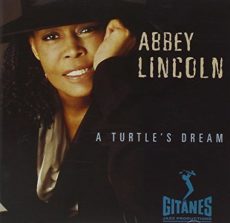
Abbey Lincoln was born Anna Marie Wooldridge on August 6, 1930 in Chicago, Illinois and raised in Calvin Center, Cass County, Michigan. One of many singers influenced by Billie Holiday, her 1956 album debut, Abbey Lincoln’s Affair – A Story of a Girl in Love, was followed by a series of albums for Riverside Records.
1956 saw lincoln’s first foray into acting in which she appeared in The Girl Can’t Help It, interpreting the theme song and working with Benny Carter. She would go on to be featured in movies and television shows like Gentlemen Prefer Blondes, Nothing But a Man, The Name of the Game, Mission: Impossible, Short Walk to Daylight, Marcus Welby, M.D., All in the Family, Mo’ Better Blues and For Love of Ivy, in which she received a Golden Globe nomination. Her song For All We Know is featured in the 1989 film Drugstore Cowboy.
Never straying far from music or the struggle for equality, in 1960 she sang on Max Roach’s landmark civil rights-themed recording, We Insist! Her lyrics often reflected the ideals of the civil rights movement and helped in generating passion for the cause in the minds of her listeners. She explored more philosophical themes during the later years of her songwriting career and remained professionally active until well into her seventies.
During the 1980s, Abbey’s catalogue of creative output was smaller and she released only a few albums. During the 1990s and until her death, however, she fulfilled a 10-album contract with Verve Records. These albums are highly regarded and represent a crowning achievement in Lincoln’s career. Devil’s Got Your Tongue (1992) featured Rodney Kendrick, Grady Tate, J. J. Johnson, Stanley Turrentine, Babatunde Olatunji and The Staple Singers, among others.
Vocalist, activist, songwriter, composer and actress Abbey Lincoln passed away eight days after her 80th birthday on August 14, 2010 in a Manhattan nursing home after suffering deteriorating health ever since undergoing open-heart surgery in 2007. She left a small but vital catalogue to the jazz canon.

More Posts: vocal
Daily Dose Of Jazz…
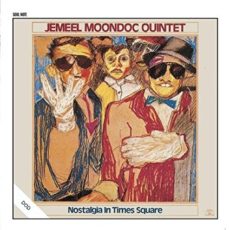
Jemeel Moondoc was born August 5, 1951 in Chicago, Illinois and studied clarinet and piano before settling on saxophone at sixteen. He became interested in jazz largely due to Cecil Taylor and at the University of Wisconsin–Madison became one of his student.
Following graduation he moved to New York City, where he founded Ensemble Muntu with William Parker, Roy Campbell, Jr., and Rashid Bakr. The group had its own Muntu record label for a time but eventually faced financial difficulties. He worked with Parker again on his 1998 album New World Pygmies.
Alto saxophonist Jemeel Moondoc, a proponent of a highly improvisational style, has recorded nineteen albums as a leader, two with the Jus Grew Orchestra, three with Denis Charles and Steve Swell and continues to compose, perform and record.
Sponsored By

Voices From The Community

#preserving genius
More Posts: saxophone
Daily Dose Of Jazz..
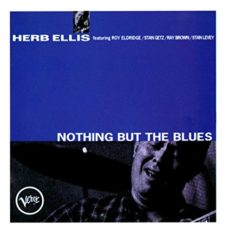
Herb Ellis was born Mitchell Herbert Ellis in Farmersville, Texas on August 4, 1921 and raised in the suburbs of Dallas, Texas. He first heard the electric guitar performed by George Barnes on a radio program which inspired him to take up the guitar. He became proficient on the instrument by the time he entered North Texas State University, majored in music, but with no guitar program he studied string bass. With a lack of funds he dropped out in 1941 and toured for six months with a band from the University of Kansas.
In 1943, he joined Glen Gray and the Casa Loma Orchestra and it was here that he got his first recognition in the jazz magazines. Leaving Gray for the Jimmy Dorsey band, he got his initial opportunities to recorded solos. Ellis remained with Dorsey through 1947, traveling and recording extensively, but with a six-week hole in the schedule, he John Frigo and Lou Carter took a gig in Buffalo that lasted six months and where the group Soft Winds was born he wrote the classic jazz standard Detour Ahead.
The group fashioned themselves after the Nat King Cole Trio. and stayed together until 1952. Herb then replaced Barney Kessel in the Oscar Peterson Trio in 1953. His prominence not only with his performing with the trio alongside Ray Brown until 1958 but also because he was the only white person in the group in a time when racism was still very much widespread.
With the addition of a drummer, the Oscar Peterson Trio, served as the house rhythm section for Norman Granz’s Verve Records. They supported the likes of Ben Webster, Stan Getz, Dizzy Gillespie, Roy Eldridge, Sweets Edison, Buddy Rich, Lester Young, Benny Carter, Victor Feldman, Mel Brown, Ella Fitzgerald and Louis Armstrong among numerous others.
The trio were a mainstay of Jazz at the Philharmonic concerts as they swept the jazz world, from 957 to 1960 Ellis toured with Ella Fitzgerald, and along with fellow jazz guitarists Barney Kessel, Charlie Byrd and Tal Farlow, he created another ensemble, the Great Guitars.
In 1994 he was inducted into the Arkansas Jazz Hall of Fame, received an Honorary Doctorate from the University of North Texas College of Music. Guitarist Herb Ellis, released twenty-two albums as a leader before passing away from Alzheimer’s disease at his Los Angeles home on the morning of March 28, 2010, at the age of 88.
Sponsored By
www.whatissuitetabu.com
#preserving genius
More Posts: guitar

Daily Dose Of Jazz…
Cedric Wallace was born August 3, 1909 in Miami, Florida. He moved to New York City in the 1930s, where he first started playing in a band led by Reggie Johnson at the Saratoga Club.
Later in the decade Wallace worked with Jimmie Lunceford before joining Fats Waller’s band from 1938-1942, the association for which he is best known. He played with Waller at the peak of his popularity and plays on many of his biggest hits.
He also recorded with Una Mae Carlisle, Maxine Sullivan, Champion Jack Dupree, Pat Flowers, Gene Sedric, and Dean Martin. Cedric led his own ensemble in New York in the 1940s which featured Eddie Gibbs on bass for a time, and continued to perform well into the 1970s.
Double-bassist Cedric Wallace passed away on August 19, 1985 in New York City.
Sponsored By

#preserving genius
More Posts: bass

Daily Dose Of Jazz…
David Binney was born on August 2m 1961 in Miami, Florida and was raised in Carpenteria, California. Through his parents love of music he grew up listening to albums by John Coltrane, Miles Davis, Wayne Shorter, and Jimi Hendrix. He took saxophone lessons in Los Angeles, California and at nineteen moved to New York City and studied with saxophonists George Coleman, Dave Liebman, and Phil Woods.
With a grant from the National Endowment for the Arts he recorded his first album, Point Game in 1991 on the Owl label, that led to him starting his own label, Mythology Records before the turn of the century.
He has been of several bands, including Lost Tribe, Jagged Sky, Lan Xang, the Gil Evans Orchestra, the Maria Schneider Orchestra, and Medeski Martin & Wood. Binney has also worked with Adam Rogers, Alex Sipiagin, Ben Monder, Ben Perowsky, Bill Frisell, Bobby Previte, Brian Blade, Cecil McBee, Craig Taborn, David Gilmore, Edward Simon, Eivind Opsvik, Jacob Sacks, James Genus, Jim Black, Jim Hall, Kenny Wollesen, John Escreet, Leni Stern, Lonnie Plaxico, Mark Turner, Marvin “Smitty” Smith, Nate Wood, Scott Colley, Steven Bernstein, Thomas Morgan, Tim Lefebvre, Uri Caine and Wayne Krantz.
Alto saxophonist and composer David Binney has recorded more than two-dozen albums as a leader, has recorded a half-dozen as a sideman, currently resides in New York City and continues to compose, perform and record.
Sponsored By

#preserving genius
More Posts: saxophone