

Daily Dose Of Jazz…
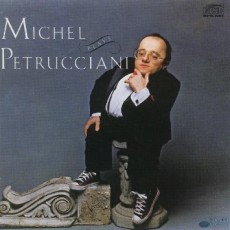
Michel Petrucciani was born on December 28 1962 in Orange, Vaucluse, France into a musical family with father playing guitar and brothers playing bass and guitar. He came into the world with a genetic disease that caused brittle bones and short stature. Due to this illness, throughout his career Michel was often carried to and from the piano when he performed.
Enthusiastic of Duke Ellington, his desire to be a pianist was driven by his main interest in jazz but trained for years as a classical musician giving his first professional concert at the age of 13. By the age of 18 he was part of a successful trio and in 1982 he moved to the US where he successfully encouraged Charles Lloyd to resume playing actively. Three years later, on February 22, 1985, with Petrucciani cradled in his arms, Lloyd walked onto the stage at Town Hall in New York City and sat him on his piano stool for what would be an historic evening in jazz history: the filming of One Night with Blue Note.
The following year Petrucciani recorded a live album with Wayne Shorter and Jim Hall and throughout his career has played with other greats like Dizzy Gillespie, Stephane Grappelli, Joe Lovano, Stanley Clark, Lenny White, Gil Goldstein and many others. He has recorded over thirty albums, wrote a biography, has a mosaic in the 18th district of Paris and in 1994 was granted a Legion d’honneur.
Michel Petrucciani, whose style is reminiscent of Bill Evans and Keith Jarrett, died on January 6, 1999 from a pulmonary infection, nine days after his 36th birthday. He was posthumously honored in 2009 with a special broadcast event on the French music channel Mezzo.

Inspire A Young Mind
More Posts: piano
Daily Dose Of Jazz…
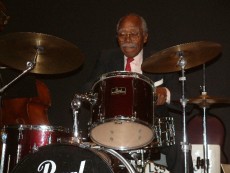
Butch Ballard was born George Edward Ballard on December 26, 1918 in Camden, New Jersey but grew up in Frankford, Pennsylvania. Following American Legion parades near his home, as a child he focused on the drummer and around 10 years old, his father bought him a set of drums. He took lessons for 75 cents each and continued his musical education Northeast High School in Philadelphia.
By 16 Ballard saw Herb Thorton, sat in and played and was invited to join a band by a man who heard him, and over the next few months rehearsed and played. In 1938, he started playing with Louis Armstrong’s band The Dukes, followed by stints with Cootie Williams, Ella Fitzgerald, Sarah Vaughan, Dinah Washington and Pearl Bailey.
Butch served in the Navy during WWII, then went to New York and worked with Eddie “Lockjaw” Davis, Eddie Vinson, Arnett Cobb and Clark Terry. He replaced Shadow Wilson in the Basie band in the late 1940s. The Fifties saw him touring Europe with the Ellington outfit and playing with Harry Carney, Paul Gonsalves, Billy Strayhorn, Kay Davis and Wendell Marshall. He declined the invite to join permanently because he didn’t want to change his drumming style to suit Duke, though he did record with him on such tunes as Satin Doll.
By the Sixties he was back in Philadelphia leading his own band and over the course of his career worked with the likes of John Coltrane, Harry “Sweets” Edison, Cat Anderson, Fats Waller, Lucky Millinder, Bootsie Barnes and Mercer Ellington among others.
In his later years he became a music teacher and played with the Philadelphia Legends of Jazz Orchestra and was honored with the Mellon Jazz Community Award for his continued education of young jazz musicians. Butch Ballard, who got the nickname after Machine Gun Butch, a character in the 1930 film The Big House, passed away on October 1, 2011.
Jazz Is Global – Share
More Posts: drums
Daily Dose Of Jazz…
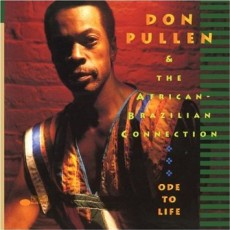
Don Pullen was born on December 25, 1941 and was raised outside Roanoke, Virginia and learned to play the piano at an early age. He played with the choir in his local church, was heavily influenced by his jazz pianist cousin, Clyde “Fats” Wright and took some lessons in classical piano. He knew little of jazz, concentrating mainly on church music and the blues.
Leaving Roanoke for Johnson C. Smith University in North Carolina to study for a medical career, Pullen soon realized that his true vocation was music. After playing with local musicians and being exposed for the first time to albums of the major jazz musicians and composers he abandoned medical studies for music.
By 1964 he was in Chicago with Muhal Richard Abrams, then moved to New York City and immersed in the avant-garde recording with Giuseppi Logan. Along with band mate Milford Graves formed a duo, started a small label and recorded his first sessions that did great in Europe. He turned to more profitable organ and during the 60’s and 70s played trio dates and backed such vocalists as Arthur Prysock, Irene Reid, Ruth Brown, Jimmy Rushing and Nina Simone. He held a brief position with Art Blakey and the Jazz Messengers in 1972.
Over the course of his career he would play with Charles Mingus, lead his own groups, form the George Adams/Don Pullen Quartet, put together the African Brazilian Connection, worked with Native American drummers and choir, and played with Nilson Matta, Carlos Ward, Gary Peacock, Tony Williams, Hamiet Bluiett, Bill Cosby, Jack Walrath, Maceo Parker, Roy Brooks, Jane Bunnett and David Murray among others.
Don Pullen jazz pianist, organist and composer of blues to bebop, who recorded over 30 albums as a leader and more than three dozen as a sideman, passed away of lymphoma on April 22, 1995.
Put A Dose In Your Pocket
Daily Dose Of Jazz…
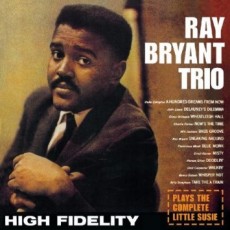
Ray Bryant was born Raphael Homer Bryant on December 24, 1931 in Philadelphia, Pennsylvania and began playing piano at age six. He played bass in junior High School. Turning professional before his age of maturity, he made a name for himself in his hometown playing a steady gig at the Blue Note Club.
From the late 1950s, he led a trio, performing throughout the world, and also worked solo. He recorded his first album with Betty Carter in 1955 titled “Meet Betty Carter and Ray Bryant” that marked his initial ascent. His first solo piano album “Alone With The Blues” in 1958 became the precursor to many more solo projects.
A noted jazz composer, with well-known themes such as “Cubano Chant,” “Monkey Business,” “Little Susie” and “The Madison Time,” the latter being resurrected in the 1988 movie Hairspray and subsequently used in the Broadway show.
Ray has performed and recorded with such players as Miles Davis, Sonny Rollins, Melba Liston, Coleman Hawkins, Charlie Parker, Carmen McRae and Aretha Franklin. Along with his brother Tommy and Oz Perkins he formed a trio as the back-up band in 1964 for the off-Broadway run of the comedy show Cambridge Circus starring John Cleese.
Ray Bryant, sensitive yet firm pianist who was comfortable with tonalities of gospel and blues and excelled as both sideman and leader passed away at age 79 on June 2, 2011.
Give The Gift Of Knowledge
More Posts: piano
Daily Dose Of Jazz…
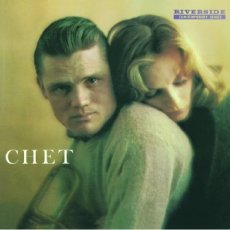
Chet Baker was born Chesney Henry Baker, Jr. on December 23, 1929 in Yale, Oklahoma. Raised in the musical household of a professional guitar player, he began his musical career singing in church, and then introduced to the trombone, but proved to large it was replaced with the trumpet.
Baker received some musical education at Glendale Junior High School, but left school at age 16 in 1946 to join the Army, serving in the 298th Army band. After his discharge in 1948, he studied theory and harmony at El Camino College in Los Angeles, dropped out in his second year and re-enlisting joined the army band at the Presidio but was soon spending time in San Francisco jazz clubs such as Bop City and the Black Hawk. Once again discharged he pursued his career as a professional musician.
Chet’s earliest notable professional gigs were with saxophonist Vido Musso band and with Stan but earned much more renown in 1951 when Charlie Parker chose him to play a series of West Coast engagements. In 1952, Baker joined the Gerry Mulligan Quartet, which was an instant phenomenon due to contrapuntal touches.
With Mulligan serving a sentence on drug charges, Pacific Jazz picked up Baker in 1956 releasing Chet Baker Sings to the consternation of purists, but it increased his profile. He would go on to perform and record with Russ Freeman, Carson Smith, Joe Mondragon, Jimmy Bond, Art Pepper and Shelley Manne among others, win the Downbeat Jazz Poll, make his acting debut in Hell’s Horizon, front his own combos, and become an icon in the West Coast cool jazz movement.
However successful Baker became his lifelong battle with heroin brought a decline to his musical career, pawning instruments, serving prison sentences, encountering expulsion and deportation from European countries, savagely beaten and losing his teeth and ability to play. Chet’s comeback came with being fitted with dentures, relocating to New York and Europe, playing with Philip Catherine, Phil Markowitz, Stan Getz and returning with his most prolific recording era between 1978 and 1988, though on mostly small European labels that never reached wide audience attention.
Chet Baker, composer, flugelhornist and trumpeter who popularity was due in part to his matinee-idol good looks and well publicized drug habit, and who was associated most prominently with his rendition of My Funny Valentine and his documentary Let’s Get Lost, passed away on May 13, 1988 in Amsterdam, Netherlands.
Take A Dose On The Road
More Posts: flugelhorn,trumpet,vocal