

Daily Dose Of Jazz…
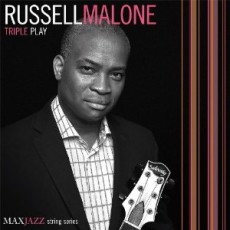
Russell Malone was born November 8, 1963 in Albany, Georgia. He began playing at the age of four with a toy guitar his mother had bought him, influenced by musicians such as B. B. King and The Dixie Hummingbirds. However, his most influential musical experience was seeing George Benson perform on television with Benny Goodman. He learned technique from listening to recordings of Benson, Wes Montgomery and Charlie Christian among others.
Malone played with jazz organist Jimmy Smith, followed by a residency with the Harry Connick Jr. Big Band and in 1995, Malone became part of the Diana Krall Trio, that had three albums nominated for a Grammy. Following his tenure with Krall, he went on to tour regularly leading his own quartet, has played with Dianne Reeves, Romero Lubambo, Ron Carter, Bobby Hutcherson, the late Mulgrew Miller, Dr. Lonnie Smith, Hank Jones, Benny Green, Bill Frisell and Sonny Rollins.
The essentially self-taught swing and bebop jazz guitarist has recorded several sessions for Columbia, Impulse, Venus, Verve and Telarc record labels and since 2004 has recorded on the MaxJazz label with his latest 2010 session being “Triple Play”. Russell Malone has amassed to date 18 albums in his catalogue and continues to perform, record and tour.
More Posts: guitar
Daily Dose Of Jazz…
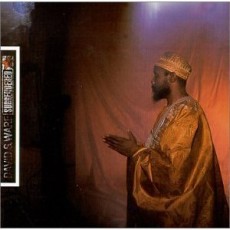
David S. Ware was born on November 7, 1949 in Plainfield, New Jersey and began playing at age ten due to his father’s admiration for the saxophone and his large record collection. While in high school he played in the bands and ventured into New York as a teenager to listen to jazz. He had informal practice sessions with Sonny Rollins as a youth in the ’60s; then as part of the fertile NYC Loft Jazz era of the ’70s.
During this decade, he joined the Cecil Taylor Unit and Andrew Cyrille’s Maono. He also worked together with drummers Beaver Harris and Milford Graves. In the early ’80s he toured Europe with both Andrew Cyrille and his own trio. In mid-decade, Ware purposefully engaged himself in a period of extensive woodshedding – in order to further develop both his personal sound and his visionary group concept.
The ’90s saw the full-on actualization of this group, and the recognition of David S. Ware as a true saxophone colossus. A series of groundbreaking albums by the David S. Ware Quartet were released on the Silkheart, DIW, Homestead, AUM Fidelity, and Columbia Jazz labels. Perhaps the most highly acclaimed group of the last decade, David’s efforts were rewarded by being one of the very few jazz musicians whose work was appreciated by an audience outside the narrow confines of the jazz world. In an unprecedented coup, the ‘Cryptology’ album garnered the lead review slot in Rolling Stone Magazine.
Over the course of his career, tenor saxophonist David Ware has recorded for Columbia, Black Saint, DIW, Silkheart, Homestead, AUM Fidelity and Thirsty Ear record labels. He has performed with a host of musicians and was responsible for bringing the young pianist Matthew Shipp to the attention of the jazz environment. David S. Ware, who has played the most prestigious clubs and festivals around the globe passed away on October 18, 2012 ar age 62 in New Brunswick, New Jersey.
More Posts: bandleader,composer,saxophone

Daily Dose Of Jazz…
Arturo Sandoval was born in Artemisa, Cuba on November 6, 1949 and began to play music at age 12 in the village band. After playing many instruments, he fell in love with the trumpet. In 1964, he began three years of serious classical trumpet studies at the Cuban National School of Arts. By the age of 16 he had earned a place in Cuba’s all-star national band and was totally immersed in jazz influenced by Charlie Parker, Clifford Brown and with Dizzy Gillespie as his idol and later mentor and colleague.
In 1971 he was drafted into the military. Luckily, Sandoval was still able to play with the Orquesta Cubana de Musica Moderna. In Cuba, Sandoval co-founded the band Irakere with Chucho Valdes and Paquito D’Rivera. They quickly became a worldwide sensation. Their appearance at the 1978 Newport Jazz Festival introduced them to American audiences and garnered them a recording contract with Columbia Records.
Arturo defected to the United States while touring in Spain with Dizzy in 1990, becoming a naturalized citizen in 1999 and has enjoyed a successful career. He has played with Woody Herman, Herbie Hancock, Woody Shaw, Stan Getz, Celine Dion, Tito Puente, Patti LaBelle, Frank Sinatra, Paul Anka, Gordon Goodwin and numerous others.
His life was the subject of the 2000 TV film For Love or Country: The Arturo Sandoval Story, starring Andy Garcia. He currently continues to perform, tour and record around the globe.
More Posts: flugelhorn,piano,trumpet
Daily Dose Of Jazz…
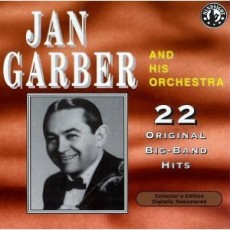
Jan Garber was born Jacob Charles Garber on November 5, 1894 in Indianapolis, Indiana. He had his own band by the time he was 21. He became known as “The Idol of the Airwaves” in his heyday of the 1920s and 1930s, playing jazz in the vein of contemporaries such as Paul Whiteman and Guy Lombardo.
It was during World War II that Garber began playing swing jazz with arranger Gray Rains and vocalist Liz Tilton. However, the recording restrictions in America during the war eventually made his ensemble unfeasible, and he returned to “sweet” music after the war, playing violin with the Philadelphia Symphony Orchestra.
Jan formed the Garber-Davis Orchestra with pianist Milton Davis from 1921–1924. After parting with Davis, he formed his own orchestra, playing both “sweet” and “hot” 1920s dance music. He was hit hard by the Great depression and in the thirties he refashioned his ensemble into a big band and recorded a string of successful records for Victor.
Violinist and bandleader Jan Garber continued to lead ensembles nearly up until the time of his death on October 5, 1977 in Shreveport, Louisiana.
More Posts: bandleader,violin

Daily Dose Of Jazz…
Hailing from the West Coast, California native, trumpeter Jeremy Pelt was born on November 4, 1976. His primary interest was strictly classical music until he started high school when he began playing in the jazz band. After matriculating Berklee College of Music he set his sights on New York and before long got noticed by many top jazz musicians and got his first professional gig playing with the Mingus Big Band, allowing him to grow and nurture long lasting associations.
Pelt has had the good fortune to play with such jazz luminaries, such as Jimmy Heath, Frank Wess, Charlie Persip, Keter Betts, Frank Foster, John Hicks, Ravi Coltrane, Winard Harper, Vincent Herring, Ralph Peterson, Lonnie Plaxico, Nancy Wilson, Bobby Short, Cedar Walton and many too numerous to list. Coupled with those collaborations he has been a featured trumpeter in the Roy Hargrove Big Band, The Village Vanguard Orchestra and the Duke Ellington Big Band. Currently, he is member of the Lewis Nash Septet, the Frank Foster Loud Minority, and The Cannonball Adderley Legacy Band featuring Louis Hayes.
Jeremy maintains a consistent forward momentum while transmitting a modern-day sense of urgency with his songs. Pelt’s major focus is on writing music for each of his three bands: “Creation”– a sextet, “Noise” – a semi-electric band and “The Jeremy Pelt Quartet”.
He has been voted “Rising Star on the Trumpet” by Downbeat Magazine and the Jazz Journalist Association two years in a row. Jeremy Pelt has toured throughout the United States, Europe, Japan, Virgin Islands and Brazil, and continues to perform and record.
More Posts: trumpet