

Daily Dose Of Jazz…
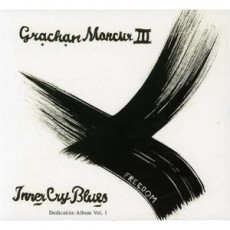
Grachan Moncur III was born June 3, 1937 in New York City, the son of bassist Grachan Moncur II, but was raised in Newark, New Jersey. He began playing cello at age nine but switched to trombone at eleven. In high school he attended Laurinburg Institute in North Carolina and began sitting in with touring musicians, establishing lasting friendships with Art Blakey and Jackie McLean.
After high school he toured with Ray Charles in 1959, gained membership into the Art Farmer/Benny Golson Jazztet in ’62, and then worked with Sonny Rollins. He took part in two classic McLean sessions in the early 1960s, One Step Beyond and Destination Out, to which he also contributed the bulk of compositions that led to two influential albums of his own for Blue Note Records – Evolution with McLean and Lee Morgan and Some Other Stuff with Herbie Hancock and Wayne Shorter.
Moncur joined Archie Shepp’s ensemble and recorded with other avant-garde players such as Marion Brown, Beaver Harris and Roswell Rudd. In 1969 while in Paris he recorded two albums as a leader for the BYG Actuel label, New Africa and Aco Dei de Madrugada, as well as appearing as a sideman on numerous other releases of the label. In 1974, the Jazz Composer’s Orchestra commissioned him to write a jazz symphony, Echoes of Prayer, and he has gone on to work with Cassandra Wilson, Frank Lowe, John Patton, Mark Masters, Joe Henderson, Tim Hagans, Gary Bartz and perform occasionally with the Paris Reunion Band.
The prolific composer and trombonist continued to perform, tour and record until he died from cardiac arrest on his 85th birthday in Newark, New Jersey on June 3, 2022.
More Posts: trombone
Daily Dose Of Jazz…
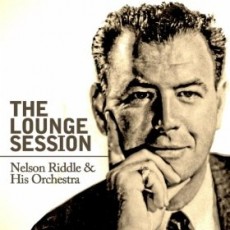
Nelson Riddle was born Nelson Smock Riddle, Jr. on June 1, 1921 in Oradell, New Jersey and later moved with his family to Ridgewood. He began taking piano lessons at age eight and trombone lessons by age fourteen. After his graduation from high school Nelson spent his late teens and early 20s playing trombone in and occasionally arranging for various local dance bands, culminating in his association with the Charlie Spivak Orchestra.
In 1943, Riddle joined the Merchant Marines, studied orchestration under Alan Shuman, joined Tommy Dorsey in 1941, drafted into WWII shortly before the end of the war. Upon discharge he moved to Hollywood and started his arranging career for radio and record projects.
In 1950, Riddle was hired by composer Les Baxter to write arrangements for a recording session with Nat King Cole, becoming his first association with Capitol Records. He would go on to work with Ella Fitzgerald, Oscar Peterson, Kate Smith, Judy Garland, Dean Martin, Keely Smith, Sue Raney, Linda Ronstadt, Johnny Mathis, Rosemary Clooney, Ed Townsend and Frank Sinatra, who reluctantly but successfully re-launched his career with the Riddle arrangement of “I’ve Got The World On A String”.
Riddle would arrange for such films as High Society with Bing Crosby and Paint Your Wagon with Lee Marvin, Clint Eastwood and Jean Seberg, in conjunction to leading his successful orchestra.
Arranger, composer, bandleader and orchestrator Nelson Riddle, whose career spanned over four decades, passed away on October 6, 1985 of cardiac and kidney failure at age 64.
Daily Dose Of Jazz….
Elaine Leighton was born on May 22, 1926 in New York City and while in high school she was in the same class as Stan Getz and Shorty Rogers. Early in her career around 1949 Leighton worked with Jackie Cain and Roy Kral. She then went to work with Ann Mae Winburn who led the International Sweethearts of Rhythm.
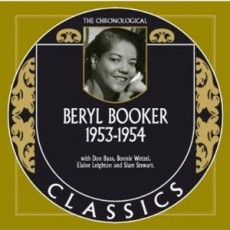
In the mid-Fifties Leighton would play in a trio with pianist Carl Drinkard and accompanied Billie Holiday, recording with her on several sessions including the 1954 Koln live recording. She would be part of an all female trio with bassist Bonnie Wetzel and pianist/singer Beryl Booker. Following a European tour Elaine started freelancing in New York, from 1957 to 1959, then led her own trio.
She has worked with Buddy DeFranco and Red Norvo, was a part of the Jazz USA tour with Clark Terry, Lucky Thompson, Tal Farlow, Kenny Clarke, Terry Pollard, Norma Carson and Mary Osborne, and recorded as a part of the Leonard Feather “Cats vs. Chicks” sessions for MGM. Drummer Elaine Leighton never led a recording session but performed on many classic recording dates but no longer performs at the age of 91.
More Posts: drums
Daily Dose Of Jazz…
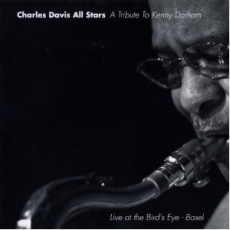
Charles Davis was born on May 20, 1933 in Mississippi but was raised in Chicago, Illinois. Graduating from DuSable High School he continued his musical study of the saxophone at the Chicago School of Music and privately under John Hauser. In the 1950s he played in the bands of Billie Holiday, Ben Webster, Dinah Washington and extensively with Sun Ra and Archie Shepp. He teamed up with Kenny Dorham, performing and recording for many years together.
An accomplished tenor and alto saxophonist, Charles was widely known for his baritone, winning Downbeat Magazine’s 1964 International Jazz Critics Poll for the baritone saxophone. Throughout his career he would perform in the musical production of “The Philosophy of The Spiritual – A Masque of the Black”, teach public school in Brooklyn, the Jazzmobile Workshop and at the New School, be the musical director of The Turntable, a nightclub owned by Lloyd Price, and tour Europe several times.
Davis would be a member of the cooperative group “Artistry in Music” with Hank Mobley, Cedar Walton, Sam Jones and Billy Higgins, and was the co-leader and composer/arranger for the Baritone Saxophone Retinue. His numerous collaborations, performances and recordings both as a leader and sideman with a who’s who of his contemporaries such as Elvin Jones, Jimmy Garrison, Illinois Jacquet, Freddie Hubbard, Johnny Griffin, Steve Lacy, Ahmad Jamal, Blue Mitchell, Erskine Hawkins, John Coltrane and Clifford Jordan among many others. Alto, tenor and baritone saxophonist Charles Davis continued to enjoy a prolific career until his passing on July 15, 2016.
More Posts: saxophone
Daily Dose Of Jazz…
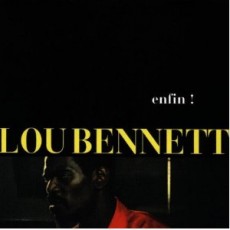
Lou Bennett was born May 18, 1926 in Philadelphia, Pennsylvania and first learned to play the piano before switching to the organ. It wasn’t until hearing Jimmy Smith play, that Bennett chose to stop playing bebop piano and make this instrument his professional calling.
Lou toured the U.S. with an organ trio between 1957 and 1959, and then moved to Paris in 1960. There he recorded and performed at the Blue Note with Jimmy Gourley, Kenny Clarke, Philip Catherine, Franco Manzecchi and Rene Thomas. He returned to America only once, for the 1964 Newport Jazz Festival.
By the 1980s he played in his own quintet and during this period toured extensively throughout Spain. As a leader he recorded twelve albums for RCA, Impulse, BelAir, Fonatana, Vogue and other labels into the Nineties. Jazz organist Lou Bennett passed away on February 10, 1997 in Paris, France.
More Posts: bandleader,instrumental,jazz,music,organ