

Daily Dose Of Jazz…
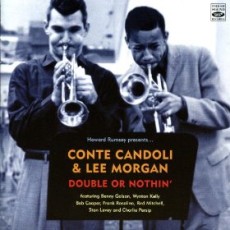
Secondo “Conte” Candoli was born on July 12, 1927 in Mishawaka, Indiana. Following in the footsteps of his older brother Pete, he learned to play the trumpet at a young age. By the summer of 1943 just before entering his junior year he sat in for the first time with the Woody Herman First Herd.
After graduation in 1945, he joined the band full-time where he sat side by side with brother Pete in the trumpet section. Conte immediately went on the road, where he stayed for the next ten years, with Woody as well as with the legendary bands of Stan Kenton, Benny Goodman and Dizzy Gillespie.
In 1954, after leaving Stan Kenton, Candoli formed his own group with sidemen Chubby Jackson, Frank Rosolino and Lou Levy. Moving to Los Angeles and for four years was a member of the Lighthouse All-Stars with Shorty Rogers, Bud Shank and Bob Cooper.
His Dizzy-inspired playing brought him many performing and recording opportunities with major jazz names and the top names in show business, such as Gerry Mulligan, Shelly Manne, Terry Gibbs, Teddy Edwards, Frank Sinatra, Bing Crosby, Sammy Davis Jr. and Sarah Vaughan.
Conte’s long relationship with The Tonight Show began in 1967 and he became a permanent fixture in the orchestra’s trumpet section when Johnny Carson moved the show to Burbank, California in 1972.
Trumpeter Conte Candoli was inducted into The International Jazz Hall of Fame in 1997. He died at the age of 74 on December 14, 2001 at Monterey Palms Convalescent home in Palm Desert, California following a long battle with prostate cancer.

Inspire A Young Mind
More Posts: trumpet
Daily Dose Of Jazz…
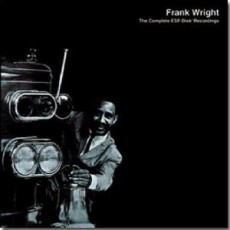
Frank Wright was born on July 9, 1935 in Grenada, Mississippi but grew up in Cleveland, Ohio. In his youth he started his musical career playing electric bass with Bobby “Blue” Bland, B. B. King and R&B bands in Memphis and Cleveland. But it was his meeting of Albert Ayler that he switched to the tenor saxophone, embraced the free jazz movement and moved to New York City in the mid-60s.
During this decade he played with some of the biggest names in avant-garde jazz including briefly with John Coltrane. He also made his first recordings as a leader for the ESP label but not finding an appreciative audience, Frank moved to Europe and spent the remainder of his life there.
Wright recorded for a few small labels, performed free jazz with expatriate American musicians and the European leaders of the avant-garde, and returned to the U.S. occasionally to perform with Cecil Taylor and the Art Ensemble of Chicago.
Tenor and soprano saxophonist and bass clarinetist Frank Wright, known for his frantic style, passed away on May 17, 1990.
Jazz Is Global – Share
Daily Dose Of Jazz…
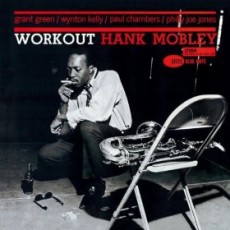
Henry (Hank) Mobley was born on July 7, 1930 in Eastman, Georgia but was raised in Elizabeth, New Jersey. Early in his career, he worked with Dizzy Gillespie and Max Roach, and then took part in one of the landmark hard bop sessions, alongside Art Blakey, Horace Silver, Doug Watkins and Kenny Dorham, resulting in the release of Horace Silver and the Jazz Messengers and the Jazz Messengers. When they split in ’56, Hank and Silver continued their collaboration in the 50s.
During the 1960s, he worked chiefly as a leader, recording over 20 albums for Blue Note Records between 1955 and 1970 and playing many of the most important hard bop players such as Grant Green, Freddie Hubbard, Sonny Clark, Wynton Kelly and Philly Joe Jones, along with a particularly productive partnership with Lee Morgan. He spent a brief time with Miles Davis in 1961 replacing John Coltrane.
Hank was a major voice on tenor saxophone, known for his melodic playing, is widely recognized as one of the great composers of originals in the hard-bop era, with interesting chord changes and room for soloists to stretch out.
He was forced to retire in the mid-1970s due to lung problems and although he worked two engagements at the Angry Squire in New York City in ‘85 and ‘86 in a quartet with Duke Jordan. He recorded as a leader for Blue Note, Prestige and Savoy record labels leaving history thirty-two albums and another fifty-six sitting in the sideman seat.
A few months later tenor saxophonist and composer Hank Mobley, who soared in the hard bop and soul jazz genres with his laid-back, subtle and melodic delivery, passed away from pneumonia on May 30, 1986.
Give The Gift Of Knowledge
More Posts: saxophone
Daily Dose Of Jazz…
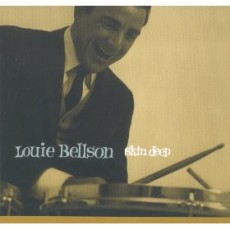
Louie Bellson was born Luigi Paulino Alfredo Francesco Antonio Balassoni on July 6, 1924 in Rock Falls, Illinois. He started playing drums at three years of age and at 15 pioneered the double-bass drum set-up. By 17 he triumphed over 40,000 drummers to win the Slingerland National Gene Krupa contest and graduated from high school in 1939.
1943 saw Bellson performing with Benny Goodman and Peggy Lee in the film “The Powers Girl” followed two more by the decade’s end. Between 1943 and 1952, he performed with Benny Goodman, Tommy Dorsey, Harry James and Duke Ellington, for whom he composed “Skin Deep” and “The Hawk Talks”. In 1952 he married Pearl Bailey, leaving Ellington to be her musical director, a union that lasted 38 years until her death in 1990.
Through the 1950s and 1960s, Louie performed with Jazz At The Philharmonic or J.A.T.P., Tommy and Jimmy Dorsey, Count Basie, again with Duke Ellington and Harry James, as well as appearing on several Ella Fitzgerald studio albums.
Equally adept as a big band or small group drummer, Bellson recorded extensively and led his own big and small bands, occasionally maintaining separate bands on each coast. His sidemen have included Blue Mitchell, Don Menza, Larry Novak, John Heard, Clark Terry, Pete and Conte Candoli and Snooky Young.
Louie Bellson, composer, arranger, bandleader and jazz educator passed away from Parkinson’ s disease on February 14, 2009.
Take A Dose On The Road
More Posts: arranger,composer,drums,educator,musical director
Daily Dose Of Jazz…
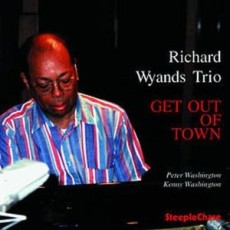
Richard Wyands was born July 2, 1928 in Oakland, California and started working in local clubs when he was 16, graduated from San Francisco State College, and gained experience playing in the San Francisco Bay area.
Although his chordal voicings are a little reminiscent of Red Garland, he spent most of his career as a sideman playing a few early dates for Fantasy and accompanying Ella Fitzgerald and Carmen McRae in 1956. A move to New York in 1958 afforded him the opportunity to gig with Roy Haynes, Charles Mingus, Gigi Gryce’s quintet, Oliver Nelson, Etta Jones, Eddie “Lockjaw” Davis, and Gene Ammons, among others.
Wyands’ association with Kenny Burrell had him playing and touring extensively from 1964-1977. He has played with many other top musicians, including Freddie Hubbard, Zoot Sims, Frank Foster, the Illinois Jacquet Big Band, Benny Carter, Ernie Andrews, and Milt Hinton, among others.
Pianist Richard Wyands has also headed his own trios, but has only had a handful of sessions as a leader including dates for Storyville, DIW and Criss Cross. The hard bop pianist is best known as a sideman, has led a few of his own trios and continues to perform and tour.
Jazz Is Global – Share
More Posts: piano