


Daily Dose Of Jazz…
Valery Ponomarev was born January 20, 1943 in Russia and the young trumpeter became interested in jazz after hearing it on Voice of America. Feeling a particular affinity for Clifford Brown, he dedicated countless hours to transcribing, studying and memorizing legendary jazz trumpet solos. Fleeing the Soviet Union in 1973 he emigrated to the U.S. where he joined Art Blakey’s Jazz Messengers, an association that lasted four years.
Valery’s tenure with Blakey afforded him the opportunity to perform the major concert venues, clubs and festivals around the world, recording eleven albums and television appearances in Europe, Japan, Brazil and the United States. After his departure from The Jazz Messengers, Valery formed his own band “Universal Language”.
Ponomarev has performed or collaborated with Max Roach, Harold Land, George Morrow, Sam Dockery, Evelyn Blakey, Curtis Fuller, Bobby Watson and others. He is currently a member of the memorial Art Blakey & The Jazz Messengers band led by Benny Golson. He also tours with his big band playing some originals and some music from the Jazz Messengers repertoire.
Considered by many as an outstanding educator and mentor, Valery teaches privately and as part of the Wells Fargo Jazz for Teens program in Newark, New Jersey. He has had a documentary made about his life, “Messenger From Russia” and released his autobiographical book “On The Flip Side of Sound” in 2009.
More Posts: trumpet
Daily Dose Of Jazz…
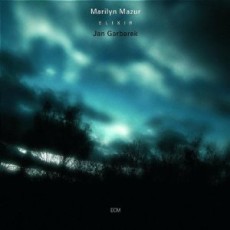
Marilyn Mazur was born on January 18, 1955 of Polish and African American descent in New York but grew up on Denmark from the age of six. Primarily a self-taught percussionist and drummer, she got a degree in percussion at the Royal Danish Academy of Music.
From 1975, Mazur has worked as a percussionist with various groups, among others, the group Six Winds with Alex Riel. She has performed with such notables as Niels-Henning Orsted Pederson, Jan Garbarek, Miles Davis, Gil Evans, Wayne Shorter Jeanne Lee and Palle Mikkelborg to mention a few.
By 1989, Marilyn founded her band Future Song, a sextet with her husband Klavs Hovman. A second project, Percussion Paradise, brought together percussionists Benita Haastrup, Lisbeth Diers and Birgit Løkke.
Marilyn Mazur is also a composer, pianist, dancer and bandleader and has been selected by Down Beat in 1989, 1990 and 1995 as a “percussion talent deserving wider recognition”. In 2001, she was awarded the Jazzpar Prize, the world’s largest international jazz prize. She continues to record, perform and tour.
More Posts: bandleader,drums

From Broadway To 52nd Street
No Strings opened the curtain at the 54th Street Theatre on March 15, 1962 and ran for 580 performances. The musical starred Richard Kiley and Diahann Carroll performing music composed by Richard Rodgers, and The Sweetest Sounds and Loads of Love went on to become part of the classic jazz lexicon.
The Story: In Paris, David Jordan, a prize-winning writer suffering from a long dry spell meets a black model, Barbara Woodruff. Their budding romance wilts when David learns that a wealthy admirer has kept Barbara. Later they resume their affair but after recognizing that an interracial marriage would be doomed, they go their separate ways.
Jazz History: When trumpeter Miles Davis, under the influence of James Brown, Sly Stone, and Jimi Hendrix, crossed over to a new rock-inflected form with his influential Bitches Brew album in 1970, the new sub-genre of jazz-rock fusion gained jazz legitimacy for about a decade. Numerous graduates of Davis’ experiment—including pianists Herbie Hancock, Keith Jarrett, Joe Zawinul, and Chick Corea, drummers Tony Williams and Jack DeJohnette, percussionist Airto Moreira, saxophonist Wayne Shorter, guitarist John McLaughlin, and bassist Dave Holland—went on to success as leaders or members of 70s fusion super groups like Weather Report, Return to Forever, Lifetime, and the Mahavishnu Orchestra. Fusion was followed by a lighter, radio-friendly style called smooth jazz, which ultimately diminished the legitimacy of fusion in the minds of jazz purists. Fusion was innovative in its time, however, for it brought electronics and a strong backbeat into jazz, while influencing an entire new generation to begin exploring the style.
Sponsored By

www.whatissuitetabu.com
Daily Dose Of Jazz…
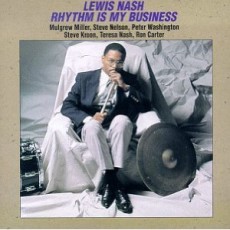
Lewis Nash was born December 30, 1958.Growing up in Phoenix, Arizona he was encouraged into jazz by his high school band teacher. By the age of 18, the drummer was a first call sideman for visiting musicians to Phoenix, and received the call to move to New York and join Betty Carter’s band at the age of 22.
he became a highly in-demand sideman during this period, and since his tenure with Carter, has gone on to record and tour with some of the most important and highly regarded jazz musicians of all time. Among them were Tommy Flanagan, Dizzy Gillespie, Sonny Stitt, Oscar Peterson, Sonny Rollins, Ron Carter, Hank Jones, Nancy Wilson, McCoy Tyner, Wynton Marsalis, Joe Williams and the list goes on and on.
A renowned master stylist, particularly in be-bop and post-bop styles, Nash is at home in a wide range of stylistic territory, including funk, free, and Latin based jazz styles. He is known for his seemingly endless depth of melodic vocabulary, drawing from all eras of jazz percussion, while adding his own unmistakably identifiable approach to the construction of his comping figures and soloing. His versatility has made him one of the foremost brush stylists of his generation.
Nash is also passionate and dedicated to jazz education, and has fostered the careers of a long list of younger players. He is in high demand as a clinician and educator at schools, workshops and major educational jazz festivals worldwide. He formed his own group in the late 1990s and currently leads several groups of varying instrumentation, from duo to septet, as well as a member of Blue Note 7.
More Posts: drums

From Broadway To 52nd Street
The Fantasticks opened it season of 418 performances at the Sullivan Theatre on May 3, 1960. The musical starred Jerry Orbach, Rita Gardner, Kenneth Nelson and Tom Jones performing music composed and written by Harvey Schmidt and Tom Jones. Most notably from the show came one tune that would inevitably land in the jazz annals of music – Try To Remember.
The Story: The parents of the boy Matt, and the girl Louisa build a wall between their homes not because of any real animosity but on the assumption that the best way to kindle a romance is to appear to oppose it. They even hire El Gallo to stage a mock rape so Matt can rescue Louisa and seemingly be the hero. The kids discover the parent’s ploy, fall out and go separate ways. Eventually, they return to each other, disillusioned but mature.
Jazz History: In the late 60s, jazz began to feel the full impact of the rock revolution. Important jazz venues shut their doors, major labels abandoned jazz to pursue rock, and many jazz artists left the country for better opportunities abroad. Jazz record sales plummeted as rock sales soared, and younger audiences increasingly chose the Beatles, Jimi Hendrix, or the politically oriented folk music of Bob Dylan over jazz. New hybrids of rock and jazz developed as a result, some fueled by jazz players interested in rock and funk, others by rockers interested in jazz. A few late-60s jazz-rock acts like Blood, Sweat, and Tears and Chicago made inroads onto the pop charts, and some youth culture-oriented jazz artists like Charles Lloyd and Gary Burton scored with rock audiences. Numerous late-60s rockers, including Jimi Hendrix, Eric Clapton, Duane Allman, and many San Francisco bands, also began to extend their solos based on the modal improvisations of John Coltrane and other free jazz innovators.
Sponsored By
www.whatissuitetabu.com