

Daily Dose Of Jazz…
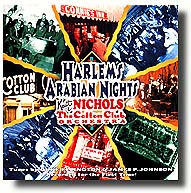
Keith Nichols was born on February 13, 1945 in Ilford, Essex, UK and took his first music lessons at age five on piano and accordion. As a youth he was a child actor and an award-winning accordionist, Great Britain Junior Champion in 1960.
He turned professional after graduating from Gulldhall School of Music, touring with the Levity Lancers for seven years playing trombone, piano and tuba. From the early 70s he has performed in concert ragtime at London’s South Bank, came to the U.S. in 1976 with Richard Sudhalter’s New Paul Whiteman Orchestra, recorded three solo albums for EMI and is a frequent sideman for the label and formed the Midnite Follies Orchestra focusing on the music of Duke Ellington and Cab Calloway.
He has gigged and recorded with Bing Crosby, arranged for the New York Jazz Repertory Company, Dick Hyman and the Pasadena Roof Orchestra, and has worked with Harry Gold, Digby Fairweather and Claus Jacobi.
The multi-instrumentalist, arranger and award-winning accordionist in his youth continues to perform and record prolifically in the UK, America and Europe with projects based in ragtime, and lectures at the Royal Academy of Music.
Daily Dose Of Jazz…
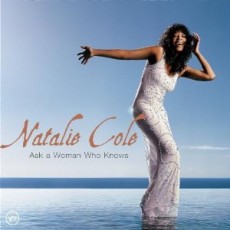
Natalie Maria Cole was born February 6, 1950 in Los Angeles, California the daughter of Nat King Cole and former Ellington Orchestra singer Maria Cole. Exposed to a host of great singers as a child, she first sang on her father’s Christmas album at six and began performing at 11. At 15 she attended Northfield Mount Hermon School followed by University of Massachusetts – Amherst, transferred to University of Southern California, returned to U Mass and graduated with a degree in Child Psychology and a minor in German.
While in college Natalie was singing on weekends and was welcomed on the club circuit in hope of singing her father’s music. However she stayed as far from his music as managers would allow and it was her own style of soul that attracted R&B producers Chuck Jackson and Marvin Yancy. The subsequent partnership produced 1975’s “Inseparable” that garnered her a Grammy for Best R&B Vocal Performance for “This Will Be” and Best New Artist for the album. She returned to pick up Grammy awards in 1976 and 1977 along with two platinum albums and gold singles.
By 1978, she would star in her first television special on CBS to rave reviews and garnered another gold album in the classic Natalie Live set. A string of hits followed with more gold albums but by the early 80s Cole’s career paused as she entered rehab multiple times for heroin and cocaine addiction.
1985 saw her back in good health and on the comeback trail hitting the charts with songs like “Dangerous” and “Pink Cadillac” through the decade culminating with a 1990 performance of “Wild Women Do” on the soundtrack of Pretty Woman. In 1991 she returned to her vocal jazz roots producing her best selling album “Unforgettable…with Love” covering 22 of her father’s greatest hits, again winning several Grammy awards. Her release of several more jazz CDs brought her more recognition with the album “Take A Look” winning a Grammy for Best Jazz Vocal Performance and “When I Fall In Love” from her Stardust album won a 1996 Grammy.
Natalie Cole has received numerous other awards and accolades, has carved out a secondary career in acting both on television and the silver screen, appeared live in concerts or other music-related programs and continued to record and perform until her passing away of congestive heart failure on December 31, 2015.
More Posts: vocal
Daily Dose Of Jazz…
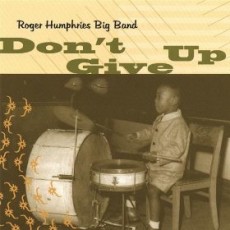
Roger Humphries was born January 30, 1944 in Pittsburgh, Pennsylvania and began playing drums at age four, and went professional at age 14. He led an ensemble at Carnegie Hall at age 16. Early in the 1960s, he began touring with jazz musicians; one of his more prominent gigs was in a trio with Stanley Turrentine and Shirley Scott in 1962.
In 1964, he played with Horace Silver on Song For My Father, following this Humphries drummed for Ray Charles. He led his own band “R. H. Factor” in the 1970s, and led ensembles under other names into the Nineties, recording under his own name in 1993, 2003 and 2011. He held teaching positions at the University of Pittsburgh and the Pittsburgh High School for the Creative and Performing Arts.
Humphries’s list of credits in jazz, R&B, and pop is extensive playing with Lee Morgan, Grant Green, Billy Taylor, Benny Green, Coleman Hawkins, Clark Terry, Dizzy Gillespie, Jack McDuff, Jon Faddis, Joe Williams, Herbie Mann, Gene Harris, Milt Jackson, Slide Hampton and the list goes on. Drummer and big band leader Roger Humphries continues to perform.
More Posts: drums
Daily Dose Of Jazz…
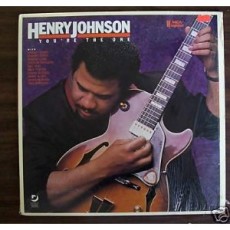
Henry Johnson was born January 28, 1954 in Chicago, Illinois and began playing at age twelve. While spending some formative time in Memphis, he started playing gospel music at age thirteen. By fourteen, Johnson was playing in R&B groups and although Johnson’s parents brought him up hearing the music of Duke Ellington, Count Basie, Joe Williams, and other artists of that era, it was not until 1967 that Johnson was formally introduced to jazz by hearing Wes Montgomery.
In 1969, his family moved back to Chicago where Henry’s reputation on the south side as a good local jazz guitarist flourished. In 1976, he went on the road with jazz organist Jack McDuff, and then he got the call to work with Donny Hathaway in 1977.
In 1979, Johnson began playing with Ramsey Lewis and some six years later Joe Williams added Johnson to his regular group. Henry’s musical roots run deep into gospel, blues, and jazz with his strongest and earliest influences were along with Wes Montgomery, guitarists Kenny Burrell and George Benson but also the music of Herbie Hancock, Oscar Peterson, Freddie Hubbard, Miles Davis, big bands, and jazz orchestras were integral forces to shape his sound and style.
His debut album “You’re The One” went #1 for two months on two charts, received a five star rating from Downbeat magazine, and was nominated for a Grammy. His follow-up albums also received wide recognition and in addition to his other projects, Henry has recorded and/or performed with Vanessa Ruben, Richie Cole, Nancy Wilson, Marlena Shaw, Angela Bofill, Dizzy Gillespie, the Boston Pops, Sonny Stitt, Freddie Hubbard, Grover Washington Jr., Stanley Turrentine, Dr. Billy Taylor, Jimmy Smith, James Moody, David “Fathead” Newman, Terry Gibbs, Bobby Watson, Nicholas Payton, Javon Jackson, Donald Harrison, and many other great jazz artists.
Guitarist Henry Johnson continues to re-invent himself as he records performs and tours worldwide.
More Posts: guitar
Daily Dose Of Jazz…
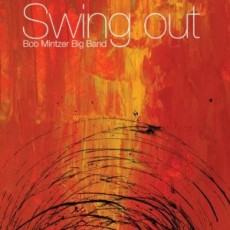
Bob Mintzer was born January 27, 1953 in New Rochelle, New York. After graduating from the Interlochen Arts Academy in 1970, he made his mark as a soloist, mainly on the tenor saxophone and bass clarinet but is also proficient on flute and the EWI (electronic wind instrument).
He is a member of the jazz-rock band the Yellowjackets but among jazz fans is even better known for his inspiring big band work since the early 1980s in the Word of Mouth Big Band and then as the leader of the Bob Mintzer Big Band. Before starting his own big band, Bob was a featured soloist and arranger with the Buddy Rich big band.
In 2008, Bob succeeded pianist Shelly Berg to hold the Bowen H. “Buzz” McCoy and Barbara M. McCoy Endowed Chair in Jazz Studies at the University of Southern California Thornton School of Music.
Mintzer has been nominated for thirteen Grammy Awards both for his solo work and big band recordings an his Homage to Count Basie won him a Grammy for the Best Large Ensemble in 2001. He has performed and/or recorded with a wide variety of artists ranging from Tito Puente, Buddy Rich, Thad Jones/Mel Lewis Big Band, James Taylor, The New York Philharmonic, National Symphony, American Saxophone Quartet, Art Blakey, Donald Fagan, Bobby McFerrin, Nancy Wilson, Kurt Elling, to Jaco Pastorius, Mike Manieri, and Randy Brecker.
Saxophonist, clarinetist, composer, arranger and bandleader Bob Mintzer continues to perform, tour and record as he explores funk and Latin domains with his big band.