

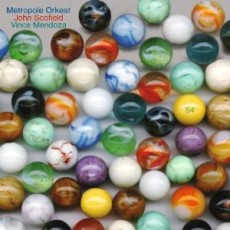
Daily Dose Of Jazz…
John Scofield was born on December 26, 1951 in Dayton, Ohio but early in his life the family moved to Wilton, Connecticut and it was here that he discovered his interest in music. He attended Berklee College of Music but left to record with Chet Baker and Gerry Mulligan followed by joining the Billy Cobham/George Duke Band touring and recording for two years.
Affectionately known as “Sco”, he went on to record with Charles Mingus, replace Pat Metheny in Gary Burton’s band and in 1976 signed with Enja Records releasing his first album “John Scofield” the next year. He formed his own band with Steve Swallow and Adam Nussbaum in ’70 and joined Miles Davis for three and half years in 1982. Leaving Miles he formed the Blue Matter Band and released three albums, in the nineties he put together a quartet that included Joe Lovano, Charlie Haden and Jack DeJohnette and recorded several albums for Blue Note. Towards the end of his tenure with Blue Note, Scofield returned to a more funk and soul jazz-oriented sound, a direction that has dominated much of his subsequent output to the present.
Scofield has played and collaborated with Joe Henderson, Joey DeFrancesco, Herbie Hancock, Pat Metheny, Bill Frisell, Pat Martino, Mavis Staples, Medeski, Martin & Wood, Jaco Pastorious, John Mayer, Hal Galper and the Metropole Orchestra along with many other well-known artists.
Guitarist John Scofield is at ease in the bebop idiom as well as he is versed in Jazz-fusion, funk, blues, soul, rock and other forms of modern American music and currently is an adjunct professor at NYU’s Steinhardt School of Education.
More Posts: guitar
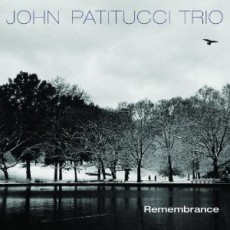
Daily Dose Of Jazz…
John Patitucci was born December 22, 1959 in Brooklyn, New York and began playing electric bass at ten, composing and performing at 12, playing the acoustic bass at 15 and a year later the piano. A family move to the West Coast allowed him to study classical music at San Francisco State and Long Beach State universities.
By 1980 John’s career moved him to Los Angeles where he began a successful career as a studio musician and jazz artist. His long list of credits include twelve albums as a leader and a sideman for the likes of B.B. King, Chick Corea, Joanne Brackeen, Wayne Shorter, Herbie Hancock, Dizzy Gillespie, George Benson, Natalie Cole, Queen Latifah, Sting, Stan Getz, Astrud and Joao Gilberto, Henry Mancini, Danilo Perez, Wynton Marsalis, McCoy Tyner and the list goes on and on.
In 1986 he was voted by the National Academy of Recording Arts and Sciences as the Most Valuable Player on acoustic bass, he has won two Grammy Awards, he has reached number one on the Billboard Jazz charts and has won the reader’s polls: Best Jazz Bassist in Guitar Player Magazine’s and Best Jazz Bassist in Bass Player Magazine’s.
Patitucci has taught at music schools in several countries, was the Artistic Director of the Bass Collective, a school for bassists in New York City, is involved with the Thelonious Monk Institute of Jazz, the Betty Carter Jazz Ahead program and was appointed Associate Professor of Jazz Studies at City College of New York.

More Posts: bass
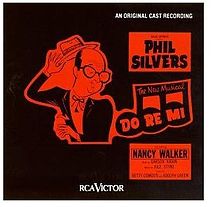
From Broadway To 52nd Street
Do-Re-Mi opened at the St. James on December 26, 1960 and starred Phil Silvers, Nancy Walker and John Reardon. Jule Styne, Betty Comden and Adolph Green composed the music and lyrics for the musical that ran 400 performances and gave the world the jazz standard Make Someone Happy.
The Story: A raucous satire on the music industry – with emphasis on the jukebox industry. Hubie Cram, a would-be big shot, induces three retired slot machine mobsters to muscle in on the jukebox racket. Though this does not make him the fawned upon tycoon he has always dreamed of becoming, Hubie does succeed in turning a waitress into a singing star.
Broadway History: The history of Black theater dates back to the turn of the century between 1890 and 1910 when the Black musical comedy was booming with the development of the Black musical theater. In 1903 composer Bert Williams and George Walker wrote “In Dahomey” and is considered the first all Black show on Broadway. The show returned a 400% profit to producers shattering the myth that Black shows were unprofitable. This was followed by a string of shows such as Shuffle Along, Showboat, How Come, The Chocolate Dandies, Africana and Keep Shufflin’. The rise of Black actors would make prominent stars of Ethel Waters, Pearl Bailey, Leslie Uggams, Bill Robinson, Josephine Baker, John Bubbles, Diahann Carroll, Ruby Dee and Sammy Davis Jr.
Over the following decades such shows as Porgy and Bess would come to Broadway along with Purlie, Raisin, Ain’t Misbehavin’, Golden Boy, Dreamgirls that would ultimately culminate in the establishment of the August Wilson Theatre, continuing the legacy of nearly a century of Black theater and inclusion in the Broadway lexicon.
Sponsored By

www.whatissuitetabu.com
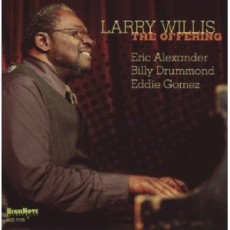
Daily Dose Of Jazz…
Lawrence Elliott Willis was born December 20, 1942 in Harlem, New York. He first got into music as a voice major at New York’s High School of Music and Art for gifted students and in his senior year he recorded an opera with the Music and Arts Chorale Ensemble under the direction of Leonard Bernstein.
Due to the barriers presented to Blacks in finding work in the classical arena, Willis changed directions, replacing voice with piano and concentrating on jazz. He taught himself to play piano and by the end of the winter was playing in a jazz trio with two of his classmates, Al Foster and Eddie Gomez.
He then entered and studied music theory at the Manhattan School of Music, was heard by Hugh Masekela and sent to John Mehegan for his first piano lessons ever, and by 19 began gigging regularly with altoist Jackie McLean and after graduating made his jazz recording debut on McLean’s “Right Now!” for Blue Note that featured two of Larry’s compositions.
Throughout his illustrious career pianist Larry Willis has performed and recorded as a leader and sideman on more than 300 recordings of bebop, avant-garde, jazz-fusion and rock with a wide range of musicians, Dizzy Gillespie, Lee Morgan, Carmen McRae, Clifford Jordan, Art Taylor, Shirley Horn, Stan Getz, Cannonball Adderley, Art Blakey, Woody Shaw and a stint of seven years beginning in 1972 as the keyboardist for Blood, Sweat & Tears.
He has composed and arranged for orchestras, big bands and symphonies for the Brooklyn Symphony with the Grammy-nominated Fort Apache Band, Roy Hargrove’s Grammy-winning Crisol Band, Vanessa Rubin and Joe Ford among others. He received the Don Redman award in 2011, and the Benny Golson Jazz Master Award at Howard University in 2012. He is currently still recording and touring around the world.
From Broadway To 52nd Street
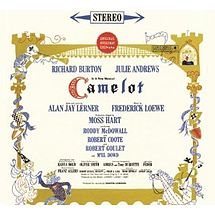
Camelot opened at the Majestic theatre on December 3, 1960 and ran for 873 performances that starred Richard Burton, Julie Andrews, Robert Goulet and Roddy McDowell. Alan Jay Lerner and Frederick Loewe composed the music that gave the world the jazz standard If Ever I Would Leave You.
The Story: The legend of King Arthur has been retold several times and it follows the exploits of his rise to power and his bringing his country under one monarch, falling in love with Guinevere and making her his queen, the illicit affair with Lancelot and the plot of Arthur’s destruction by his bastard son, to the fall of Camelot is set to music in this enjoyable portrayal of royal English life.
Jazz History: In the 1960s Afro-Cuban jazz grew as an extension of the movement that began in the 50s after bebop musicians such as Dizzy Gillespie and Billy Taylor started bands influenced Xavier Cugat, Tito Puente and Arturo Sandoval. The natural progression to Latin jazz combined the rhythms from Africa and Latin American countries that incorporated various instruments as conga, timbale, guiro and claves with jazz and classical harmonies. Though Afro-Cuban was after the bebop period, Brazilian jazz became extremely popular in the Sixties pioneered by Joao Gilberto, and Antonio Carlos Jobim. The rhythms of bossa nova, which were derived from samba, were first adapted to jazz by Charlie Byrd and Stan Getz.
Sponsored By
www.whatissuitetabu.com