

Hollywood On 52nd Street
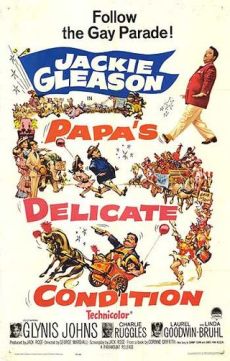
Papa’s Delicate Condition is a 1963 comedy that gave us ”Call Me Irresponsible” which became another jazz classic. Jimmy van Heusen composed the music and Sammy Cahn wrote the lyrics and the tune received an Oscar for Best Song.
The film starred Jackie Gleason and Glynis Johns and was adapted from the Corinne Griffith memoir of the same name. It recounted her father and growing up in Texarkana, Texas.
The Story: If Jack Griffith’s wife doesn’t like the color of a neighbor’s house, he’ll arrange for it to be a house of a different color. If the owner of the ice cream parlor doesn’t believe in selling triple banana splits for a penny, Jack will buy the establishment. And if Jack’s little girl wants the pony in the circus parade, why ot buy the entire circus! This last prank sends Amberlyn Griffith back to turn of the century Texarkana, c. 1900, where her father is running for his third term a mayor. Jack follows, bringing the entire circus.
Sponsored By

www.whatissuitetabu.com

Daily Dose Of Jazz…
Amina Figarova was born on December 2, 1966 in Baku, Azerbaijan and began studying music as a child. She started learning piano and expanded into composition and arrangement. Attending the Baku Conservatory as a youth, her immediate plans were to become a classical concert pianist.
A course in jazz performance at the Rotterdam Conservatory, however, led to Amina matriculating through Berklee College of Music. She recorded the first of her ten CDs in 1995 titled Attraction on the Media Music label then signed with Munich Records and has had a prolific and collaborative relationship releasing nine albums for the label.
Pianist Amina Figarova has toured extensively, developing a tight-knit ensemble that, despite inevitable personnel changes, has attained a distinctive and inimitable voice by concentrating on all-original repertoire for almost 18 years.
With a dozen albums under her belt the pianist continues to perform, record and tour with her husband, flautist Bart Platteau, who is a member of her international sextet.

Give The Gift Of Knowledge
More Posts: piano
Hollywood On 52nd Street
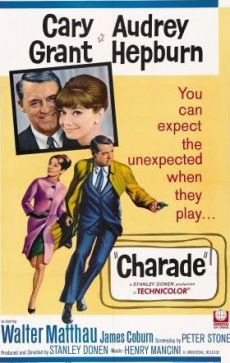
Charade is a sad, lonely Parisian waltz composed by Henry Mancini with lyrics by Johnny Mercer for the 1963 film of the same name starring Cary Grant and Audrey Hepburn. Now a classic song getting perpetual jazz encores song and is the theme to this romantic comedy, thriller, mystery film. The supporting cast included Walter Matthau, James Coburn, George Kennedy, Dominique Minot, Ned Glass and Jacques Marin.
The Story: When husband Charles is murdered leaving town, Regina “Reggie” Lampert (Hepburn) is tasked by the CIA administrator Matthau) to deliver the $250,000 in gold that five men stole from the U.S. that was to be delivered to the French Resistance and that her husband double-crossed and took for himself. Insistent that she knows where it is even though she may not know it. In walks Peter Joshua (Grant) to help her move into her apartment and the hunt for the money begins. Reggie falls for Peter, names constantly change, there’s murder and chases through the streets of Paris. They realize the money is in a priceless stamp and this lead up to the discovery of the identity of Carson Dyle and who the government agent is.
Sponsored By
www.whatissuitetabu.com
Daily Dose Of Jazz…
Geoffrey Keezer was born in Eau Claire, Wisconsin on November 20, 1970 to music teachers. He began studying piano at the age of three and by 1989 at 18, after one year of study at Berklee College of Music he joined Art Blakey’s Jazz Messengers.
His professional career has spanned many projects and genres such as performing Gershwin’s Rhapsody In Blue with the Hollywood Bowl Orchestra, composing commissioned pieces for the Carnegie Hall Jazz Band, Saint Joseph Ballet, Mainly Mozart Festival in San Diego, Scottish National Jazz Orchestra, and the Nancy Zeltsman Marimba Festival all while releasing a dozen albums as a leader and touring.
Geoffrey has received the Chamber Music America’s 2007 New Works grant, has appeared as a sideman on countless recording sessions, has played bass in a rock band, contributed artwork to David W. Mack’s comic “Kabuki”, and has performed with world-class musicians Joshua Redman, Diana Krall, Christian McBride, Barbara Hendricks, Kenny Barron, Chick Corea, Benny Green, Joe Locke and Mulgrew Miller.
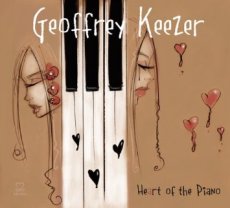
Keezer’s “Live in Seattle”, a collaboration with vibes player Joe Locke, won the Golden EarShot Award for “Concert of the Year” and his latest musical adventure, Áurea, is a Grammy nominated, multinational Afro-Peruvian jazz recording featuring the hottest players from New York City and Lima, Peru. In 2013 he released his latest solo project Heart Of The Piano, continues to lend his talents to educate at such institutions of higher learning as the New School, the Brubeck Institute, Indiana University, the Thelonious Monk Institute of Jazz and others, all while continuing to arrange, perform, record and tour both as a leader and sideman.
Jazz Is Global – Share
More Posts: piano

Daily Dose Of Jazz…
Julie Lyon was born on November 17, 1969 in Milwaukee, Wisconsin but grew up in Florida where she studied classical voice and received her degree in Vocal Performance from the University of Central Florida.
After college Julie started her musical career singing with different Top-40, Rock, Blues and Country bands until meeting her husband, drummer Tom Cabrera, and then turned to jazz.
Following her passion Lyon has recorded two albums, “Beginning To See The Light” and “ Live: Between Then And Now” and has since become a regular on the Park Avenue scene in Winter Park. An Orlando area staple, she performs regularly at Club Swank, Harvey’s Bistro, Fiddlers Green and The Citrus Club among others.
Pulling up stakes she moved with her husband to New York and continues to perform with her quartet/quintet in jazz clubs and appear at annual festivals. The vocalist and lyricist also composes, arranges and improvises her style through her original and standard catalogue of music.
Take A Dose On The Road
More Posts: vocal