

Daily Dose Of Jazz…
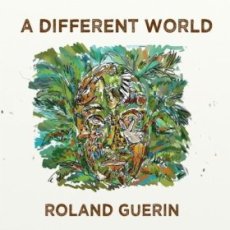
Roland Guerin was born on November 15, 1968 into a musical family, first learning music from his bass playing mother. Her sage wisdom taught him that you can’t make it in music without a strong groove and feeling.
While studying marketing at Southern University in Baton Rouge he joined legendary jazz educator Alvin Batiste’s band, The Jazztronauts. Following this stint he toured the world with jazz guitarist Mark Whitfield and during this period he further explored the jazz genre in which he found success.
While exploring his spiritual side, Guerin created a new instrument – a hollow-bodied acoustic six string bass guitar that enabled him to write music for an entire spectrum of genres including pop, rock, R&B, classical, folk, and country.
Roland made his debut as a bandleader in 1998 with his acclaimed “The Winds of the New Land”, and then released four successful albums in the next decade. From 1994 to 2010 Roland was a member of the Marcus Roberts Trio, also regularly enhanced by symphony orchestras.
He would go on to perform with George Benson, Jimmy Scott, Frank Morgan, Vernel Fournier, Gerry Mulligan, Brian Blade, John Scofield, Herlin Riley and Dr. Michael White while recording with Ellis Marsalis, Marcus Roberts, and Allen Toussaint among others.
When he is not touring around the world, Roland is very active on the New Orleans music scene, and has released his last album “A Different World” in 2011.

Inspire A Young Mind
More Posts: bass,bass guitar
Daily Dose Of Jazz…
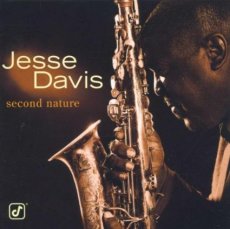
Jesse Davis was born on November 9, 1965 in New Orleans, Louisiana and showed signs of musical talent at a very young age. When he was eleven, his brother Roger, an accomplished tuba player bought Jesse a saxophone and taught him how to play it. He went on to study with Ellis Marsalis, whose teachings inspired him to become a music student at North-Eastern Illinois University on a full scholarship. He eventually transferred to William Patterson College in New Jersey, then to the New School in New York City, enrolling in their Jazz and Contemporary Music Program under the tutelage of Ira Gitler.
After graduating, alto saxophonist Jesse Davis embarked on a productive jazz career and has recorded eight albums on the Concord Jazz label. He has collaborated with such artists as Jack McDuff, Major Holley, Cecil Payne, Jay McShann, Cedar Walton, Benny Golson, Illinois Jacquet Kenny Barron and Roy Hargrove amongst a long list of notables.
Davis has received a “Most Outstanding Musician award” from magazine, won several awards at jazz festivals for outstanding soloist, toured Europe several times fronting his quartet and a member of the Sax Machine and made his debut as an actor in the celebrated Robert Altman movie “Kansas City”.
Jesse was equally influenced by Charlie Parker, Cannonball Adderley and Sonny Stitt and contributes a flawless technique and a natural feeling for the blues to every one of his performances as he continues to perform, record and tour.
Dose A Day – Blues Away
More Posts: saxophone
Daily Dose Of Jazz…
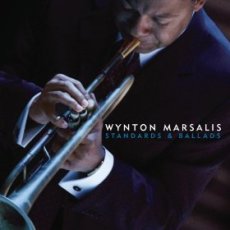
Wynton Learson Marsalis was born October 18, 1961 in New Orleans, Louisiana, the son of a jazz pianist. At an early age he exhibited an aptitude for music and by age eight he was performing traditional New Orleans music in the Fairview Baptist Church band. At 14, he performed with the New Orleans Philharmonic and during high school played with the New Orleans Symphony Brass Quintet, the New Orleans Community Concert Band, the New Orleans Youth Orchestra, the New Orleans Symphony, various jazz bands and with a local funk band, the Creators.
At age 17, Wynton was the youngest musician admitted to Tanglewood’s Berkshire Music Center where he won the school’s Harvey Shapiro Award for outstanding brass student. Moving to New York City he attended Julliard in 1979 and picked up gigs around town. He joined the Jazz Messengers led by Art Blakey in 1980 and in the years that followed he would perform with Sarah Vaughan, Dizzy Gillespie, Sweets Edison, Clark Terry, Sonny Rollins, Ron Carter, Herbie Hancock, Tony Williams and countless other jazz legends.
Marsalis has written, produced and hosted Marsalis On Music, an educational television series on jazz and classical music, National Public Radio aired the first of Marsalis’ 26-week series, titled Making the Music, was awarded a Peabody Award, has written five books, co-founded the jazz program at Lincoln Center that evolved into Jazz at Lincoln Center, opened Frederick P. Rose Hall, the first ever institution for jazz with three performance halls, recording, broadcast, rehearsal and education facilities.
Wynton Marsalis, jazz trumpeter, bandleader, composer and educator is currently the Artistic Director for Jazz at Lincoln Center and Music Director for the Jazz at Lincoln Center Orchestra. He was won nine Grammy Awards in both jazz and classical genres, and received the first ever Pulitzer Prize for Music.
Jazz Is Global – Share
More Posts: cornet,flugelhorn,flumpet,trumpet
Daily Dose Of Jazz…
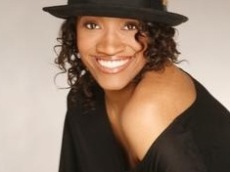
Nefertari Bey was born on September 29, 1980 in Oakland, California, but had the privileged of growing up in places such as Detroit, Chicago, South Carolina & North Carolina. Having such strong musical influence at home she naturally gravitated toward music and began singing at the age of 5. By 16, Nefertari was embarking on her first European tour.
With a Bachelor of Arts in Vocal Performance/Music Engineering Technology from Hampton University, and a Masters in Music from Georgia State University, Nefertari has used her musical education and talent to master the powerful art of musical storytelling and become a profound advocate of music education for all ages.
Bey, who is also a pianist, composer and arranger draws her musical style from influences such as Dinah Washington, Aretha Franklin, Nina Simone, John Coltrane and Liz Macomb. She has lent her rhythmic skill, style and sound to performances with notable artist such as Kenny Barron, Curtis Lundy and Louis Hayes.
Nefertari Bey unparalleled talent and sultry voice continues to perform.
Inspire A Young Mind
More Posts: vocal
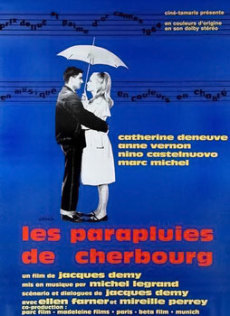
Hollywood On 52nd Street
Watch What Happens and I Will Wait For You The film score established composer Michel Legrand’s reputation in Hollywood, where he later scored other films, winning three Oscars . In North America, two of the film’s songs, the main theme “I Will Wait For You” and “Watch What Happens” originally titled Recit de Cassard or Cassard’s Song. They became hits and were recorded by many artists. Both were given new English lyrics by lyricist Norman Gimbel and Tony Bennett’s classic performance of the theme song was added to one version of the soundtrack CD.
The Story: The Umbrellas of Cherbourg or the French translation Les Parapluies de Cherbourg is a 1964 French musical film directed by Jacques Demy, starring Catherine Deneuve and Nino Castelnuovo. The film dialogue is all sung as recitative, even the most casual conversation.
Umbrellas is the middle film in an informal “romantic trilogy” of Demy films that share some of the same actors, characters and overall look; it comes after Lola (1961) and before The Young Girls of Rochefort (1967)
More Posts: comedy,dance,drama,hollywood,instrumental,jazz,musical,suite ta bu,vocal