


Daily Dose Of Jazz…
Danielle Wertz was born on June 11, 1994 in Washington, D.C. She was a semi-finalist in the 2015 Thelonious Monk International Jazz Vocal Competition.
Danielle independently released her debut album, Intertwined, in 2017 which ranked #4 on Capital Bop’s list of Best DC Jazz Albums of 2017 and was a finalist in both the Ella Fitzgerald Jazz Vocal Competition and the Mid-Atlantic Jazz Vocal Competition.
After making a cross-country move to California, Wertz quickly became an integral and sought-after musical collaborator and educator in the Bay Area. She has taught workshops and masterclasses at the Berkeley Jazzschool, joined the California Jazz Conservatory faculty, as well as the Sonoma State University faculty.
2022 saw her moving to NYC and being hired by Signature Theatre in Arlington, VA to co-create and co-star in a theatrical concert about the lives and music of Joni Mitchell and Leonard Cohen. In 2023 Danielle released her sophomore album, Other Side, as a composer and conceptualist. Reimagining arrangements of the Great American Songbook she paired them with her original compositions.
Vocalist, composer and arranger Danielle Wertz continues to collaborate as a new member of the NYC jazz scene, recording with Remy LeBoeuf, releasing a new album and looking forward to headline her first European tour.

More Posts: arranger,bandleader,composer,history,instrumental,jazz,music,vocal
On The Bookshelf
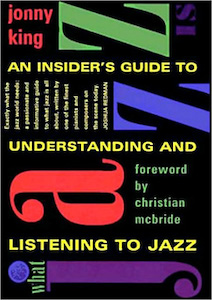
WHAT JAZZ IS | JONNY KING
Drawing on the unique insight of a seasoned jazz pianist, What Jazz Is offers an illuminating journey into the heartbeat of America’s original art form. With clarity and passion, Jonny King breaks down the essential building blocks of jazz, tempo, harmony, and melody, demystifying the role each instrument plays in creating the genre’s unmistakable sound.
Through the eyes and ears of a performer, he reveals the hidden structure behind improvisation, showing that what often sounds spontaneous is guided by a deep internal logic and shared musical language. Far from abstract theory, his explanations come to life through vivid examples and personal reflections.
King pays tribute to the giants who shaped jazz, Art Blakey’s explosive rhythms, John Coltrane’s spiritual intensity, Thelonious Monk’s angular genius, while also spotlighting the brilliance of modern innovators like Kenny Garrett, Christian McBride, and Joshua Redman.
Part guide, part homage, What Jazz Is invites readers to hear jazz not just as music, but as a conversation—one that’s rich with history, soul, and ever-evolving creativity.

On The Bookshelf
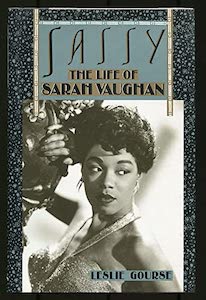
SASSY: THE LIFE OF SARAH VAUGHAN | LESLIE GOURSE
This is a vivid, intimate portrait of one of the most extraordinary voices in American music. In this definitive biography, acclaimed jazz chronicler Leslie Gourse brings to life the woman behind the legend— a vocal genius whose range, tone, and effortless improvisation changed the sound of jazz forever.
Born in Newark, New Jersey on March 27, 1924, Sarah Vaughan began her musical journey in the pews of Mount Zion Baptist Church, where she played organ and sang in the choir. By her early twenties, she was performing alongside jazz revolutionaries like Dizzy Gillespie, Charlie Parker, and Billy Eckstine—helping shape the very fabric of bebop and setting a new standard for vocal jazz.
A look behind the glamorous performances was a woman navigating a life as complex as her music: three turbulent marriages, financial upheavals, and a nightlife fueled by passion, excess, and resilience. Yet Vaughan remained grounded, driven by an unwavering dedication to her family and her art. Her voice is rich, operatic, and fearlessly expressive, defying genre boundaries, earning her acclaim in both jazz and pop and elevating her to the rare status of jazz’s only diva.
Gourse draws upon candid interviews with those who knew her best, revealing a fiercely talented, deeply human artist, unpretentious, hard-working, and ultimately triumphant.
On The Bookshelf
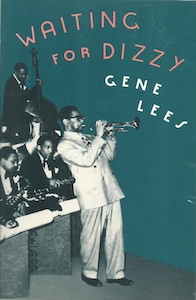
WAITING FOR DIZZY | GENE LEES
The story of jazz is a story of individuals–enormously gifted, dedicated, sometimes driven, yet often gentle people.
In this volume, Gene Lees, continues his richly entertaining and informative chronicle of the lives and times of jazz with a new collection of fourteen memorable essays drawn from his renowned Jazzletter. Waiting for Dizzy adds to the insights of his two previous collections, where the lyricist, essayist, and music historian draws on a lifetime of experience, and in many cases friendships in the jazz world to bring fresh insights to the lives and work of these magnificent artists, whether he is discussing why any guitarists have unsteady time or the complex role of race in jazz history.
The heart of Waiting for Dizzy is its exquisitely crafted character studies, warm pictures of the men and women who created and continue to create this music. Beginning in the era of its first great flowering, the 1920s, he weaves a story of discrimination against Black Americans to the tragic, determined, gifted guitarist Emily Remler who sought to break the sex barrier and her own drug habit, only to die all too young in a far-away place.
The stories continue through the final essay: a day spent in the recording studio with Dizzy Gillespie, surrounded by brilliant younger musicians who are his spiritual children, among them Art Farmer and Phil Woods. It is a lyrical, affectionate, and affecting portrait of one of the three or four most important figures–and the most loved– in jazz history.
Waiting For Dizzy: 1991 | Gene Lees
Oxford University Press

Daily Dose Of Jazz…
Greg Fugal was born on April 14, 1991 and started playing when he was twelve, receiving a zephyr saxophone from his great aunt. He began on alto then eventually played on all three saxophones.
He initially learned the classical genre but was introduced to jazz in his junior high years. Fugal became involved in a band that was organized outside of high school and called themselves the Rum House Jazz Mafia or R.H.J.M. as a baritone player in that band.
Having moved several times Greg played at three different high schools. Those schools being Uintah, Lehi, and Westlake high school, all based in Utah. During his senior year he was first chair and section leader and was rewarded the Louis Armstrong Jazz Award.
Graduated from Westlake High School in 2010, saxophonist Greg Fugal now plays for The Utah Valley University Jazz Band.
More Posts: history,instrumental,jazz,music,saxophone