

Daily Dose Of Jazz…
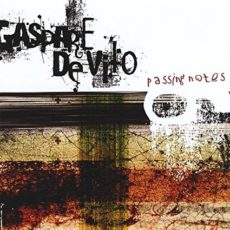
Gaspare De Vito was born on August 17, 1978 in Naples, Italy. He studied with Gianluigi Troversi, Eugenio Columbo and musical composition with Giancarlo Schiaffini. An auspicious meeting of Steve Grossman and Greg Osby was fundamental to the freedom of his original music.
Blending his Neopolitan and Meditteranean roots with hip-hop in his early teens, he would go through funk, jazz, Cuban traditional and South African music gave him the basis for his music. He has performed and recorded as a leader and a session player throughout Europe.
He has performed and recorded with Butch Morris, Alvin Curran, Tristan Hosinger, Giancarlo Schiaffini, Eugenio Colombo, Francesco Bearzatti, Fabrizio Puglisi, Vincenzo Vasi, Nicola Guazzaloca, Pasquale Mirra, Marco Dal Pane, Luisa Cottifogli, Maisha Grant and numerous others.
Alto saxophonist, flautist and composer Gaspare De Vito who has been voted Best Italian saxophonist in 2007 and co-founded the Suoniforme record label, continues to record, tour and perform internationally.

Daily Dose Of Jazz…
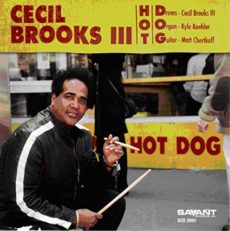
Cecil Brooks III was born on August 16. 1959 in Pittsburgh, Pennsylvania and started playing drums at age 5, studying with his father Cecil Brooks, Jr., a renowned jazz drummer. His father introduced him to Art Blakey, Max Roach, Philly Joe Jones and the jazz drumming tradition. He would go on professional performances with his father and by the age of 14 he was performing professional gigs on his own.
Awarded a full music scholarship at Mt. Aloysius College and Duquesne University and after receiving his degree, he played around the metropolitan city with visiting heavyweights. Cecil was virtually reviewed in every major music publication and newspaper as well as on Pittsburgh television and radio.
In 1984, Brooks moved to New York City where his first gigs were with Houston Person and Etta Jones. He toured and recorded with the duet for several years. During the same time he also performed with Oliver Lake, Mingus Dynasty/Big Band, Terence Blanchard, David Murray, Terumasa Hino, Greg Osby, Andrew Hill, Michelle Rosewoman, Nat Adderley and many others.
Brooks has released 9 CDs as a leader starting with The Collective to his latest Hot D.O.G. where he holds down with crisp and powerful drumming on the recording. He has performed and/or recorded with Jack McDuff, Andrew Hill, Hannibal Peterson, Groove Holmes, Don Braden, Jack Walrath and many more. He has produced John Hicks, Jimmy Ponder, Hannibal Peterson, Winard Harper, Darrell Grant, Bruce Williams, Radam Schwartz, Leon Lee Dorsey, Akua Dixon Turre, Russell Gunn Jr, Ron Jackson, Nat Simpkins, Eric Johnson, Roseanna Vitro, Arthur Blythe, Chris White, Don Braden, Talib Kibwe, and the list goes on.
For nine years beginning in 2003 he was the proprietor of Cecil’s Jazz Club in West Orange, New Jersey. IHe has had Cecil’s Monday Night Big Band featured ABC’s Nightline, has hosted visiting jazz greats and pros who live in the area. Home to bassist Christian McBride, pianist Geri Allen, saxophonist Don Braden, trombonist Steve Turre, and Herbie Hancock were all were regulars at the club and Bill Cosby launched the grand opening.
He has been the subject of many articles and reviews: Jazziz, DownBeat, Modern Drummer, JazzTimes, Hot House, The New York Times, BET Jazz Central, Time Warner Cable TV 90 minute documentary Cecil Brooks III The Third Generation, and many other major publications worldwide. He has toured throughout Europe, South America, Japan, the United States and Canada. Drummer, composer, arranger, producer and educator Cecil Brooks continues to swing as he performs, records and tours.
More Posts: drums
Daily Dose Of Jazz…
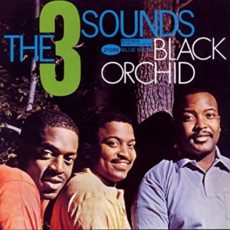
Bill Dowdy was born August 15, 1932 in Osceola, Arkansas but his family moved to Benton Harbor, Michigan when he was six months old. At a young age he would beat on things as if he were playing the drums, an indication of his future musical career. It was in high school that he learned to play the piano and the drums and in 1949 had a group called Club 49 Trio that group played on the radio in Chicago.
After Dowdy started his own music group, he moved to Battle Creek, Michigan and joined a band before being drafted by the Army. After his discharge he landed in Chicago and took private lessons to improve his musical skills. Over time he became a professional drummer, playing with many blues bands. He continued traveling from New York City to Los Angeles, California to Canada and the South.
Bill joined the jazz trio, The Three Sounds and recorded over ten jazz albums from the 1950s through the early 1970s. He also played with Lester Young, Lou Donaldson, Nat Adderley, Johnny Griffin, Anita O’Day and Sonny Stitt among others.
Drummer, bandleader and teacher Bill Dowdy, whose idols included Gene Krupa, Max Roach, Roy Haynes, and Tony Williams, passed away on May 12, 2017.

Daily Dose Of Jazz…
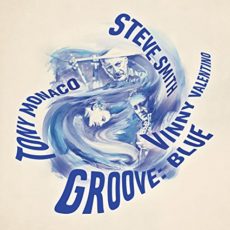
Tony Monaco was born on August 14, 1959 in Columbus, Ohio and began his musical journey learning to play the accordion when he was eight years old. At 12 he heard a Jimmy Smith album and instantly knew that jazz organ was his calling. He began playing jazz in nightclubs around his hometown while learning the art of the Hammond B3 organ and gleaning from influences Hank Marr and Don Patterson. This led him to Jimmy McGriff, Richard “Groove” Holmes, Charles Earland, Jack McDuff and Dr. Lonnie Smith.
On his sixteenth birthday Jimmy Smith called him, a friendship was struck and Smith began giving him jazz organ secrets over the phone. Four years later Jimmy invited Tony to come play with him at his club in Los Angeles, California. This would lead to future introductions and study with Hank Marr, Bobby Pierce and Dr. Lonnie Smith. At the turn of the century he met Joey DeFrancesco when he was playing Columbus and the two of them became instant friends. Recognizing Tony’s’ talents right away, he offered to produce a CD for him and Burnin’ Grooves was born with drummer Byron Landham and guitarist Paul Bollenback. He also recorded a few tracks with Joey, who was on either piano or trumpet.
Into the new millennium Monaco began performing every major festival and outdoor concert in Central Ohio as Burnin’ Grooves gained attention. He went on to release his sophomore project on the Summit Records label titled Master Chops T with his trio and trombonist Sarah Morrow, saxophonist Donny McCaslin and trumpeter Kenny Rampton. This he followed with his third project Live at the 501, began endorsing Hammond/Suzuki Organs and conducting his jazz organ clinic at the 2003 International Association of Jazz Educators in Toronto, Canada. He has played concerts with Lewis Nash, Red Holloway, Plas Johnson, Sonny Fortune, John Faddis, Mel Lewis, Eric Neymeyer among others.
Organist Tony Monaco has been voted in the Downbeat Magazine Critics and Readers Polls as well as voted by Jazztimes Readers Poll as being in the top 4 organists. He has released a dozen albums and continues to record, tour and perform worldwide.
More Posts: organ
Daily Dose Of Jazz…
Ivon Karel De Bie was born August 13, 1914 in Molenbeek-Saint-Jean, Brussels, Belgium. He received piano lessons from the age of six for ten years and around 1936 he began working as an amateur with Jimmy Turner, George Clais and with the Blue Blythe Players.
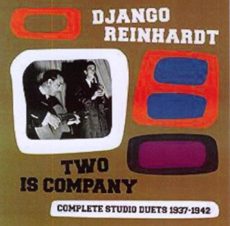
From 1938 onwards he directed his own bands as well as playing and recording beginning in the Forties in the groups of Fud Candrix, Jeff De Boeck and his metro band. In 1942 Ivon recorded his debut with a quartet with Andre Mersch, Gene Kempf and Jeff De Boeck on the Metrophone label. That same year he accompanied Django Reinhardt on a session for the Belgian label Rhythme, recording Vous et moi, Distraction, Blues en Mineur and Studio 24.
He went on to continue recording with Candrix in Berlin, with Hubert Rostaing in Brussels and with members of the Stanbrender Orchestra for the Olympia label. After the World War II De Bie directed a big band recordings for Decca Records, and also played with Robert De Kers.
From the 1950s, Ivon directed the orchestra recordings of the Middelkerke Casino played in bands led by David Bee, as well as with Brother Powell and His Dixie Rag-a-Jazz Band and The Original Syncopators Gang. In 1957 he became the artistic director of the Belgian department of RCA Victor and his last recordings were made in 1983 with the BRT Jazzorkest OLV under the direction of Etienne Verschueren.
Over the course of his career in the field of jazz he was involved in 41 recording sessions between 1941 and 1983. He wrote a series of jazz compositions such as Dixie Souvenir, partly under the pseudonym Don Bayo. His piano style was influenced by Billy Kyle, Bob Zurke, Earl Hines and Art Tatum. Pianist, composer and bandleader Ivon De Bie passed away in 1989 in Brussels.

More Posts: piano