

Daily Dose Of Jazz…
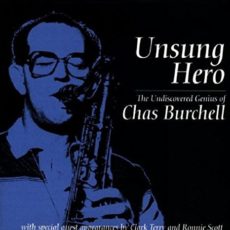
Chas Burchell was born Charles Burchell on October 30, 1925 in London, England. Originally a George Formby fan, he began learning the ukelele and then guitar, before hearing an Artie Shaw record that inspired him to take up the clarinet and play jazz.
Switching to alto saxophone, he started his own quintet in 1943. He tried the tenor saxophone before being drafted into the Royal Air Force, and then was transferred to the army in 1944. During the next three years he played in Greece with the British Divisional Band and following his discharge in 1947, worked in London with the Toni Antone Big Band.
By 1949 he gave up full-time musicianship and worked in a factory so that he would not have to perform music he did not like in order to make a living. A disciple of Lennie Tristano and a devoted admirer of Warne Marsh, Burchell continued to play part-time, leading his own quintet for more than 20 years, guesting with distinguished visitors such as Clark Terry, Emily Remler and Nathan Davis.
He recorded for Peter Ind’s Wave label and played with Ind in the group that backed Lennie Tristano’s only UK concert at Harrogate in 1968. Tenor saxophonist Chas Burchell, a supple, lyrical musician whose unpredictable twists and turns of phrase recall the style of his idol Marsh, died of a heart attack on June 3, 1986.

Put A Dose In Your Pocket

#preserving genius
More Posts: saxophone
Daily Dose Of Jazz…
Jimmy Woods was born on October 29, 1934 in St. Louis, Missouri. Woods began playing saxophone with Homer Carter’s R&B band in 1951, then served in the Air Force from 1952 to 1956. After being discharged honorably he played with Roy Milton and was with Horace Tapscott and Joe Gordon in the start of the Sixties. Following this he played and recorded two albums with Gerald Wilson and two with Chico Hamilton to the middle of the decade.
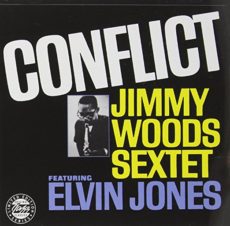
in the early 1960s Woods recorded two albums, Awakening and Conflict, both released on Contemporary Records. The second of these albums, Conflict, featured Elvin Jones, Harold Land, Carmell Jones, Andrew Hill, and George Tucker. During the decade he also performed and recorded with Teddy Edwards and Joe Gordon
Since the end of the Sixties not much has been heard from jazz alto saxophonist Jimmy Woods.
Sponsored By

Double Impact Fitness
More Posts: saxophone
Daily Dose Of Jazz..
Jay Clayton was born on October 28, 1941, in Youngstown, Ohio as Judith Colantone and after studying at Miami University in Oxford, Ohio she ventured to New York City and took lessons from Steve Lacy. Together with her husband, percussionist Frank Clayton, she presented Jazz at the Loft in their home around 1967. Among the featured musicians Sam Rivers, Cecil McBee, Joanne Brackeen, Dave Liebman, Larry Karush, Pete Yellin, Hal Galper, Jeanne Lee, Bob Moses, Junie Booth, John Gilmore, and Jane Getz.
Earning her own reputation as an avant-garde singer, Jay developed her personal wordless vocabulary. Her pioneering vocal explorations placed her at the forefront of the free jazz movement and loft scene in the 1970s, where she counted among the first singers to incorporate poetry and electronics into her improvisations. She performed and recorded with Muhal Richard Abrams, John Fischer’s Interface, Byron Morris’s Unity and for a long time she was a member of the Steve Reich ensemble. She was one of the first singers to record composer John Cage’s vocal music.
Clayton’s own performance dates appear under the heading the Jay Clayton Project, while she titles her work with other esteemed vocalists Different Voices. She co-leads a trio, Outskirts, with drummer Jerry Granelli and saxophonist Jane Ira Bloom. She has more than 40 recordings to her credit, Clayton has appeared alongside Bud Shank, Charlie Haden, Kirk Nurock, Stanley Cowell, Lee Konitz, Julian Priester, George Cables, Gary Bartz, Gary Peacock, Fred Hersch, Jeanne Lee, Lauren Newton, Urszula Dudziak, and Bobby McFerrin.
As an educator, in 1971 Jay began leading her own workshops, partly together with Michelle Berne and Jeanne Lee. By 1981 onwards she taught at Cornish College of the Arts in Seattle, Washington for 20 years. In addition to that tenure, she taught for several semesters at New York’s City College, at Graz in Austria, Berlin, Cologne and Munich. She developed the vocal program for the Banff Center in Canada, which she co-taught with fellow vocalist Sheila Jordan. The two are also teaching together at Vermont Jazz Workshop and at Jazz in July at the University of Massachusetts Amherst. She has taught masterclasses to the Manhattan School of Music and the Peabody Conservatory.
In 2001 her book, Sing Your Story: A Practical Guide for Learning and Teaching the Art of Jazz Singing, was published. She was the first artistic director for the first ever Women in Jazz Festival, served as a consultant for ABC Cable’s Women in Jazz, and has received grants from the National Endowment for the Arts, Meet the Composer, and Chamber Music America. Vocalist Jay Clayton continues to perform, record and tour.

More Posts: vocal
Daily Dose Of Jazz…
Philip Catherine was born on October 27, 1942 in London, England to English/Belgian parents and a grandfather who was first violinist in the London Symphony Orchestra. Having an ear for music early on, he picked up the guitar after hearing George Brassens and began listening to jazz.
He soon got the opportunity to play with some of those musicians when performing in Belgium, where he was residing at the time. In the 1960s he was a member of the Jean-Luc Ponty Quintet and during this period he was at the forefront on the European jazz scene performing and recording with Lou Bennett, Billy Brooks, Edgar Bateman, John Lee, Gerry Brown, Larry Coryell, Alphonse Mouzon, Charlie Mariano, Kenny Drew and Tom Harrell, among others.
Recording his debut solo album Stream in 1971 for Warner Bros. Records, the following year Philip collaborated with John Scofield, Ran Blake, George Benson and other musicians in Boston, Massachusetts. By early 1976 he replaced Jan Akkerman in the Dutch rock group Focus, recording on one album Focus con Proby, featuring American singer P. J. Proby.
The 1980s Catherine played extensively with the Chet Baker Trio and is featured on several of Baker’s albums. He went on to play with Charles Mingus, who dubbed him “Young Django”, as well as collaborations with Dexter Gordon, Richard Galliano, Niels-Henning Ørsted Pedersen, Stéphane Grappelli, Toots Thielemans, Robert Wyatt, Klaus Doldinger, Buddy Guy, Karin Krog, Carla Bley, Mike Mantler and Joachim Kühn as well as others too numerous to list.
He won the first Belgian Golden Django in 1995 and is considered the grandfather of Belgian jazz for his approach, sound, emotional lyricism and expression that is both important and influential. Guitarist Philip Catherine continues to perform on the now very active Belgian jazz scene as well as record and tour worldwide.
Uplift Someone’s World
More Posts: guitar
Daily Dose Of Jazz…
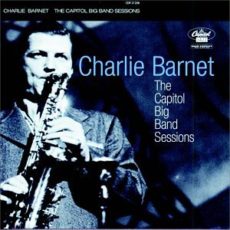
Charlie Barnet was born Charles Daly Barnet on October 26, 1913 in New York City. His parents divorced when he was two and he was raised in well-to-do surroundings by his mother and her grandparents. His grandfather was Charles Frederick Daly, a vice-president for the New York Central Railroad, banker and businessman. He attended various boarding schools, both in the New York and Chicago areas, learning to play piano and saxophone as a child. He was often found leaving school to listen to music and to try to gain work as a musician.
By sixteen, Barnet had done road work with a Jean Goldkette satellite band and was in New York, where he joined Frank Winegar’s Pennsylvania Boys on tenor saxophone. Always restless, by 1931 he had relocated to Hollywood and appeared as a film extra while trying to interest local bandleaders in hot music, which was increasingly unpopular due to the Great Depression. By late 1932 he was 18 and returning east, where he persuaded a contact at CBS’ artist bureau to try him out as an orchestra leader.
Charlie began recording in 1933, during an engagement at New York’s Park Central Hotel, but was not a great success for most of the 1930s. Regularly breaking up his band and changing its style by early 1935 he attempted to premiere swing music at New Orleans’ Hotel Roosevelt. However, Louisiana’s Governor Huey Long, disliking the new sound, had the band run out of town, arranged with Joe Haymes to take several of his now-jobless sidemen, and he went to Havana, Cuba as an escort to well-to-do older women.
1936 saw another swinging Barnet edition featuring the up-and-coming vocal quartet The Modernaires but this too quickly faded from the scene. The height of Barnet’s popularity and his first really permanent band came between 1939 and 1941. It was a period that began with his hit version of the Ray Noble tune Cherokee arranged by Billy May. 1944 saw him with another big hit with Skyliner. During his swing period his orchestra included Buddy DeFranco, Roy Eldridge, Neal Hefti, Lena Horne, Barney Kessel, Dodo Marmorosa, Oscar Pettiford, Art House, Maynard Ferguson, Doc Severinsen, Clark Terry and trumpeter Billy May was his arranger before joining Glenn Miller in 1940.
He was one of the first bandleaders to integrate his band; the year is variously given as 1935 or 1937. He was an outspoken admirer of Count Basie and Duke Ellington. Ellington recorded the Charlie Barnet composition In a Mizz. In 1939, Basie lent Barnet his charts after Barnets’ had been destroyed in a fire at the Palomar Ballroom in Los Angeles, California. Throughout his career he was an opponent of syrupy arrangements, however, in the Billy May song The Wrong Idea, he lampooned the “sweet” big band sound of the era.
Barnet penned an autobiography The Swinging Years where he noted the orchestra was a notorious party band where drinking and vandalism were not uncommon. He had several hits across America and in Europe during the late 1940s, thanks to the U.S. Armed Forces Network powerful twin 100 kW transmitters stationed in Munich, Germany.
By 1947, he started to switch from swing music to bebop and in 1949 he retired, apparently because he had lost interest in music. He was able to retire when he chose because he was one of the few heirs in a very wealthy family. He occasionally returned from retirement for brief tours but never returned to music full-time. Tenor, alto and soprano saxophonist, composer and bandleader Charlie Barnet passed away from complications of Alzheimer’s disease and pneumonia on September 4, 1991 in San Diego, California.
Jazz Is Global – Share
More Posts: saxophone